[musica] Parag Thakore: Direi di incoraggiare anche gli acquirenti e i professionisti della sicurezza a iniziare a pensare alle caratteristiche prestazionali e all'ottimizzazione e a vedere se quell'infrastruttura può offrirli o meno. E non devono essere esperti, è una domanda molto semplice in termini di: "Ehi, posso ottenere questa connettività ad alte prestazioni da questo Cloud Security che sto acquistando o dal fornitore di sicurezza che sto cercando?" Quindi penso che la facilità operativa e la connettività ad alte prestazioni siano criteri che la sicurezza dovrebbe considerare come criterio quando si tratta di piattaforme di sicurezza.
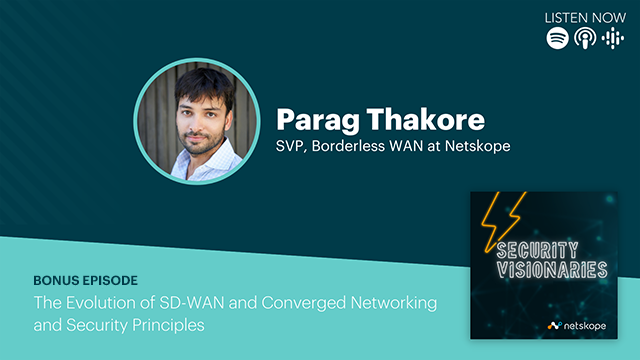
[musica] Produttore1: Ciao e benvenuti a Security Visionaries. Hai appena sentito l'ospite di oggi, Parag Thakore, SVP di Borderless WAN a Netskope. Con l'evoluzione dei modelli di business, i CIO devono iniziare a riflettere sulla convergenza delle responsabilità dei team di networking e sicurezza e semplificando il percorso dell'utente finale. Netskope sta facendo proprio questo collaborando con i leader SD-WAN per offrire un accesso rapido, sicuro ed economico agli utenti di filiale e remoti. Prima di entrare nell'intervista a Parag, ecco una breve parola del nostro sponsor.
Produttore2: Il podcast Security Visionaries è gestito dal team di Netskope. Da Netskope, stiamo ridefinendo la sicurezza del Cloud, dei dati e delle reti con una piattaforma che offre accesso ottimizzato e sicurezza zero trust per persone, dispositivi e dati ovunque si trovino. Per saperne di più su come Netskope aiuta i clienti a essere pronti a tutto nel loro percorso SASE , visita Netskope.com.
Produttore1: Senza ulteriori indugi, godetevi l'episodio 21 di Security Visionaries con Parag Thakore, SVP di Borderless WAN su Netskope e il vostro conduttore, Mike Anderson.
Mike Anderson: Benvenuti all'episodio di oggi del podcast Security Visionaries. Sono il vostro conduttore, Mike Anderson. Sono il Chief Digital & Information Officer qui a Netskope. Oggi sono entusiasta di essere raggiunto da uno dei miei coetanei qui, Parag Thakore. Parag, come stai oggi?
Parag Thakore: Sto benissimo. Grazie Mike e grazie per avermi invitato.
Mike Anderson: Sì, assolutamente. Ovviamente, sei arrivato a noi quasi un anno fa dopo l'acquisizione di Infiot e ora ricopri il ruolo di vicepresidente senior del nostro gruppo Borderless SD-WAN . Raccontaci un po' del tuo percorso e poi del tuo percorso in Netskope e un po' del tuo background nel settore delle reti e della sicurezza.
Parag Thakore: Certo, Mike. Il mio background nel networking risale ai tempi di Cisco, quando c'erano fornitori di servizi con cui lavoravo e che usavano reti MPLS. E in realtà, se guardi la tendenza MPLS, è nata più dalla voce, VOIP. Quindi, quando le reti dati e le reti vocali convergevano, è lì che nacque il mercato MPLS e io ho fatto parte di quel percorso per creare l'ISR Gen 1, ISR Gen 2, che erano come router di filiale. E fino al 2009-2010, il MPLS era in espansione, ed è il momento in cui tutti acquistavano MPLS per esigenze di connettività molti-a-molti.
Parag Thakore: E improvvisamente, a quel punto c'è stato un punto di svolta in cui, se guardi a Cisco, stavano acquisendo molte aziende di endpoint voce e video e questo richiede video molto elevati, larghezza di banda molto elevata per la voce e il video per funzionare su quello. Quindi, se guardi la nostra videochiamata, ogni flusso video sarebbe di 10 mega e il collegamento MPLS sarebbe di un mega e mezzo e costerebbe 400 dollari al mese. Quindi è lì che abbiamo iniziato a pensare più tipo: "Come possiamo aiutare i clienti affinché sia più conveniente per loro gestire queste reti?" Perché non puoi aggiornare la banda MPLS a quel punto, dato che sarebbe stato davvero costoso.
Parag Thakore: Così ho lasciato Cisco a quel punto e sono diventato vicepresidente dei prodotti e anche membro fondatore di un'azienda chiamata VeloCloud Networks, una delle aziende leader di mercato nel settore WAN definiti software. La parola SD-WAN non esisteva. Abbiamo creato quel mercato. Al momento è un mercato piuttosto grande, la gente lo sa. Da lì, ciò che SD-WAN ha dato è tutta questa larghezza di banda comune, collegamenti a banda larga di base, e potevi far passare le tue reti su di essa invece che su MPLS, e ti dava affidabilità tramite collegamenti Internet e gestione facile delle filiali.
Parag Thakore: Quello che non ti ha dato, e da dove abbiamo iniziato Infiot, era più una connettività molti-a-molti, perché abbiamo visto che il perimetro dell'impresa si stava espandendo. In effetti, ricordo una conversazione in cui stavo presentando SD-WAN e il cliente ha detto: "Amico, non ho capito una sola parola di SD-WAN." E per indagare sul problema, abbiamo detto: "Ok." Vai al loro reparto di fabbrica e indicano questa grande macchina e dicono: "Quella è la mia filiale New e dentro la filiale ho dei sensori." Oppure, se guardi tutti noi che lavoriamo da casa oggi, quelli sono estensioni delle tue filiali o guardi l'ambiente multicloud. Quindi abbiamo notato che SD-WAN non è stato progettato per questo mondo molti-a-molti ed è da lì che siamo usciti dopo l'acquisizione. VeloCloud è stata acquisita da VMWare. Subito dopo l'acquisizione siamo usciti e abbiamo fondato Infiot e da lì in poi, Infiot è stata acquisita da Netskope a partire dallo scorso anno.
Mike Anderson: Fantastico. È stato un... Ed è un viaggio straordinario. Ho sentito che molte delle aziende WAN definite dal software oggi hanno le radici nello stesso team Cisco in cui eri anni fa, prima ancora di fondare VeloCloud. Quindi sicuramente c'è molto buon talento in quella squadra.
Mike Anderson: Quindi, approfondendo un po' di più, so che noi, quando abbiamo esaminato il mercato ovviamente dal punto di vista Netskope , abbiamo esaminato SASE e per molto tempo abbiamo fornito un lato dell'equazione, che era lo stack di sicurezza del cloud e poi ovviamente, quando si esaminava il business SD-WAN o il business Borderless SD-WAN , quel many-to-many, ha creato un buon accoppiamento da mettere insieme mentre le aziende guardano al complesso "Come si presenta un mercato SASE con un singolo fornitore in futuro?"
Mike Anderson: Quindi sei qui da quasi un anno. Parlami un po' del tuo ruolo attuale in Netskope e quali sono alcune delle cose su cui ti stai davvero concentrando? Quali sono alcune delle grandi novità che ritieni siano in arrivo con questa fusione tra edge dei servizi di sicurezza e SD-WAN, se pensi all'architettura SASE , quali sono le cose interessanti su cui stai lavorando, magari in quel contesto many-to-many che hai appena menzionato?
Parag Thakore: Sì, sono il vicepresidente senior del gruppo Borderless SD-WAN , che include anche SASE , dove uno dei nostri obiettivi è fornire lo stesso livello di prestazioni costanti e connettività sicura ovunque. Che Parag o Mike come utente siano nel nostro ufficio, in un caffè o in un ufficio domestico, ovunque siamo, ora come singola azienda siamo in grado di offrire connettività ad alte prestazioni e sicurezza per tutti questi casi d'uso. Quindi costruire davvero quel gameplay di piattaforma in cui la facilità d'uso è fondamentale, perché ora si tratta insieme con il team di rete e il team di sicurezza e come si combinano queste cose in modo che sia molto semplice, agile, conveniente e che abbassa i costi. Ma più importante, se si pensa da un punto di vista di casi d'uso, si tratta dall'ufficio al caffè, alla casa o al tuo ambiente multicloud, offrendo prestazioni e connettività sicura per tutti questi casi d'uso.
Mike Anderson: Fantastico. Sai che mi appassiono di entusiasmo. Abbiamo avuto così tante conversazioni. Mi entusiasmo con tutta la tecnologia che hai portato insieme a quella che abbiamo qui a Netskope. Molti dei nostri ascoltatori potrebbero dire: "Ok, pensavo che il nostro tema di quest'anno fosse la sicurezza come sport di squadra." E penso che tu abbia centrato nel segno quando hai parlato di questo punto e inizia davvero a convergere le capacità di rete e sicurezza in un approccio di piattaforma. Qual è la tua opinione sull'intera nozione di sicurezza come sport di squadra?
Parag Thakore: Sì, penso assolutamente. Quindi c'è un po' di storia interessante in questo. Se guardi indietro nel 2010-2013, quando abbiamo iniziato questo percorso SD-WAN, allo stesso tempo, Netskope e pochi altri fornitori erano in quel percorso di sicurezza Cloud con lo stack SSE. All'epoca, una delle idee di SD-WAN negli anni 2010 era: "Ok, vi darò una rottura diretta di Internet da ogni singola filiale." In quel processo, tra l'altro, ero coinvolto in quel problema, dicendo: "Sapete una cosa, vi daremo una sicurezza sufficiente in ogni singola filiale." E una sicurezza abbastanza buona non è mai abbastanza. Lo sappiamo tutti.
Parag Thakore: Col tempo è stato dimostrato che se distribuisci la sicurezza a ogni singola filiale, probabilmente è molto più difficile da gestire perché, da un punto di vista, è super distribuito ed è molto complesso dal punto di vista della gestione; dall'altro spettro, le persone facevano backhauling del loro traffico solo per esigenze di sicurezza. C'erano due soluzioni sul mercato: o il backhaul e si avevano problemi di prestazioni, oppure si portava una sicurezza abbastanza buona nella filiale, che ancora una volta comportava alcune sfide per i fornitori di rete. Al momento devi gestire la sicurezza distribuita. È qui che penso che tutta questa nozione di SASE e SSE si divida dolcemente, perché col tempo è stato dimostrato che la sicurezza nel cloud e in particolare SASE sono il modo giusto per costruire insieme rete e sicurezza, e questi team devono intervenire e collaborare per costruire questo framework e architettura corretti.
Mike Anderson: Al 100%. Ho visto spesso questo fenomeno perché si inizia a pensare, in particolare a SD-WAN, se non si ha la giusta partnership tra rete e sicurezza, si potrebbero persino bypassare i controlli di sicurezza in cui il team di sicurezza è coinvolto per completare tutta la storia del SASE. Potresti avere SD-WAN completamente aperto a Internet e il traffico non passa nemmeno oltre il bordo del servizio di sicurezza, quel Cloud edge per la sicurezza e quindi richiede una stretta coordinazione. Che consiglio daresti ai team di networking con cui hai lavorato in passato mentre riflettono sulla sicurezza? So che hai parlato che diventa pesante al limite, ma che consiglio daresti davvero? Avete qualche consiglio da darmi?
Parag Thakore: Sì, devi guardare e sederti con i tuoi colleghi della sicurezza e stabilire una serie di requisiti che vuoi approfondire dalla sicurezza di rete. Bisogna sedervi come gruppo e decidere cosa volete, quali sono le priorità e trovare quella giusta struttura architettonica.
Mike Anderson: Al 100%. È divertente, ho scherzato, ho fatto una previsione in un podcast precedente, ovvero che sarebbe emerso un New titolo di lavoro, perché ho visto l'80% delle organizzazioni che ancora fanno capo al CIO, anche se ovviamente fanno parte dei comitati del consiglio di amministrazione. Allo stesso tempo, però, ho visto CIO riunire il loro team di infrastruttura e quello di sicurezza, il che è divertente perché è quasi come una ricongiunzione, dato che, se guardi da dove proveniva originariamente il budget per la sicurezza 20 anni fa, la sicurezza faceva parte del gruppo di reti. Quindi la previsione era che avremmo avuto un titolo chiamato Chief Information and Security Officer e fondamentalmente avete entrambe le cose, ma vedremo se si concretizzerà.
Mike Anderson: Hai sollevato un ottimo punto. Pensandoci, spesso i nostri team finiscono per essere organizzati non necessariamente in base alle capacità, ma agli strumenti che possediamo rispetto a quelle capacità. E ovviamente, come sappiamo, l'unica costante nella vita è il cambiamento, e quindi quello che succede è che queste capacità e gli strumenti convergono contemporaneamente e dobbiamo assicurarci che, man mano che le capacità e gli strumenti convergono, pensiamo anche a come quei team convergono per aumentare l'efficienza nell'organizzazione. Quindi anche i modelli operativi devono cambiare all'interno delle nostre aziende.
Parag Thakore: E credo che Mike, è qui che hai sollevato la questione: "Qual è il lavoro entusiasmante che stiamo facendo?" Proprio su questa convergenza stiamo lavorando perché i tecnici di rete tengono alla connettività ad alte prestazioni, quelli della sicurezza a prova di sicurezza. Che ne dici se ti diamo entrambi? E che ne dici se ti forniamo entrambi non solo per un caso d'uso, ma per tutti i casi d'uso? E si mettono tutte queste persone sul tavolo e si dice che si può avere questa unica architettura convergente, che è Cloud-native, pronta per il cloud, per le app on-premise e per tutti, e farlo per entrambe le parti.
Mike Anderson: Al 100%. Penso che molte volte anche noi parliamo, hai parlato che inizialmente dovevi educare il mercato su cosa fosse SD-WAN, giusto? E so che abbiamo già affrontato anche questo, perché Security Service Edge è un termine New introdotto negli ultimi due anni che il mercato ha dovuto assorbire. Si torna sempre al fatto che, se sono un leader aziendale o un CIO, devo poter avere una connettività Internet sicura nel modo più efficiente e conveniente possibile, giusto? Ed è davvero questo che SD-WAN mi porta: ora posso aggiungere, nel modo più economico e sicuro possibile, per far passare traffico da qualsiasi dispositivo a qualsiasi dispositivo. Quindi penso che questo diventi un messaggio molto positivo che può essere estratto dal mercato mentre riflettiamo su cosa offre SASE e anche SASE nel contesto, ovviamente, di ciò che facciamo qui a Netskope.
Mike Anderson: Quando guardi a queste funzioni e responsabilità, ovviamente, vedendo la convergenza, inizi ad avere il Wi-Fi in questi dispositivi, inizi ad avere quelle che sarebbero considerate capacità LAN tradizionali. Come pensi che le aziende dovrebbero pensare a questo dal punto di vista del modello operativo? Come dovrebbe influire questo?
Parag Thakore: Sì, penso che serva flessibilità dal punto di vista del modello operativo. Dal punto di vista del modello di business, i modelli della vecchia scuola non funzionano. Vedi che le persone vogliono offrire servizi in abbonamento. Ragazzi, c'è flessibilità sui prezzi per utente? Alcune persone applicano prezzi basati sulla larghezza di banda. Quindi penso che tutto stia convergendo, che tutto stia andando a posto, ma da questa prospettiva la flessibilità e l'agilità sono fondamentali.
Mike Anderson: Abbiamo parlato dei consigli che daresti alle persone del team di networking. Quale consiglio daresti ai CIO e, ovviamente, ai responsabili della sicurezza che rispondono a loro, ai CISO o anche ai CISO che rispondono all'esterno del CIO? Che consiglio daresti loro su come possono aiutarli a riflettere su questi modelli operativi in evoluzione e sul cambiamento e la convergenza delle capacità?
Parag Thakore: Sì, se la guardi come se stessi parlando con alcuni analisti più noti e dal punto di vista di un CIO, dovrebbero dare priorità al SASE. E man mano che danno priorità al SASE, questo costringe le cose sottostanti perché se cerchi una rete semplificata migliore e qualcosa di sicuro che ti dia connettività ad alte prestazioni, il SASE deve essere una delle priorità principali, e lo è, tra l'altro, quando in realtà uno degli analisti ha fatto un recente sondaggio in cui il SASE era tra le prime tre tecnologie in assoluto, tra i CIO e non stiamo parlando solo di sicurezza di rete, ma di tutto.
Parag Thakore: Quindi lo vediamo e, man mano che i CIO danno priorità al SASE, si assicurano che "Ehi... Sì, potremmo essere due fornitori" perché non tutto cambierà da un giorno all'altro. Quindi sarà una fase di "striscia, cammina, corri", in cui inizialmente avrai una strategia a doppio fornitore e, man mano che semplificherai le cose e passerai al lato del fornitore singolo, le cose inizieranno a convergere. Quindi, come riorganizzate i vostri team, come assegnate i budget ai team giusti affinché la decisione diventi più semplice? Quindi, per tornare al punto, bisogna che quella persona prenda la decisione e sta emergendo questo New titolo. Penso che sia fondamentale perché quando ciò accade, c'è qualcuno che è responsabile di quel progetto e deve assicurarsi che entrambe le parti siano motivate allo stesso modo per far sì che quel progetto abbia successo.
Mike Anderson: 100%. E penso che una delle cose che viene sempre fuori, è che molte persone, quando siamo passati a questo modello di lavoro da casa, molte persone avevano progetti SD-WAN, c'erano molte persone che li hanno deprimite la priorità. C'erano alcuni che le davano più priorità. Dicevo sempre alla gente: "Guardate, quando tornate in ufficio, se non avete SD-WAN, tutto il traffico video in esecuzione oggi su Teams verrà convogliato sulla vostra rete e quei circuiti saranno sovraccarichi". E vi garantisco che il primo giorno in cui qualcuno tornerà in ufficio, sentirete la gente lamentarsi dicendo: "Perché le mie chiamate Microsoft Teams o Zoom in ufficio sono peggiori che a casa?" Ed è decisamente cambiato.
Mike Anderson: Se pensiamo alla pandemia, abbiamo avuto questo: ha accelerato il passaggio delle persone a maggiori capacità digitali, cose che avevano creato autonomamente nel cloud pubblico o che erano passate ad applicazioni SaaS. Abbiamo assistito a questa esplosione nei media digitali, nell'impegno digitale, nelle funzionalità video avanzate e poi abbiamo visto anche il lavoro ibrido, che credo sia l'ultimo dato che indica che circa il 70% delle aziende prevede di mantenere una politica di lavoro ibrido in futuro per il modo in cui gestiscono il lavoro. In che modo questo ha cambiato il tuo punto di vista? Forse in che modo questo ha influenzato la tua creazione di Infiot e poi quello che stai facendo ora presso Netskope? In che modo ha influenzato il modo in cui era stata concepita originariamente l'SD-WAN? Quali problemi mi aiuta a risolvere ora in questo New mondo ibrido, con questi New carichi di lavoro, con le cose che girano nel cloud pubblico e con il video, tutte quelle cose che abbiamo appena descritto?
Parag Thakore: Sì. Quindi Mike, se ci pensi bene, ci sono due sfide fondamentali. Una è quella che chiamo una sfida architettonica, mentre la seconda è quella che chiamo una sfida a livello di funzionalità. Se prendi la prima, che è una sfida architettonica, hai ragione. Quello che dico alla gente è che non è possibile ottenere una rete migliore o una maggiore sicurezza con delle patch. Era come un miscuglio. Quando è scoppiato il COVID, le persone hanno iniziato a lavorare da casa, il team IT si è dato da fare, hanno fatto quello che potevano e hanno messo insieme le cose. Basta aggiungere più risorse, aggiungere più server, semplicemente si risolve il problema. Ma era questo il modo giusto di progettare tutto questo fin dall'inizio?
Parag Thakore: E se ci pensi, penso che quello che hai detto sia assolutamente giusto, ovvero che vai in una filiale e ottieni SD-WAN e quando torni a casa, i fornitori di SD-WAN vendevano dispositivi per utenti domestici, allo stesso tempo c'era un client ZTNA, allo stesso tempo c'era un client SSE, allo stesso tempo avevi più agenti seduti sul tuo laptop che facevano cose e avevi una scatola a casa tua per fornirti quella connettività ad alte prestazioni. Quindi, se si ragiona in una prospettiva multiprodotto, si tratta di troppi prodotti. Quindi, dal punto di vista Netskope , abbiamo fatto qualcosa di davvero valido dal punto di vista della piattaforma: innanzitutto, si tratta di un software, una piattaforma, una policy, un'architettura, in cui la persona potrebbe essere a casa seduta su un laptop con un agente endpoint, c'è un agente che gira sul laptop, che fornisce sia Endpoint SD-WAN che funzionalità SSE e ZTNA , tutto proveniente da un singolo agente.
Parag Thakore: In questo modo non avrai più bisogno di prodotti con più punti di forza e non dovrai portare con te l'hardware ovunque tu vada. È possibile far funzionare questa funzionalità SD-WAN sul proprio laptop come software completo. Inoltre, l'esperienza è la stessa anche nella filiale, perché quando lo stesso utente entra in una filiale, non si vuole avere un'esperienza frammentata. Quindi, se prendiamo in considerazione l'esempio appena citato, in cui un utente Zoom può dire: "Ehi, questa è un'applicazione ad alta priorità nella filiale". Ma nel momento in cui torni a casa e utilizzi il tuo client VPN tradizionale, non puoi dire che Zoom, Office 365 o RingCentral siano prioritari. Quindi, come si fa a far convergere queste architetture in modo che, ancora una volta, per l'utente domestico, sia la soluzione migliore dal punto di vista dell'agente software e, quando si accede a una filiale, sia comunque un dispositivo di filiale a fare tutto per conto dell'utente?
Parag Thakore: E lo stesso vale, tra l'altro, nel multicloud, abbiamo visto apparire una serie di fornitori solo per la connettività multicloud, per la connettività app-to-app, e poi ci sono altri fornitori che si occupano solo di WAN wireless. Quindi, come si crea questo software, questa policy, questa architettura in modo che il software possa essere eseguito nella tua filiale, da molto piccola a multi-gigabyte, come endpoint sul tuo laptop, oppure come WAN wireless per il tuo cellulare o nel tuo ambiente multicloud? E questo è fondamentale. E poi, oltre a tutto questo, si aggiungono anche la sicurezza a tutti questi servizi di connettività. Quindi questa è la chiave del successo dal punto di vista SASE.
Mike Anderson: Parag, queste sono delle intuizioni fantastiche. Quando pensiamo all'architettura, una delle cose a cui pensiamo, soprattutto in ambito di sicurezza, è che la complessità è il nemico della sicurezza. Quindi, quando abbiamo architetture diverse per ogni modo di lavorare, non solo creiamo complessità per i nostri team e complessità nel nostro stack tecnologico, ma creiamo anche maggiori problemi di risoluzione dei problemi per i nostri utenti che lavorano da casa. E quindi, sicuramente, la capacità di semplificare l'architettura e, come dice la mia citazione preferita "La semplicità è la massima sofisticatezza", consente loro di ottenere quella scala e consente alle persone di lavorare allo stesso modo indipendentemente da dove lavorino e richiede molto... Semplifica la complessità per i miei team che devono supportare quegli utenti che in realtà cercano solo di svolgere il loro lavoro da qualsiasi luogo lavorino.
Mike Anderson: Uno dei casi d'uso davvero interessanti e so che ne hai altri che potresti condividere, ma uno di quelli che mi ha colpito, perché lo sentiamo qui a Netskope, è che abbiamo agenti di supporto che lavorano da casa, e alcuni di questi agenti di supporto potrebbero vivere da soli, potrebbero vivere con coinquilini, potrebbero vivere con membri della famiglia, potrebbero avere figli in casa che trasmettono in streaming o lavorano anche da casa, e quindi, mentre pensiamo a questo, vogliamo assicurarci che quando i nostri agenti di supporto supportano i nostri clienti, vogliamo assicurarci che abbiano un'esperienza vocale di qualità quando forniscono supporto. Non vogliamo che ci siano interruzioni in questo. E quindi parlami un po' di questo caso d'uso e di come affrontiamo quel problema e di come SASE in generale, in questo New contesto che stiamo esaminando, aiuta a risolvere quel problema.
Parag Thakore: Sì. Mike, mi ricordi una storia interessante che ho avuto con un cliente: nella mia vita precedente, ho venduto 25.000 unità hardware al cliente finale per lavorare da casa e fornire connettività ad alte prestazioni per questi agenti del contact center. E quello che abbiamo capito, dopo un anno di lancio, ho contattato il cliente e gli ho detto: "Ehi, come va il lancio?" E così disse: "Terribile." Ho chiesto: "Perché?" Ha detto: "Ogni volta che un agente del contact center se ne va, questi agenti se ne vanno, dobbiamo inseguirli per restituire le unità. Diamo loro un portatile Dell da 400 dollari con Windows Microsoft e io ho un dispositivo SD-WAN da 2000 dollari che funziona solo per offrire loro quelle prestazioni e connettività."
Parag Thakore: Ed è lì che si è accesa la lampadina: che ne dici se ti do lo stesso agente che ti dà non solo prestazioni ma anche sicurezza per quegli agenti? Le persone vogliono monitorare se l'agente lavora a tempo pieno o se guarda Netflix? Quanto sono produttivi questi agenti che lavorano da casa, com'è l'ottimizzazione o come sono quelle voci e video, che sono quelle che hai menzionato. E forse anche qualche tipo di funzione dei titoli, canale di controllo per queste voci e video, e abbiamo sicurezza per questo.
Parag Thakore: Quindi si tratta di una connettività sicura ad alte prestazioni per gli agenti o potrebbe essere anche per i dipendenti, e vediamo un grande mercato intorno a questo. Probabilmente siamo gli unici a Netskope ad avere il primo cliente SASE di questo settore, quello che chiamo SASE, e il motivo per cui lo chiamo primo cliente SASE del settore è che, se guardi, ci sono fornitori che si occupano di appliance SD-WAN come ho detto, fornitori che si occupano di clienti SSE e SSE. Se guardi a SASE, la definizione è costruita da SD-WAN e SSE, ma nessuno ha SD-WAN e SSE al 100% software che girano sul laptop. Quindi, da questa prospettiva, siamo gli unici e i primi del settore ad avere questo client SASE in esecuzione sul proprio portatile, e ti offre connettività e sicurezza ad alte prestazioni ovunque tu vada, comprese le filiali, quando entri in una filiale, ci rendiamo conto che ci sono più utenti in una filiale, Quindi hai bisogno di un dispositivo e ti spediamo un dispositivo per le esigenze della tua filiale, per le tue esigenze multi-giga.
Mike Anderson: È un ottimo lavoro, e l'ultima cosa che vuoi è avere più beni da recuperare dai tuoi dipendenti. Ho visto molti persino leader IT dire: "Comprerò un laptop per un dipendente", e poi, una volta terminata la sua vita utile di tre anni, possono tenersi quel laptop, diamo loro uno stipendio e compriamo un New laptop e rifacciamo la stessa cosa. Quindi è interessante, l'ultima cosa che faremo è avere più asset di capitale da mantenere o recuperare, perché se se ne vanno prima che scadano quei tre anni, vogliono recuperare l'asset, ovviamente, e ridistribuirlo a un altro utente dell'organizzazione.
Mike Anderson: Quando penso all'agente unificato, alcune delle cose che ci hanno entusiasmato è che abbiamo sempre considerato il nostro vantaggio di servizio di sicurezza come un apporto di consapevolezza contestuale a tutte le diverse transazioni e decisioni che prendo per un utente proveniente dal nostro client tradizionale, questo SSE. Ora, guardando la SD-WAN e mettendo insieme tutto per offrire un vero client SASE, so che hai fatto un lavoro entusiasmante per portare quel contesto anche alle capacità SD-WAN. Puoi parlarci un po' di questo e di come questo aiuta la forza lavoro ibrida?
Parag Thakore: Certo Mike. Se la guardi, non puoi dare priorità o proteggere ciò che non puoi rilevare. Questo è il punto. E quello che abbiamo visto in passato è che, se guardi ai fornitori SD-WAN e quando SD-WAN è iniziato nel 2013, nel 2010 c'erano sempre meno carichi di lavoro Cloud. La Nuvola stava ancora emergendo. E se guardi la maggior parte dei fornitori SD-WAN oggi, ti parleranno: "Ehi, supportiamo al massimo qualche migliaio di applicazioni, 2000-3000 applicazioni."
Parag Thakore: In Netskope abbiamo un motore di Cloud discovery di livello mondiale dal punto di vista SSE, ad esempio, e supportiamo oltre 60.000 applicazioni dal punto di vista della sicurezza. Ora portiamo lo stesso contesto sull'SD-WAN, abbiamo lo stesso Zero Trust Engine costruito per SSE, l'abbiamo portato su SD-WAN, e non si tratta solo di applicazioni ma anche di applicazioni e rischi applicativi, rischi utente-utente, rischi dispositivo e dispositivo. Quindi questi sono elementi diversi, molto più ampi rispetto a ciò per cui SD-WAN è stata originariamente progettata. E con questo, quello che succede è che ora, se guardi, ottieni una consapevolezza contestuale molto più ampia ovunque si trovi l'utente, anche se è in un ramo, posso creare in un ramo grande una Policy più orientata all'identità? Posso considerare il rischio d'identità? Posso considerare il rischio del dispositivo e metterlo in quarantena?
Parag Thakore: Le persone che fanno segmentazione in SD-WAN basandosi su VLAN e IP, e io dico: "Ehi, sì, ma abbiamo un'ipersegmentazione contestuale." In cui non devi farlo in base a VLAN e IP, non sai nemmeno quali dispositivi IoT ci sono nel tuo ambiente di filiale, e possiamo scansionare tutti quei dispositivi e metterli in quarantena, ad esempio, oppure possiamo dare priorità a oltre 60.000 app e app Cloud, cosa che nessun altro fornitore può fare. Quindi, per me, tutto il lavoro che stiamo facendo ruota attorno a: "Ehi, davvero non puoi mettere in sicurezza o dare priorità a ciò che non puoi scoprire, e questo include utenti, applicazioni, dispositivi e molto più ampiori di quanto SD-WAN sia stato originariamente progettato per questo."
Mike Anderson: Sì, e ti conosco e ne abbiamo parlato, è l'aggiunta anche di quella possibilità in futuro di fare quella priorità basata anche su applicazioni autorizzate o non autorizzate, perché così spunto una casella e si forza la collaborazione tra team perché la gente dice: "Ehi, per qualche motivo ogni applicazione SaaS sembra andare lente." Beh, forse non state usando quelli autorizzati o dobbiamo collaborare di più su quelli. Quindi questo costringe a un po' di conversazione perché naturalmente le persone possono avere una peggiore esperienza con applicazioni arrivate dall'esterno rispetto a quelle che sono state verificate da programmi di sicurezza e leader IT per assicurarsi che siano sicure e protette. E quindi penso che questo porti anche opportunità interessanti.
Mike Anderson: Quindi Parag, voglio cambiare direzione e farti un'altra domanda. Quindi, quando si pensa a SD-WAN, abbiamo parlato di ciò che è importante per i team di rete, ma ciò che è importante per i team di sicurezza è che devono considerare le loro stack tecnologiche e opportunità di consolidamento, perché la consolidazione è sempre stata un'opportunità per l'IT. In che modo questo rappresenta un'opportunità per una certa consolidazione, che ora è fondamentale anche per loro?
Parag Thakore: Sì, penso che il team di sicurezza per me, e penso che venga dal team di sicurezza e anche per i CIO, devono unire rete e sicurezza Cloud. Questo è il punto. Quindi il cloud deve intervenire, la rete deve intervenire e la sicurezza deve intervenire. Quindi ora, quando il team di sicurezza lo esamina, quanto è facile integrare e gestire l'intera rete? È lì che si tratta di lavoro di squadra tra team di rete e sicurezza, perché non si può scegliere un'infrastruttura di sicurezza in silos senza pensare a come la rete si collegherà ad essa, dato che entrambe vanno di pari passo perché, alla fine, non vuoi che i tuoi colleghi di rete abbiano un deployment davvero complesso dal punto di vista dell'integrazione.
Parag Thakore: Quindi penso che la semplicità sia ciò a cui il team di sicurezza dovrebbe pensare, come in Netskope diciamo ai team di sicurezza e ai team di rete. Disponiamo di questa infrastruttura New Age di livello mondiale. È un ottimo esempio. Siamo in oltre 67 regioni, probabilmente con latenze molto basse in tutto il mondo dalla prospettiva dell'utente finale alla nostra POP. È un ottimo esempio in cui in tutto questo Cloud on RAM, sia per motivi di sicurezza che di ottimizzazione, che si stia ottimizzando voce o video o che si stia cercando di proteggere le applicazioni web e SaaS, bisogna riflettere su tutto. E quell'infrastruttura ti offre entrambe le cose di cui hai bisogno dal punto di vista della rete e della sicurezza?
Parag Thakore: Quindi direi di incoraggiare gli acquirenti e gli addetti alla sicurezza a iniziare a pensare anche alle caratteristiche delle prestazioni e all'ottimizzazione, e se l'infrastruttura può o meno fornirgliele. E non hanno bisogno di essere esperti nel rispondere a domande semplici come: "Ehi, posso ottenere questa connettività ad alte prestazioni da questa sicurezza cloud che sto acquistando o da quel fornitore di sicurezza che sto cercando?" Quindi penso che la facilità operativa e la connettività ad alte prestazioni siano criteri che la sicurezza dovrebbe considerare come criterio quando si tratta di piattaforme di sicurezza.
Mike Anderson: È un ottimo consiglio perché quando pensi a questo consolidamento, come hai detto prima, il modello tradizionale per l'implementazione della sicurezza e della rete sugli endpoint prevedeva un altro agente, un altro agente e un altro agente, e questo crea affaticamento da parte degli agenti per i team IT perché ogni volta che aggiornano il loro sistema operativo MacBook o ogni volta che vogliono distribuire una New versione di Windows o applicare una patch a una macchina, devono testare tutte queste diverse applicazioni sui loro dispositivi e quindi questa convergenza è importante perché il consolidamento è sempre stato presente per i team IT tradizionali, che sono sempre alla ricerca di un consolidamento. Il reparto sicurezza ha aggiunto nuovi strumenti, ma ora sta valutando anche il consolidamento. Questo rappresenta un ottimo modo per guidare realmente quel vero consolidamento tra sicurezza e networking ed eliminare l'affaticamento dell'agente sull'endpoint.
Mike Anderson: Quindi vorrei porre un'altra domanda. Uno degli argomenti di cui parliamo spesso, dal punto di vista di Netskope, riguarda il concetto di creare cittadini digitali migliori. Vogliamo quindi che le persone non clicchino su cose su cui non dovrebbero cliccare, che non introducano New app non approvate, che non siano state verificate per quanto riguarda la sicurezza, e che collaborino con i loro team IT e di sicurezza su iniziative di trasformazione digitale. Come vedi ora questa convergenza di SASE e SD-WAN unificati e l'applicazione di questi principi al punto finale, come ritieni che ciò contribuirà a promuovere meglio la cittadinanza digitale e in che modo?
Parag Thakore: Quindi questo è assolutamente fondamentale, Mike, perché se pensi che sia lì che la maggior parte dell'SSE, come quello che hai menzionato, è per gli utenti remoti che lavorano in siti remoti e potresti farlo. E ora, quando la stessa persona entra in un ufficio, si desidera che la stessa sicurezza digitale sia garantita anche all'interno di una filiale. Quindi penso che sia qui che entra in gioco l'intero concetto di sicurezza zero trust contestuale, in cui si vuole sapere chi è l'utente, si vuole conoscere l'identità dell'utente, non solo quando l'utente è remoto, ma anche quando l'utente è in sede, in modo da poter promuovere quella cittadinanza digitale, e quando l'utente entra in una filiale, sto entrando con un dispositivo gestito o un dispositivo non gestito o ho questi endpoint IoT rischiosi per i quali dovrei mettere in quarantena?
Parag Thakore: Quindi penso che sia questa la direzione verso cui si muoverà la soluzione SD-WAN di prossima generazione, ovvero avere una soluzione WAN software-defined zero trust e contestualizzata, e portarla a un livello inferiore sia dal punto di vista delle prestazioni che della sicurezza, come se entrambe le cose insieme fossero ciò che la promuoverà ulteriormente.
Mike Anderson: È sicuramente un ottimo consiglio e non vedo l'ora di metterlo in pratica. Sono stato entusiasta di implementarlo anche internamente perché desidero che tutti i nostri 2500 dipendenti Netskope diventino dei grandi cittadini digitali. Hai parlato della SD-WAN di nuova generazione. Vorrei passare alla prossima parte del nostro podcast di oggi, che chiameremo "Ritorno al futuro": tirate fuori la sfera di cristallo. E pensi che i responsabili della sicurezza e dell'IT, i CIO e i CISO sperassero di aver investito prima in questa SD-WAN di nuova generazione, come la chiami SASE unificata, e perché pensi che sia così?
Parag Thakore: Assolutamente sì. Se si pensa alla semplicità operativa, alla semplificazione della rete, al non avere più prodotti a punti e alla necessità di mantenerli in fasi continue, è una seccatura. Quando parliamo con il CIO, ci dicono: "Ehi, ho questi stack di sicurezza multipli e poi ho questi stack di rete multipli, solo per la connettività app-to-app in multicloud o solo per la connettività remota o solo per la connettività ad alte prestazioni e ti sto spedendo un dispositivo". Se facciamo un passo indietro e guardiamo a dove si trovano le soluzioni oggi, anche in questo momento, ci rendiamo conto che sono completamente frammentate.
Parag Thakore: Quindi, mettendo insieme queste cose, avendo architetture cloud-native, senza quella che io chiamo SD-WAN Gen 1, si tratta di soluzioni fat, SD-WAN fat. E se vuoi davvero passare a una soluzione SD-WAN sottile, che si tratti di un agente o di un software nella tua filiale, è questo l'effetto che intendo quando vuoi spostare la rete sul cloud; un buon esempio è quando la sicurezza è già stata spostata sul cloud e vuoi spostare l'elaborazione più vicino all'utente. Quindi queste applicazioni leggere che vuoi distribuire, voglio distribuire un'applicazione XYZ, quasi come un app store sul tuo iPhone, questo è ciò che si sta avvicinando all'utente, ma tutte queste funzioni di rete pesanti si stanno spostando sempre di più nel Cloud. Quindi è questo fenomeno di sbarazzarsi di SD-WAN fat come avere questo ramo sottile, soluzioni SD-WAN sottili, penso che se dovessi scommettere, penso che sia lì che si sta muovendo il mondo e questa soluzione di ramo sottile, dove la rete è nel cloud e i cluster di elaborazione si avvicinano sempre di più a dove si trova la fonte dei dati.
Mike Anderson: Quindi penso che sia un'ottima previsione. Una delle tecnologie più rilevanti in questo momento è l'intelligenza artificiale generativa, e tutti la stanno studiando e stanno valutando il suo ruolo in questo ambito. Ho delle idee per il futuro, tipo: "Perché la mia rete non funziona?" E mi dirà: "Queste sono le cose che devi fare per risolvere i problemi della tua rete". Non ho più bisogno di chiamare l'help desk. Quale pensi che sarà la grande novità per le persone, oltre a ciò di cui abbiamo appena parlato, come si inserisce e cosa le persone avrebbero voluto fare riguardo all'intelligenza artificiale generativa e come si inserisce nell'intero stack di sicurezza della rete?
Parag Thakore: Sì, se si considerano le operazioni basate sull'intelligenza artificiale, che è anche la direzione verso cui si sta muovendo il mondo, vorrei sapere quando un utente si lamenta: possiamo dirgli subito che ha troppe app aperte sul suo laptop e che il problema non è la rete ma il suo dispositivo, perché la CPU sul suo dispositivo è davvero alta, oppure se si tratta di un problema con il Wi-Fi in casa, se il problema è davvero nel dispositivo o nella WAN, e poi, combinando rete e sicurezza, dov'è esattamente il problema? Quindi, affidare tutto a un unico fornitore ti aiuta in questo contesto e in questo feedback, perché avendo a disposizione la parte relativa alla rete e alla sicurezza, sappiamo dove sono i problemi, dove si trovano i punti critici. Quindi penso che sia qui che si vuole semplificare le cose per gli utenti finali perché, in fin dei conti, l'utente finale è il tuo cliente e vuoi assicurarti che la vita sia il più semplice possibile per questi utenti dal punto di vista della connettività.
Mike Anderson: No, al 100%. Bene, questo è stato un episodio fantastico. Una delle cose che facciamo sempre alla fine di ogni nostro spettacolo è quella che chiamiamo la nostra puntata veloce. Quindi vorrei farti qualche domanda veloce così possiamo conoscerti un po' meglio, perché mi sono divertito molto qui e anche i nostri ascoltatori si sono divertiti molto. Allora, prima domanda: qual è il miglior consiglio sulla leadership che hai mai ricevuto?
Parag Thakore: Direi che è merito di mia madre. Quindi mia madre è la mia leader ed è stata una leader al servizio degli altri, tanto che ha venduto la sua casa solo per farmi avere un biglietto aereo per gli Stati Uniti, così che potessi studiare qui, quindi abbiamo visto un sacco di cose. Quindi è stata una leader al servizio degli altri e per me si tratta di assegnare compiti, rimboccarsi le maniche e aiutare il team, in cui assegni il compito al team ma lavori anche per loro, non sono loro a lavorare per te, e poi ti rimbocchi le maniche e porti a termine il lavoro e questo per me è fondamentale. E l'altro è imparare in fretta e fallire in fretta. È assolutamente normale commettere errori, ma bisogna essere onesti, umili e trasparenti nell'ammettere i propri errori e anche nel perdonarli. Quindi penso che per me ogni decisione che ho preso nella mia vita personale o lavorativa sia stata incentrata su questa leadership di servizio.
Mike Anderson: Fantastico. Sembra che tua madre abbia fatto un ottimo lavoro e una delle migliori leader con cui abbia mai lavorato mi ha chiesto, nei nostri colloqui individuali, come potevo essere d'aiuto e di cosa avrei dovuto preoccuparmi. Due domande davvero interessanti. Mi piace molto il consiglio che ti è stato dato, è proprio la mentalità della leadership di servizio. Quindi, la prossima domanda, che riguarda i consigli sulla leadership, è: se potessi mangiare una sola cosa per il resto della tua vita, quale sarebbe?
Parag Thakore: Oddio, credo che sarà il cibo da strada a Bombay. Quindi torno a Mumbai e vado in giro per strada a mangiare del pesce o a mangiare qualche chiacchiera, ma a Mumbai si mangia sicuramente cibo da strada.
Mike Anderson: Fantastico. Durante il mio ultimo viaggio in India ho avuto l'opportunità di trascorrere un po' di tempo a Mumbai. Non ho avuto modo di provare il cibo di strada, quindi devi indirizzarmi verso quelli giusti. La prossima, qual è la tua canzone preferita e cosa ci dice di te?
Parag Thakore: Okay, penso che sarà "Don't worry, be happy". Ovviamente, questo è il nostro Bob Marley preferito. Quindi penso che la canzone parli da sola, nel senso che esprime semplicemente relax e tranquillità nella vita. Ci saranno dei problemi, hai visto alti e bassi e devi solo fare un passo indietro e goderteli.
Mike Anderson: Ottimo consiglio. Penso che sia stato un consiglio così buono da parte di Bob Marley che anche Bobby McFerrin ne ha creato la sua versione con "Don't worry, be happy" negli anni '80. Parag, è stato un piacere averti nella puntata odierna del Security Visionaries Podcast. C'è qualche commento finale che vorresti lasciare al nostro pubblico, qualche spunto che vorresti che traessero dalla nostra conversazione?
Parag Thakore: Penso che la cosa più importante da ricordare, su cui si è molto discusso e si è molto insistito, sia che è necessario unire la rete cloud e la sicurezza. SASE sta prendendo forma, SASE sta convergendo ed è molto importante dialogare con gli architetti di rete, con il team di sicurezza, fare in modo che ciò accada e persino creare un New ruolo che converga queste cose insieme. Ma cloud, rete e sicurezza si stanno unendo, e questo sta accadendo più velocemente di quanto sembri, e sta accadendo ora, quindi investi il tuo tempo in questo e cerca quell'esperienza di alta qualità quando definisci i requisiti per gli utenti finali, le filiali, il multicloud, e scopri come posso semplificare la mia rete e la mia sicurezza mentre ci sei.
Mike Anderson: Beh, questo è sicuramente un ottimo consiglio. Di nuovo, apprezzo molto il tempo che hai dedicato a questo episodio.
Parag Thakore: Grazie. Grazie, Mike.
Mike Anderson: Mi è piaciuta molto la conversazione di oggi con Parag, che ci ha illustrato SASE e Borderless SD-WAN e il suo percorso. Tre spunti chiave che ho tratto dalla nostra conversazione. Il primo è che prendiamo in esame SASE: le persone dovrebbero davvero accelerare il loro lavoro in quest'area perché esiste davvero un'opportunità per promuovere la semplificazione all'interno delle organizzazioni, per eliminare la stanchezza degli agenti e per far convergere realmente tutte quelle funzionalità di sicurezza e di rete. E questo ci porta alla seconda cosa che ho imparato da questa esperienza: dobbiamo davvero assicurarci che i nostri team lavorino insieme e li aiutiamo a lavorare meglio. Può trattarsi di un team interfunzionale o di tutti coloro che lavorano sotto lo stesso leader, ma è importante che questi team lavorino insieme su questa convergenza e che si assicurino di rivedere contemporaneamente i propri modelli operativi per cercare altri modi per essere efficienti e, ancora una volta, liberare talenti e persone affinché si concentrino sulla creazione New capacità per la propria organizzazione.
Parag Thakore: E l'ultimo ma non meno importante, mentre approfondisco la questione, è che se investiamo in SASE e lo facciamo nel modo giusto, ci consentirà di creare cittadini digitali migliori e creerà un'esperienza migliore, più coerente e sicura per i nostri dipendenti, che lavorino da casa, in un bar o in una filiale.
Parag Thakore: Spero che il podcast di oggi vi sia piaciuto. Lo so che lo abbiamo fatto. Un sacco di informazioni utili e sono sicuro che Parag tornerà in un episodio futuro. E vorrei ringraziare tutti i nostri ascoltatori per essersi sintonizzati su questo episodio del nostro Security Visionaries Podcast, e vi invito a sintonizzarvi sui nostri episodi futuri: abbiamo l'intera libreria di tutti i nostri episodi disponibile su Netskope e su tutte le diverse piattaforme di podcast più popolari. Sono il vostro ospite, Mike Anderson, CIO e responsabile dell'ufficio digitale di Netskope. Buona giornata.
[musica] Producer2: The Security Visionaries Podcast è realizzato dal team di Netskope. Veloce e facile da usare, la piattaforma Netskope fornisce un accesso ottimizzato e una sicurezza zero trust per persone, dispositivi e dati ovunque si trovino, aiutando i clienti a ridurre i rischi, accelerare le prestazioni e ottenere una visibilità senza pari su qualsiasi attività di applicazioni cloud, web o private. Per saperne di più su come Netskope aiuta i clienti a essere pronti a tutto nel loro percorso SASE , visita Netskope.
Producer1: Grazie per aver ascoltato Security Visionaries. Prendetevi un momento per valutare e recensire lo spettacolo e condividetelo con qualcuno che conoscete e che potrebbe apprezzarlo. Restate sintonizzati per gli episodi che usciranno ogni due settimane e ci vediamo al prossimo.























)