Le guide stratégique pour sécuriser l'IA
Ce guide explore les six principaux défis de sécurité auxquels les organisations sont confrontées lorsqu'elles adoptent l'IA, ainsi que des stratégies éprouvées et concrètes pour les relever.


Mettez la main à la pâte avec la plateforme Netskope
C'est l'occasion de découvrir la plateforme Netskope One single-cloud de première main. Inscrivez-vous à des laboratoires pratiques à votre rythme, rejoignez-nous pour des démonstrations mensuelles de produits en direct, faites un essai gratuit de Netskope Private Access ou participez à des ateliers dirigés par un instructeur.

Netskope est de nouveau reconnu comme un leader dans le Magic Quadrant™ de Gartner® pour les plateformes SASE et Security Service Edge
Découvrez pourquoi Gartner® a nommé Netskope Leader du Magic Quadrant™ 2026 pour les plateformes Secure Access Service Edge (SASE) et pour le Security Service Edge

Rapport sur les risques et la maturité face à l'IA
Comparez votre organisation à l'aide d'une étude sur les défis et les stratégies de sécurité de l'IA, menée par Cybersecurity Insiders.
Rapport sur les risques et la maturité face à l'IA
Comparez votre organisation à l'aide d'une étude sur les défis et les stratégies de sécurité de l'IA, menée par Cybersecurity Insiders.
La prévention moderne des pertes de données (DLP) pour les Nuls
Obtenez des conseils et des astuces pour passer à un système de prévention des pertes de données (DLP) dans le nuage.
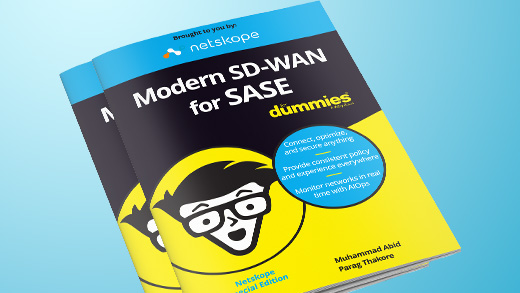
SD-WAN moderne pour les nuls en SASE
Cessez de rattraper votre retard en matière d'architecture de réseau

Identification des risques
Advanced Analytics transforme la façon dont les équipes chargées des opérations de sécurité utilisent les données pour mettre en œuvre de meilleures politiques. Avec Advanced Analytics, vous pouvez identifier les tendances, cibler les domaines préoccupants et utiliser les données pour prendre des mesures.


6 raisons pour lesquelles Universal ZTNA est une solution intelligente pour échapper au chaos du VPN et du NAC
Oubliez la complexité des VPN et du NAC. Découvrez comment Universal ZTNA sécurise chaque utilisateur et chaque périphérique à l'aide d'un cadre cohérent.

BDO associe la mise en réseau et la sécurité pour protéger une infrastructure adaptée à l'IA et à l'informatique dématérialisée.
Netskope obtient l'autorisation FedRAMP High Authorization
Choisissez Netskope GovCloud pour accélérer la transformation de votre agence.


The Lens

Découvrez les dernières nouvelles et opinions de l'équipe de Netskope. La lentille combine nos blogs, nos podcasts et nos études de cas, avec New contenu ajouté chaque semaine.

Support technique de Netskope
Nos ingénieurs d'assistance qualifiés sont répartis dans le monde entier et possèdent des expériences diverses dans les domaines de la sécurité du cloud, des réseaux, de la virtualisation, de la diffusion de contenu et du développement de logiciels, afin de garantir une assistance technique rapide et de qualité
L'IA sur la voie rapide
Le roadshow AI in the Fast Lane de Netskope réunit des professionnels de la sécurité pour discuter de la façon dont les organisations utilisent l'IA aujourd'hui et de la manière dont une stratégie de sécurité globale peut créer un modèle plus intelligent, plus sûr et à l'épreuve du temps.

Formation Netskope
Grâce à Netskope, devenez un expert de la sécurité du cloud. Nous sommes là pour vous aider à achever votre transformation digitale en toute sécurité, pour que vous puissiez profiter pleinement de vos applications cloud, Web et privées.



Maximisez le retour sur investissement de votre SASE avec les Business Value Services de Netskope
Commencez à prouver le retour sur investissement. Netskope BVS est un service de conseil gratuit qui quantifie l'impact financier et stratégique de votre transformation SASE.
Faisons de grandes choses ensemble

La stratégie de commercialisation de Netskope privilégie ses partenaires, ce qui leur permet de maximiser leur croissance et leur rentabilité, tout en transformant la sécurité des entreprises.