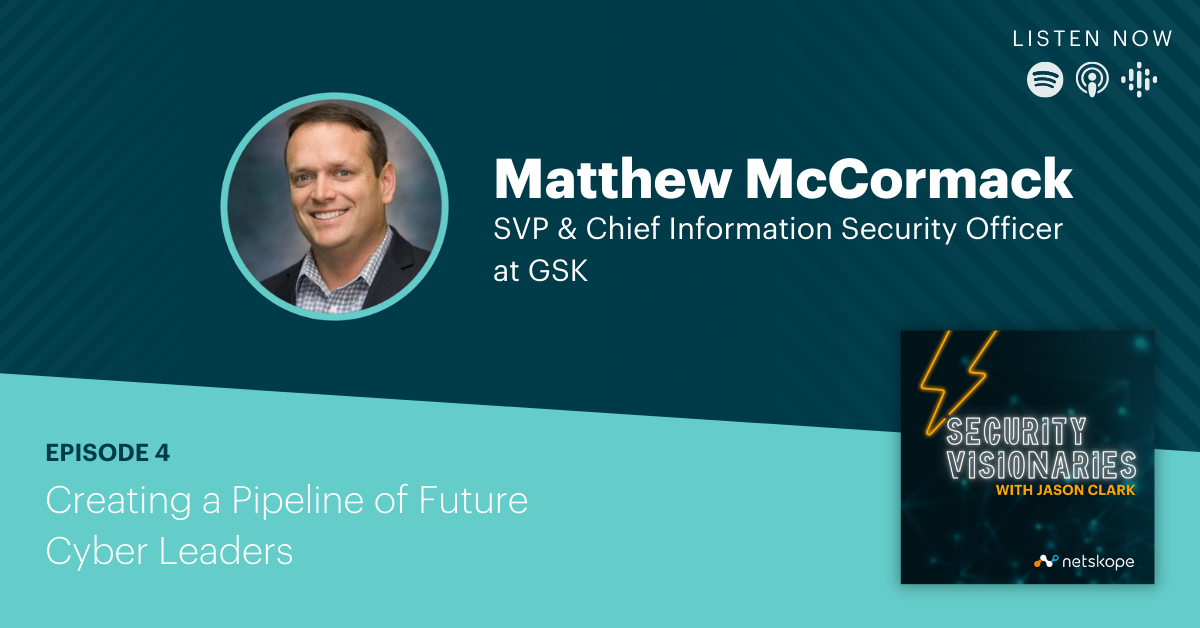
Matthew McCormack: How do we help create a pipeline of future cyber leaders, but then also that pyramid? How do we get millions more people into the discipline and just convince them that you don't have to be a com sci or an engineer to do this, right? All you have to be is inquisitive, right? What I want is I want somebody who looks at something and says, "Well, that's interesting. That doesn't make sense." "Let me figure out why," that's the person who would make a good security person. If you are somebody that looks at something and says, "I don't understand why it looks like that, but I'm going to go figure out why," then you're right for this field.
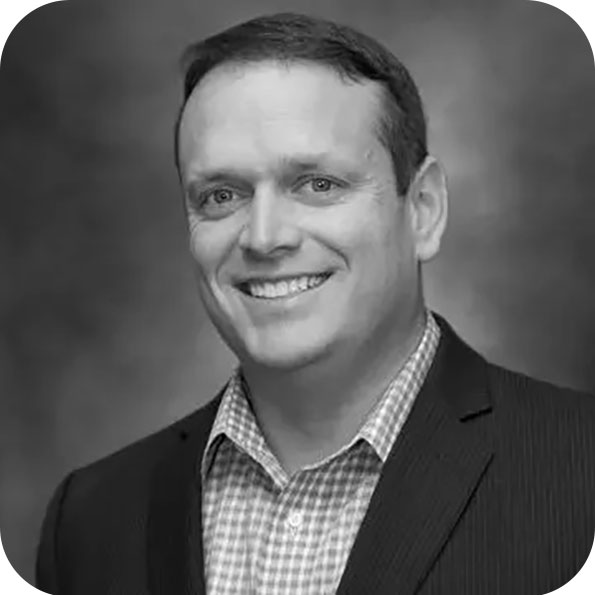
Narrator: Hello and welcome to Security Visionaries hosted by Jason Clark, CISO at Netskope. You just heard from today's guest, Matthew McCormack, senior vice president and chief information security officer at GSK. What happens in a world where the bad guys outnumber the good guys? If you're a modern day CISO, this thought keeps you up at night. Cyber criminals are multiplying at an astounding rate and CISOs are racing to build out teams that can help them stay ahead. A key part of the fight is developing the next generation of security leaders, but how do we, as an industry fill the ranks of tomorrow's cybersecurity forces? Luckily, that's just what today's guest is here to help us figure out. So before we dive into Matthews gameplan, here's a brief word from our sponsor.
Ad roll: The security visionaries podcast is powered by the team at Netskope. Netskope is the sassy leader offering everything you need to provide a fast, data-centric and cloud smart user experience at the speed of business today. Learn more at netskope.com.
Narrator: Without further ado, please enjoy episode four, Security Visionaries with Matthew McCormick, senior vice president and chief information security officer of GSK, and your host, Jason Clark.
Jason Clark: Welcome to security visionaries. I'm your host Jason Clark, CMO and chief strategy officer and chief security officer at Netskope. I'm joined today by my friend and special guests, Matt McCormack. Matt, how are you?
Matthew McCormack: Good. Jason, how are you?
Jason Clark: I am super fantastic, man. Really good to kick off this podcast series with you here. You are our second guest. I was with Emily Heath two weeks ago and that went really, really well. So, as we get started, what was your first job insecurity?
Matthew McCormack: So my first job insecurity, actually ironically, was in the Navy, right? When I was ROTC in college in my senior year of college, they did a physical on me before I joined the Navy and told me that I was red-green colorblind. And if you are familiar with boats at all, red and green are important colors out at sea. It tells you which way the ship is going. And so they basically told me I couldn't fly a plane or drive a ship and so they turned me into a cryptologist which in the '90s cryptology morphed into the early network security. So really wound up in this because of the Navy and because I was colorblind.
Jason Clark: That's an interesting story, right? I think my mind was similar to yours from joining the army, not because of colorblindness, right? But I was flying planes thinking I wanted to be a pilot, and while I was flying, the pilots all around me were professional airline pilots, I had left the Navy, and they said, "Listen, you don't want to be a professional airline pilot. Basically, I'm just driving a bus. Pick a different career." And I'm like, "Oh, wow, okay. You just crushed my dreams."
Matthew McCormack: That's some good advice though.
Jason Clark: It was great advice and I dumped into security. That was it. I was an analyst, right? So it changed my life.
Matthew McCormack: The world has changed, right? Now people are getting into security originally, right? Security originalists, where we all happened into it years ago.
Jason Clark: It was good. I think, Matt, I must say, we've known each other probably 15 years, right? I'd say we've helped be the foundation for this industry, right? We've started from this thing from zero together. It's been pretty cool to see.
Matthew McCormack: I know my first CISO role actually, I was the first CISO at the organization at Defense Intelligence Agency. There hadn't been one before. The idea that we're literally creating some of those first organizations and as scary as it sounds almost 20 years ago, but yes. I remember our first interactions, you were with Websense and Blue Coats back then and I was at the IRS and then everybody was doing their first web proxying and web filtering. 20+ years ago, network security was just packet filtering firewalls, right? And that was it. And then, VPNs and then all the web content filtering popped in and now here we are today.
Jason Clark: Just honestly, we were figuring it out, right? We were just having to invent, as we went and said, "Okay, let's see if this works," right? Which is a lot I think of contributes to a lot of the ways that we still need to do things today, right? And so tell us a little bit about your role at GSK.
Matthew McCormack: As the Chief Information Security Officer, I have all the traditional roles of a CISO, right? Whether it's the cybersecurity network defense, but I also have the GRC function, that governance, risk and compliance which was a global regulated pharmaceutical. There are a significant amount of regulations. And one of the interesting pieces when you're global is it's not just US regulations, right? It's regulations for every company or every country that you manufacture and sell in. And we are in a significant amount of countries. And so when you look at the governance, risk and compliance, its significance, right? As opposed to a previous role with a US tech company, where you're really only generally concerned about a limited amount of countries.
Matthew McCormack: Being with a pharmaceutical that manufactures and sells in almost every country, having to be aware of and pay attention to all these different compliance rules is different, right? Actually it's quite eye opening because you get to see the manner in which different countries approach the privacy of their citizens and how data is kept and maintained. And there's a wide variety, right? I say, as an American, we generally treat the privacy of our citizens toward the bottom of how many other countries do. A lot of countries are very protective of their citizens data. So it was a quite eye opening starting this role several years ago.
Jason Clark: How do you keep up with it at all? That is a lot, right? That's a lot of changing. It looks like it's changing faster than ever it has to me. So how do you stay on top of it?
Matthew McCormack: Well, I mean, for me, look, you have to have a team of people that know how to do it and know how to do it well but also global. You're not going to have a team of people sitting in one spot that's able to manage this global program. When you look at GRC, you have individual people. I'll have several people that are the only person on my team in that country, right? And their job is to maintain that relationship with the local governments and to keep us abreast of all the changes, but there's a lot of significant when you look at China security law, China privacy law, but there's also a lot of privacy discussions going on in India about changing laws over there.
Matthew McCormack: And so when you look at some of these larger countries, any changes in privacy laws can have impact on us globally, right? Because to comply with some of these laws, you may have to make some corporate level changes.
Jason Clark: So when you were at the DIA, you and I were talking a bunch about making this transition away from government and being a CISO in the enterprise. Maybe talk a little bit about how that transition was for you, what's different and also your advice to anybody making that change right now. Because there's definitely people I had seen that had tried and they'd come in a little too hard and it doesn't fit me. What was that like for you and what would you recommend for others?
Matthew McCormack: A router is a router and a person is a person, right? Those things aren't fundamentally different being federal and being commercial. I will say some of the differences, and I don't think anybody would be shocked by any of these, speed, right? The speed with which you can get things done. I know that there's been some changes to allow some more flexibility in the government, but really, the budgeting and the procurement process of the government was not necessarily built around doing things quickly, right? It's basically built around doing things fairly inequitably and not necessarily around being done with speed.
Matthew McCormack: And so for me, one of the bigger changes, and for me, it was 2012 when I went commercial, was my ability to buy and procure what I needed to do, but then also the speed with which in general, not always, but the speed with which I could hire, right? The ability to identify talents and grab that talent very quickly, commercially, was a big difference. Now, on the flipside is, I would say, generally, employees, when you're dealing with employees and some of the actions employees take and as CISOs, we're always having to keep an eye on what we allow employees to do and what we don't allow them to do.
Matthew McCormack: The attitude within the federal space, the government space, people were more comfortable with a command and control-type attitude. So if we say you can't do X, on your computer, people generally said, "Okay, we can't do X," right? Whereas commercially, it's more of a negotiation, right? Especially if you're with a global company, you're going to have unions, worker commissions in Europe. You're going to have different national laws that allow people to do things. There are certain countries that allow some minimal personal use of corporate by law, which you didn't have federally. You could say, "You cannot use your federal computer to do personal work." Boom, end of story, it's done.
Matthew McCormack: But when you have some of these countries that actually have laws that allow that to go on, we have to manage that. So from a personal point of view, some of the rules and requirements on what must be done and what can't be done, sometimes that was a little bit easier on the federal side because it makes the point it, but to make these decisions by edict was a little bit simpler.
Jason Clark: For you, it seems like there's a lot of similarities, right? And then there's some clear differences to me. It just seems very wide, right? Because other than the Army, I have not worked in the federal space.
Matthew McCormack: And the federal space is not all the same, right? So I've been military. I've done intelligence and also spent a number of years with the IRS, so essentially financial. And there's a wide swath of differences between those different areas within the federal space. It's not all ubiquitous. It doesn't all look the exact same, but I will say one of the questions you'd ask, "What advice would I have for somebody transitioning from federal to commercial?" and some of it would be around. Some of the comfort level they had around, as a CISO you make a decision, everybody will go do it. When you're moving into the commercial space is understanding that everything isn't a negotiation or is a negotiation, right?
Matthew McCormack: If there's something that you need to do from a security point of view you're going to have to sit down and make sure you've checked with your privacy officers, with your employment attorneys, within HR, within these different areas. You won't be able to get things done just because you said to do it, right? And understanding that it doesn't mean that you're not a smart person and people don't believe you, it just means that that is the process. Whereas I think federally, we were able to do more of the, "Because I said so." And when you come out into the commercial space, people will not blindly accept what you tell them.
Jason Clark: So just a little bit transition here, what do you believe is the fastest growing risk in cybersecurity, the catch, that people do not realize that CISOs or most security teams or executives do not realize is the fastest growing risk? What's sneaking up on everybody?
Matthew McCormack: I think a lot of people, they're aware now because of some of the stuff, but not understanding the full range and impact is third party. And third party, there's multiple pieces to third party. As companies have grown, they've moved away from all employees, obviously, to very heavy support from contractors or third parties to provide bodies to help you but then also software. And the rise in ransomware, which has affected so many different companies and some very large companies, and specifically when a service provider, somebody that is providing bodies to your company to help you complete a task and traditionally, you're allowing those bodies some manner of access into your company similar to a bad employee, when one of those service providers gets hit with ransomware, really step one is you killing all access for all employees of that company who are accessing your network, killing all remote accesses until the company has determined what the outcome of the ransomware was.
Matthew McCormack: And you realize the impact when all of a sudden 1,500 people can't show up to work on Monday because their company's got hit with ransomware. And you realize the depth of dependency you have on that service provider. And then the second piece to that is the software, right? Everybody knows SolarWinds there's in the press all these things. The idea that you're actually buying and deploying already compromised systems into your own network and it's not like these companies are going to provide us with the source code, so that we can go do our due diligence source code analysis, right? They're not going to do that.
Matthew McCormack: And so because of that, we're really dependent on the product security internal capabilities of these vendors. And so when I say third party, third party around service providers and bodies and then third party around compromised software. You just realize that dependency. At GSK, obviously, a pharmaceutical company, we specialize in making medicines and vaccines and things like that. You don't think about what impact your IT management software could have like SolarWinds, right? You bring SolarWinds in. SolarWinds gets hacked. You have to rip it out, and then all of a sudden, that can shut down a whole company.
Matthew McCormack: And so really understanding that impact of all these third parties and how you try to develop a response plan for what you do when something like this does happen.
Jason Clark: I think you just hit, I think, what is probably, I agree, the biggest. I think the two biggest is really the third party risk, but I'd say it's the fastest growing because of SaaS, right? It is the thing that the business is just lining up with or without IT. And mostly actually without IT in most organizations, they're just going, right? HR, marketing, etcetera and then also the growth of data, right? Data, you are the MC, right? And data is 3x'ing from 57 zettabytes to 107 zettabytes over the next four years. We don't see storage companies stocks, 3x'ing going through the roof, right? Because it's all moving to cloud or mobile. I think it's definitely those two, but double clicking on the third party risk which is at the fastest rate by count, it's definitely SaaS, right? Most companies have over a thousand. What are you seeing organizations do to get involved in that, the CISOs getting over with the business and helping them enabling that versus historically, we've always said, "Hey, no, we have one CRM. Don't go do anything else"?
Matthew McCormack: Anything dot-dot as a service is sometimes code for, "We're going to go around IT," right? And sometimes, look, I understand the reason people do this sometimes because when you go through the process, it takes longer in general, it's more expensive in general, but there's reasons for that, right? Especially in a regulated industry, you have to make sure you're complying. I am seeing a huge trend, especially in direct-to-consumer, right? People wanting to be able to sell directly to you, Jason, which sounds great on the surface and they can go out and find a vendor who will say, "Hey, I'll spin up a portal for you and you can sell your product directly to Jason." "Okay, great, and yes, that that'll drive sales, but do we have a PCI letter, right? Do we have the compliance set up? Are we storing credit cards? Are we storing personal data?" some of these different things.
Matthew McCormack: And so what we're having to do is trying to be proactive and reaching out. As we find some of these capabilities internally, not necessarily just the old days, take out the hammer, smash it and shut it down, but say, "Okay, you know what? If there is a requirement for direct to consumer and you've already built that portal, let's figure out if we can make it legitimate, right? Let's get all the PCI portion done for your direct-to-consumer portal and then let's make sure that other folks within the company going forward are using the one that you just built and not going out and building their own."
Matthew McCormack: So in the past, we probably would have said, "No, this is in violation. We don't do direct to consumer, blah, blah, blah," but now we're having to say, "Look, if you're doing it, statistically there's other people in the company who are either doing it or are going to want to do it, so let's figure out how we get this done." And I'll tell you, a good example and I'm not plugging anybody is when COVID hit here in the US, if you have children, all of a sudden, they popped on Zoom, and Zoom, within GSK, Zoom was not one of the approved collaboration tools. And there was tremendous pressure to allow us to start using that specific tool on our devices when we had not gone through the security due diligence on it. We didn't have a licensing and a privacy agreement with it, all of these things and a lot of pushback from our side on deploying a freeware tool into the environment, but yet, so many people were used to it because they'd all help their children with school and they gotten very comfortable with Zoom and they understood it.
Matthew McCormack: And so sometimes, you know saying no to something while it may make sense from a security point of view, security's in the gray. It's not black and white anymore. Security, you got to live in the gray. And so finding a way while we were not able to necessarily deploy it as quickly as a lot of people would have liked, in the end, we did allow ourselves to add that to the approved collaboration tools and then provide some level of support.
Jason Clark: That's a great example. To that, I get surprised, I'm almost so many companies a day, right? Definitely probably five CISOs a week and obviously many people trying to sell to my security program and listen to vendors, but how many people except the Zoom bots, the bots that come on and say, "Hey," that thing that's just hidden there, translating the whole conversation? Every time I say to the people that are hosting the call, and sometimes it's big companies, I'm just like, "Hey, do you realize that I just looked that company up and they're only 18 employees and they don't have a single person with a security title and their company and we're trusting this whole conversation to be sitting there in the cloud? You know that's probably a compromise, right?"
Jason Clark: And people are like, 'Oh, no, I hadn't thought about that." And sometimes it is security teams and I'm like, "Okay, this is, this is interesting, right?
Matthew McCormack: And I think that one in particular when there was a lot of initial push toward allowing use, allowing that app to be deployed onto our devices, laying out the reason like, "Look, we're not just being jerks to be jerks here, right? We're not just saying no for no reason. We had to lay out the reasons, right? That conversation is kept on commercial servers of another company. If you're discussing patient data or medical device or anything like that, we have no expectation of privacy. That data could be harvested, mined and sold to whoever because we don't have a privacy agreement."
Matthew McCormack: We, within security, have to do a better job sometimes of explaining the reasons. People have gotten smarter about technology and don't just blindly accept, "Well, the security guy said that's bad, so we're not going to do it." They want this. It's just families and kids, right? As my children get older, I need to start explain to them why a little bit more. It's not just a, "No, you can't do that." It's like, "You can't do that because XYZ," or, "Look, when you start driving, you need to start ... This is why you have to go around that corner slow because you can't see this thing over here and there's a blind curve." Same thing, right?
Matthew McCormack: When people are used to a technology, being told that they can't use it in this environment, they want to know why. And I think that's a legitimate question, right? It doesn't mean that they're questioning whether we know what we're doing as security professionals. It just means that there's a level of knowledge that they have, and because of that, they have some questions. And so we need to do a better job from the security side of being that explainer in chief.
Jason Clark: Well, there's two parts there, that's really important. So there's one which is translating this to real risks that I want to double click on. And then the second one we'll come to is, and you've made the statement that was published, it was that in the end where all CISOs are salesman which is true. And so I want to hit both of those around there's risk changing, it's happening fast. I actually say that we're in this upside down world of security where everything we protected is now out and now our security controls have to follow those users and those data everywhere they go and we still have to protect the old, right?
Jason Clark: So it's like enable the new, protect the old, but in this new model, one of the things that you talked about the past is frameworks, but are the frameworks really there and up to date to truly understand what my risk is in this new world versus let's say more threat modeling and actually thinking about the risk per each stage and what my control is and moving that to real time? How do you feel we are as an industry in that thinking and what suggestions do you have?
Matthew McCormack: Are the frameworks there? Yes. Are they as up to date as we need them? No. Right? I think we've all been very reliant on the goodness frameworks for a number of years. As you talked about at the beginning, as the world is turning dot-dot as a service and things like that, those frameworks have struggled to keep pace, right? But it doesn't mean that they're not still good foundational. But I think for us, your ability to grade how well you're doing and if you're actually delivering on the commitment you're making to your board, you have to have some kind of framework, right?
Matthew McCormack: We got our ICF, our internal control framework, and as most people, we use NIST as a baseline, but then we customize and there's reasons to do that. If you look at your internal audit capability, you want your framework matching up with theirs, so that if they're identifying an issue, it maps into yours. And if you're looking at your privacy organization, if you're looking at some of these different, your overall compliance team, not just your security compliance, but the folks that are responsible for us, your HIPAA, your Sarbanes-Oxley, all these other national compliance standards and GDPR, right? There's so many compliance and frameworks out there.
Matthew McCormack: You could fall down a black hole of perpetually trying to make the perfect framework. And I think for us, we decided NIST is our framework and we will do a small amount of customization because of our unique industry and draw the line there. I do you think you will forever be updating because when you're in 130 countries, there's always new frameworks and new standards, and new things like that that you'll just never be able to catch up on. We do try to review our framework annually, make changes, but I do think frameworks are great, frameworks are important. Threat modeling is very important as well and trying to go through ...
Matthew McCormack: If you got 130 factories, not all 130 factories are at the same level of importance. Maybe one makes your highest selling and highest revenue-producing product. Maybe another one is just packaging the cardboard that you need to put that product in. Both are important, but which one is the most critical, right? Can you get cardboard from somebody else? Most likely. Can somebody else make that specific medicine for you? Less likely. So your threat modeling, you have to go through and we are in a constant state of that, not just for our manufacturing facilities, but also our data stores and our data repositories, right? Where do we allow them to be replicated? Who owns them? Are they in the cloud? Are they not in the cloud?
Matthew McCormack: Maybe it makes economic sense to put something in the cloud and make it some sort of SaaS model. However, the risk of taking that data outside of your environment and putting it into the cloud outweighs the economics. We are in a constant state of threat modeling and risk return, right? For us, is the risk of doing that worth the return and I'll tell you, that is why and it's a topic, is within any good security organization, something everybody deals with, but from hiring, don't always go look for computer science people for your security organization, right? If you're doing this type of threat modeling, you better find yourself an accountant, right? You better find yourself somebody that understands money.
Matthew McCormack: And when you're looking at your insurance policy, your cyber insurance policies, computer science people are not the best people to be evaluating your insurance risk levels. And so when you look at your security organization, when you're doing threat modeling, don't just blindly accept that you're going to have people internally that know how to do that. Either you're going to have some really boutique specialist people and we're lucky to have a couple of really smart people to help us with that or go out and get it. Because if you try to do some of that threat modeling with people that are not specialists in that, your priorities for that year are going to be pretty messed up.
Jason Clark: Honestly, we hit sales, right? We said, "Oh, well, you need to be salesman," right? Well, I don't think no computer science majors aren't necessarily going to be your best salesman either, right? So I think depending on your domain and depending on what you're trying to grow helps nurture that talent gap that we have. What I'd say is I've had tremendous success actually getting kids out of high school. So with a Security Advisor Alliance, I go to high schools and middle schools and we're teaching them, "Hey, this is cyber." And they're all like, "Oh, I thought it was like rocket science. I didn't realize it was that easy. I didn't realize I had to be a guy in the basement with no lights on and just sliding pizzas under the door," right?
Jason Clark: And you'll see groups of girls almost always beating the guys in a capture the flag event. And they're like, "Oh, wow, I didn't even know this was an option for me, right? I'm good at this." And so I've been recruiting out of high school and it's not more like ... College isn't for everybody right away, right? I went into the Army instead of going to college at first. I actually didn't get my degree until I was 25. And the only reason I got my degree was they said, "Hey, we want to make you a CISO, but we can't unless you have your degree." And so what's your view on the places that you go and have you been grabbing kids out of high school at all, and also just in general, what's your view on things that other security and IT leaders can do for this talent gap?
Matthew McCormack: 100% right. So yeah, I speak it at high schools and it blows my mind. I just actually ... A goddaughter of mine, I did an interview with her because her high school has a cybersecurity program and she actually was doing a program where she has to code, but then she also has to pull down some products and look at them and evaluate the risk. And it blew my mind that they were doing that in their junior year of high school. I was really wowed, but then also like, "Thank God," right? Because to your point, the amount, whoever you talk to, whether it's three, five or seven, right? The million, 3, 5, 7 million people gap that we have in the cyberspace, expecting that we're going to be able to wait for these people to graduate university before they can enter the field is crazy, right?
Matthew McCormack: There's just too much demand. And also depending on that discipline, like I said, I'm with you. You don't fundamentally need that university degree. I taught you for years at a local community college and they had an associate's degree in cybersecurity where it was several years ago, but they were literally teaching these people how to use, I'm going to date myself, NetWitness and ArcSight and some of these tools, right? They were teaching them how to use them. And when I was still in the government at that point, I was hiring those people left and right because you can literally put them right in your sock.
Matthew McCormack: And so I think the idea that there's so many pieces to cybersecurity and then I'm not saying you want us operating on you, but it's become very much like medicine, right? The same way not all doctors are doctors, right? Some doctor is good at joints, some doctor is good at dermatology. You have all these different specialists who are good at their different things. Security has become that, right? You have your pen testers, you have your training specialists. If you're in a company the size of ours, you need program and project managers who can manage these multimillion dollar projects.
Matthew McCormack: So when I look at my team of 300-400 people, you have all different backgrounds, all different color stripes and I will say some of the best security people are psychology people. And when I talk at colleges, I routinely have people saying, "Oh, I'm studying psychology or sociology, but I'm really interested in cybersecurity." "Great because big portion of cybersecurity is what the user does." And people that understand how to influence users, when you're trying to get users to not click on a phishing, I can't just send an email saying, "Don't be dumb and click this link," I'm going to have to figure out how to influence people and those are psychology background people. And so there's all different types.
Jason Clark: I know a couple of CISOs that got a degree in psychology, right? Some really good CISOs and they actually started as psychologists and then made the transition. They don't talk about that too much, but that's one of the secrets to their success. In a way, I think it's all about being different, right? Being unique. Don't just follow the main road that everybody else has done. What can you bring to the table that nobody else has?
Matthew McCormack: Ed è in realtà una delle mie cose che mi danno fastidio, e ovviamente non sono un presidente universitario e non pretendo di esserlo. Uno dei miei problemi sono le università che inseriscono i loro programmi di cybersecurity nella scuola di ingegneria o scienze della comunicazione. È assolutamente il posto sbagliato per metterlo, giusto? La cybersecurity non è una disciplina informatica e nemmeno una disciplina ingegneristica. Sì, sono un ingegnere. Sì, sono cresciuto così. E questo ha influenzato il modo in cui sono diventato CISO? Sì, assolutamente e ho 100 colleghi che non sono ingegneri, giusto? È un business, giusto? La cybersecurity è una disciplina del rischio aziendale. E quando guardi una business school, "Ehi, avrai un corso di rischio, uno di assicurazioni, un corso di finanza, un corso di psicologia, un corso di comportamento organizzativo," quando ho preso il mio MBA, i corsi che ho seguito alla business school erano infinitamente più legati a quello che faccio quotidianamente rispetto a quelli che ho seguito a scuola di ingegneria. E quindi mi fa male vedere università inserire i loro programmi di informatica o sicurezza nelle scuole di informatica o ingegneria. Assolutamente il posto sbagliato.
Jason Clark: Sono d'accordo. Per me, l'MBA ha avuto un impatto significativo sul modo in cui vedevo la mia organizzazione, me stesso, la mia funzione. Onestamente, prendere la laurea triennale per me era insignificante, giusto? Non ha davvero cambiato la mia vita, a parte il fatto che sentivo che avevo la casella di spunta, ma prendere l'MBA mi ha cambiato il modo di pensare. Quindi era significativo. Se torniamo indietro, hai menzionato qualcosa sulle diverse funzioni: se dovessi andare a fare un downshift di carriera e accettare un ruolo da manager, per qualsiasi motivo, in quale ambito vorresti lavorare? Qual è il tuo dominio preferito della sicurezza in cui vorresti operare a quel livello?
Matthew McCormack: Allenamento, giusto? Perché penso che, per me, sia uno degli ambiti assolutamente più critici, giusto? 100%, perché è comunque il 90% dell'utente, giusto? Cosa fa l'individuo che mette in mostra? Spendiamo milioni e milioni e milioni in strumenti per impedire a qualcuno di fare qualcosa e poi guardo la percentuale del mio budget, è formazione ed è minuscola, ma è così che va. E c'è una tendenza nel settore della formazione alla sicurezza che cerca di diventare più interattiva, più attuale e strappata dai titoli dei giornali. È ancora molto difficile. Ma devo dire che uno degli ambiti ancora presenti nel campo della cybersecurity, che è ancora così aperto a un pensiero diverso di nuova generazione, è la formazione, giusto? Perché è così che interagisci con le persone.
Jason Clark: Esatto. E puoi misurarlo. Puoi misurare le differenze nei cambiamenti, giusto? Adoro questa risposta, Matt, perché ti dico che facendo molte interviste faccio questa domanda continuamente. Come sai, ho assunto oltre 50 CISO nella mia carriera, giusto? Ne ho 30 che lavorano per me in passato e ne ho ottenuti 10 qui a Netskope, ma faccio anche molti colloqui per CISO per CIO per loro conto, giusto? Tre CIO mi stanno chiedendo di partecipare al loro processo di selezione, che attualmente lavorano in aziende diverse, solo per amicizia. Quindi direi di aver intervistato centinaia di CISO a questo punto e ho fatto questa domanda ogni volta: sei il primo CISO che ha risposto alla formazione.
Matthew McCormack: Probabilmente perché sono un pessimo programmatore. Probabilmente è per questo. Non vorresti mai che ti programmassi nulla.
Jason Clark: Generalmente è o [inaudibile 00:37:07] oppure, "Oh, voglio stare vicino all'azienda," e più comunemente, "Voglio essere l'architetto. Voglio giocare con la tecnologia," o adoro il SOC. Adoro combattere, vero?" Ma ogni tanto, capita qualcuno che dice semplicemente: "Adoro le IR," e io penso: "Oh, c'è qualcosa che non va. Addio alla tua vita. Va bene se non hai mai una vacanza e lavori ogni venerdì sera. Va bene." Questa è la cosa davvero unica, Matt. Penso che sia importante e penso che sia chiunque stia ascoltando. In realtà è qualcosa su cui riflettere. Si può fare tantissimo con l'allenamento. C'è molta opportunità lì, soprattutto pensando di inventare la tecnologia. E so che tu ed io stiamo effettivamente facendo coaching a un'azienda che vuole fare qualcosa in questo ambito. Quindi dovremmo dedicare ancora un po' di tempo a parlarne.
Jason Clark: Quindi andando avanti, un po' più di tempo, alcune domande veloci per te, giusto? Se potessi fare qualcosa di diverso nella tua carriera o tornando ai tuoi ultimi ruoli CISO, cosa faresti diversamente?
Matthew McCormack: Onestamente, penso che il senno di poi sia ottimo, giusto? Penso che mi sarei aspettato che il SaaS ... Non pensavo sarebbe arrivato così in fretta. Pensavo di avere un po' più di tempo per preparare la mia infrastruttura per dot-dot come servizio. È arrivato più velocemente di quanto pensassi.
Jason Clark: È comune, giusto? In realtà la cosa divertente è che, come sai, Netskope è in quel settore, giusto? E quindi facciamo report per le persone. Arriviamo e la gente pensa di avere tipo 100 SaaS e poi quando glielo mostriamo ne hanno 1.000 o 2.000 e mostriamo loro quel numero di traffico e che il loro traffico SaaS è più della metà del traffico web. E ricevi proprio questo, "Oh, wow." E poi la frase successiva dice: "È successo in fretta", giusto? È perfetto. Ecco perché abbiamo parlato di te, hai detto che il rischio di terze parti è quello che cresce più rapidamente. E penso che questo sia guidato dal SaaS o dalla tecnologia integrata, come hai detto, l'esempio di SolarWinds. Quindi un altro colpo veloce, giusto? Com'è la pensione per te?
Matthew McCormack: Non ne ho idea. Non credo di esserci nemmeno lontanamente avvicinata, giusto? Sono stato nel governo troppo a lungo. Devo continuare a lavorare. Penso che per me, ciò che mi piace davvero fare al di fuori delle attività operative quotidiane di un CISO è che faccio da mentore a molti CISO, faccio lezioni in università e frequento scuole superiori. Penso che sia solo advocacy, e per me non è advocacy intorno a "Ecco come si proteggono le reti. Ecco perché la PlayStation di tuo figlio è a rischio." Advocacy intorno al semplice incoraggiare le persone a entrare nella disciplina. Accidenti, Jason, se guardi indietro all'UMA, è letteralmente cieca, ma una stupida fortuna, che siamo caduti in quello che penso sia stato appena benedetto, giusto?
Matthew McCormack: Se mi avessi detto nel '97, quando ho iniziato a fare questo, che la cybersecurity sarebbe diventata l'industria che è, non ti avrei mai creduto. È solo un aspetto di pura fortuna cieca. Ma ora dobbiamo averne di più e ovviamente CISO, giusto? Perché ci sono milioni di aziende, non milioni di CISO. Come possiamo aiutare a creare un canale di futuri leader nel settore cyber, ma anche quella piramide? Come facciamo a far entrare milioni di persone in più nella disciplina e convincerle che non serve essere un informatico o un ingegnere per fare questo, giusto? Devi solo essere curioso, giusto?
Matthew McCormack: Quello che voglio è qualcuno che guardi qualcosa e dica: "Beh, è interessante. Non ha senso. Lascia che capisca il perché." Quella è la persona che farebbe un buon agente di sicurezza. Se sei uno che guarda qualcosa e dice: "Non capisco perché sembri così, ma vado a capire perché", allora sei adatto a questo campo, giusto? Quindi, come facciamo a far entrare più persone? Quando avrò finito l'attività, quando sarò pronto a spegnere il telefono nei weekend e fare cose del genere, immagino che passerò molto tempo a cercare di convincere o educare i giovani a entrare nella disciplina.
Jason Clark: Lo adoro. In realtà, ovviamente, stai già iniziando, lo stai facendo ora, giusto? Lo farai solo di più. Penso che tu abbia parlato dello spazio e di come ci siamo entrati. Onestamente, ho pensato di lasciare la sicurezza nel 2000, giusto? Ogni volta che è successo il virus ILOVEYOU, ho pensato: "Abbiamo già risolto questa cosa." Ho detto: "È AV. Abbiamo filtri antispam, giusto?" Stavo letteralmente iniziando a annoiarmi un po' e ho iniziato a prendere il mio CCIE. Ho superato l'esame scritto. Ho detto: "Oh, la voce è il futuro, giusto? Il voice over IP potrebbe essere la mia carriera." Ero letteralmente preoccupato che ci sarebbe stato un vicolo cieco sulla sicurezza e poi il mondo intero sarebbe cambiato, giusto?
Matthew McCormack: Beh, guarda ora dopo il COVID, quando le aziende passano dal 2% da remoto al 98% da remoto nel giro di un mese, e eccoci qui, per quanto possa sembrare folle, finiremo per spingere due anni di COVID e lavoro da remoto. Questo ha cambiato radicalmente il mondo, ovviamente. Basta guardare il valore di mercato delle aziende che offrono strumenti di collaborazione online, giusto? Attraverso il soffitto. Cosa fai quando non hai persone negli uffici? E non è solo, "Come posso mettere in sicurezza le loro transazioni?" Ora torni all'addestramento di loro. Come li formi quando non vengono in ufficio? Come fai a farli fare... È più complicato consegnare il portatile quando esci e non sei in ufficio.
Matthew McCormack: All'improvviso, la sicurezza ha preso un altro cambiamento e l'industria si è spostata, come hai detto tu, su "Va bene, è uscito il virus ILOVEYOU. Sì, abbiamo risolto il problema. Abbiamo AV. E adesso?" Dio, se ogni anno il nostro settore non cambiasse, giusto? Mobile l'ha spostato. Cloud la spostò. Ora il lavoro da remoto ha cambiato la situazione. E ci sarà un altro cambiamento tra due anni. Penso che uno dei motivi per cui siamo rimasti nella sicurezza, è che ogni anno è qualcosa di diverso.
Jason Clark: Quindi, ultime tre domande qui, ma sono risposte rapide, 15, 20 secondi, giusto? Tre domande. Quindi, la prima domanda è: qual è un talento o una competenza che non è nel tuo curriculum?
Matthew McCormack: Non è nel mio curriculum. Vuoi dire che l'ho fatto, ma non lo metto nel curriculum?
Jason Clark: Che l'hai fatto, potrebbe essere un hobby, giusto?
Matthew McCormack: Sì, quindi adoro costruire, giusto? Che sia un muro di contenimento. Quando è arrivato il COVID, ho costruito una casa sull'albero per i miei figli che ho evitato di passare elettricità e acqua, ma a parte questo, probabilmente è essenzialmente una casetta.
Jason Clark: È davvero bello. Ok, secondo, se non fossi in rete e sicurezza, se non facessi quello che fai, in quale altro settore saresti andato?
Matthew McCormack: In realtà all'università ero ingegneria industriale, che progettava fabbriche, ricerca operativa e statistica. Mi piace perché prende le cose non strutturate, le pulisce attraverso la sala operatoria. Puff, questo è quello che il tuo ... Adoro entrare nelle fabbriche e vedere come si possono modernizzare le macchine, spostare tutte le cose. Questo mi affascinava, ma la Marina disse: "Puff, saresti un crittologo migliore," ed eccomi qui, ma mi piacerebbe davvero o apprezzavo molto la progettazione di fabbrica e la statistica.
Jason Clark: Sembri che sappia come si capisce con i tuoi figli, vero? Puoi iniziare a guardarli e già puoi vedere i talenti e le abilità. Quindi ho il mio figlio di quattro anni, lui è il costruttore, giusto? È l'unico che costruisce questi enormi set LEGO a quattro anni e da solo, si concentra su di essi e costruisce cose in giardino.
Matthew McCormack: Anch'io ne ho uno che è uguale. È curioso che da molto giovane si vedano esattamente quegli stessi tratti, che i miei genitori mi hanno detto: "Noi l'abbiamo fatto, vero?" E quindi sì, è interessante anche quello. Lo so da allora, 13 anni ormai, ma lo so fin da piccolo che sarebbe diventato un ingegnere. Lo sapevo e basta.
Jason Clark: Anche per te, giusto? Meccanico, pratico, anche un ingegnere in qualche modo. L'altro è più simile a quello di uno scienziato. Vuole mescolare sostanze chimiche e cose insieme, giusto? E poi l'ultima domanda veloce è il consiglio principale se qualcuno ti chiama ed è un CISO alla prima volta.
Matthew McCormack: E questo è un consiglio che do, come te, sono orgoglioso del fatto di aver contribuito a far crescere molte persone che ora ricoprono ruoli CISO. E quindi uno dei pezzi che do sempre loro è: "Sei nel tuo lavoro perché sei intelligente. Le persone con cui sei seduto in quella stanza per la riunione lavorano perché sono intelligenti. Non sei la persona più intelligente nella stanza. Prendi consigli dagli altri presenti. E la sicurezza è una disciplina collaborativa, giusto? Dovrai lavorare con il CTO, il CIO, il CFO, il general counsel e tutte queste diverse discipline.
Matthew McCormack: Quindi imparare a parlare le loro lingue, giusto? Impara a parlare avvocato. Impara a scrivere un business case perché se devi chiedere milioni di dollari per un'iniziativa, il CFO vorrà sapere quale sarà il suo rendimento. Comprendi che tutti quelli con cui interagirai sono i loro colleghi perché sono anche molto intelligenti. Quindi affronta sapendo che sei una delle tante persone intelligenti, non sei l'unica persona intelligente."
Jason Clark: Lo adoro. Penso che sia un buon consiglio. Una volta, alla mia prima riunione del consiglio a 26 anni come CISO, sono entrato e ero nervoso. Tremavo. E il presidente di questa azienda disse: "Figlio, vieni qui," e disse: "Senti, sei tu l'esperto qui, giusto? Sono persone intelligenti, sì, ma sono in consiglio, ma non conoscono cyber come tu sai cyber. Sei tu l'esperto. Possiedi le tue cose, giusto?" Poi si è girato e ha detto: "E ho un'altra cosa per te." E lui ha detto: "Ecco due shot di Johnnie Blue." E lui ha detto: "Sarà tuo amico. Torneremo. Partirete tra 15 minuti." Io ho pensato: "Ok, ha funzionato." E tra l'altro, non l'ho mai avuto in vita mia.
Matthew McCormack: E penso che tutti abbiamo delle storie. E quello che ho scoperto è che di solito ho una simile di quando ero all'IRS, dove cercavo di sostenere un'iniziativa New cyber e il responsabile dell'unità di business con 26.000 persone coinvolse ha detto, "Ehi," ha iniziato la discussione con, "Figlio," e quello che ho scoperto nella mia carriera è che ogni volta che qualcuno inizia una discussione con, "Figlio," di solito viene seguito da qualche consiglio, giusto? Ti dice qualcosa che al momento non sai. Quindi l'ho sicuramente ascoltata. Ogni volta che qualcuno inizia, è tutto qui. Succede meno ora che sono invecchiato. Ma ogni volta che qualcuno iniziava con un "Figlio", sapevo che quello che sarebbe successo era qualcosa che dovevo ascoltare.
Jason Clark: Esattamente. Da quando eri bambino, giusto? Comunque, abbiamo finito il tempo, ma Matt, è stato davvero fantastico. Grazie mille. È stato divertente. Penso che ci siano state molte ottime intuizioni per tutti là fuori e hanno conosciuto anche meglio te. Rifacciamolo e torniamo sicuramente a parlare di più delle cose che possiamo fare insieme per l'industria.
Matthew McCormack: Mi sembra una buona idea. Grazie, Jason. Apprezzo davvero. È stato molto divertente.
Pubblicità: Il podcast dei visionari della sicurezza è gestito dal team di Netskope. Cerchi la giusta piattaforma di sicurezza cloud per rendere possibile il tuo percorso di trasformazione digitale? Il Netskope Security Cloud ti aiuta a connettere gli utenti direttamente a internet in modo sicuro e rapido da qualsiasi dispositivo a qualsiasi applicazione. Scopri di più su Netskope.com.
Narratore: Grazie per aver ascoltato Security Visionaries. Prenditi un momento per valutare e recensire lo show e condividerlo con qualcuno che conosci e che potrebbe apprezzarlo. Restate sintonizzati per gli episodi che usciranno ogni due settimane e ci vediamo nel prossimo.
















)