Matthew McCormack: How do we help create a pipeline of future cyber leaders, but then also that pyramid? How do we get millions more people into the discipline and just convince them that you don't have to be a com sci or an engineer to do this, right? All you have to be is inquisitive, right? What I want is I want somebody who looks at something and says, "Well, that's interesting. That doesn't make sense." "Let me figure out why," that's the person who would make a good security person. If you are somebody that looks at something and says, "I don't understand why it looks like that, but I'm going to go figure out why," then you're right for this field.
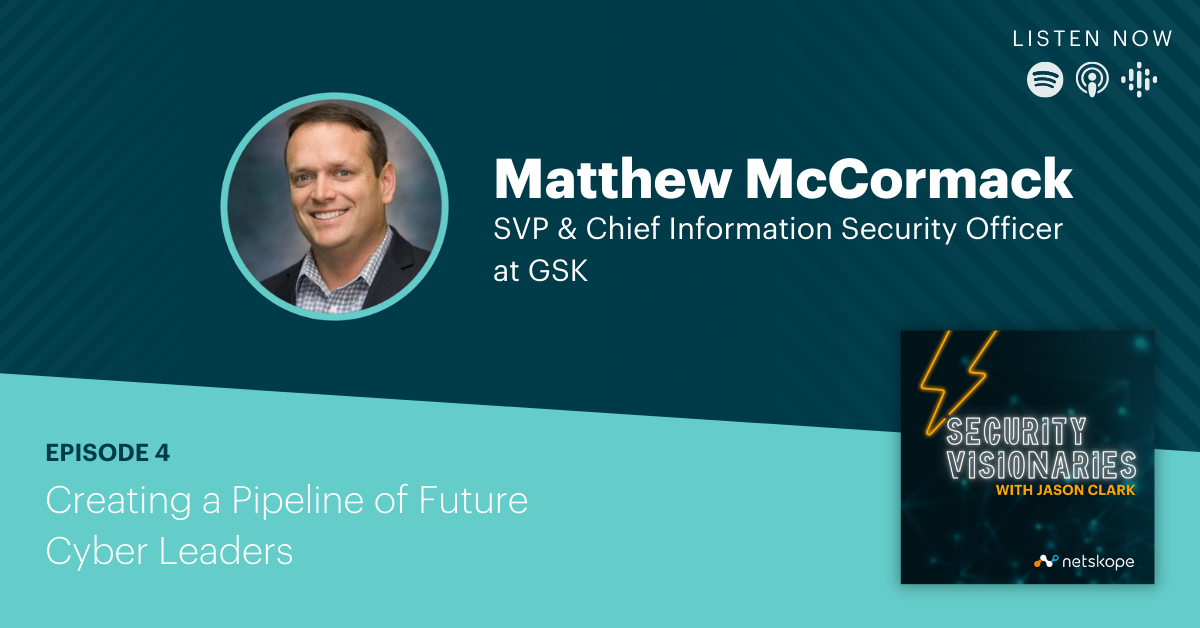
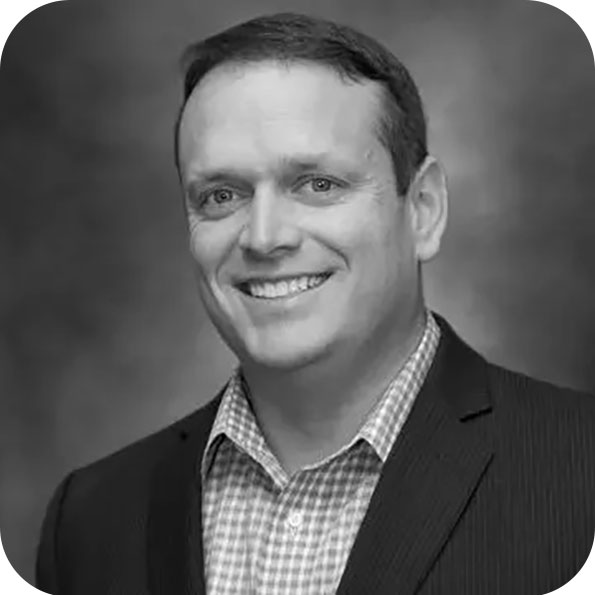
Narrator: Hello and welcome to Security Visionaries hosted by Jason Clark, CISO at Netskope. You just heard from today's guest, Matthew McCormack, senior vice president and chief information security officer at GSK. What happens in a world where the bad guys outnumber the good guys? If you're a modern day CISO, this thought keeps you up at night. Cyber criminals are multiplying at an astounding rate and CISOs are racing to build out teams that can help them stay ahead. A key part of the fight is developing the next generation of security leaders, but how do we, as an industry fill the ranks of tomorrow's cybersecurity forces? Luckily, that's just what today's guest is here to help us figure out. So before we dive into Matthews gameplan, here's a brief word from our sponsor.
Ad roll: The security visionaries podcast is powered by the team at Netskope. Netskope is the sassy leader offering everything you need to provide a fast, data-centric and cloud smart user experience at the speed of business today. Learn more at netskope.com.
Narrator: Without further ado, please enjoy episode four, Security Visionaries with Matthew McCormick, senior vice president and chief information security officer of GSK, and your host, Jason Clark.
Jason Clark: Welcome to security visionaries. I'm your host Jason Clark, CMO and chief strategy officer and chief security officer at Netskope. I'm joined today by my friend and special guests, Matt McCormack. Matt, how are you?
Matthew McCormack: Good. Jason, how are you?
Jason Clark: I am super fantastic, man. Really good to kick off this podcast series with you here. You are our second guest. I was with Emily Heath two weeks ago and that went really, really well. So, as we get started, what was your first job insecurity?
Matthew McCormack: So my first job insecurity, actually ironically, was in the Navy, right? When I was ROTC in college in my senior year of college, they did a physical on me before I joined the Navy and told me that I was red-green colorblind. And if you are familiar with boats at all, red and green are important colors out at sea. It tells you which way the ship is going. And so they basically told me I couldn't fly a plane or drive a ship and so they turned me into a cryptologist which in the '90s cryptology morphed into the early network security. So really wound up in this because of the Navy and because I was colorblind.
Jason Clark: That's an interesting story, right? I think my mind was similar to yours from joining the army, not because of colorblindness, right? But I was flying planes thinking I wanted to be a pilot, and while I was flying, the pilots all around me were professional airline pilots, I had left the Navy, and they said, "Listen, you don't want to be a professional airline pilot. Basically, I'm just driving a bus. Pick a different career." And I'm like, "Oh, wow, okay. You just crushed my dreams."
Matthew McCormack: That's some good advice though.
Jason Clark: It was great advice and I dumped into security. That was it. I was an analyst, right? So it changed my life.
Matthew McCormack: The world has changed, right? Now people are getting into security originally, right? Security originalists, where we all happened into it years ago.
Jason Clark: It was good. I think, Matt, I must say, we've known each other probably 15 years, right? I'd say we've helped be the foundation for this industry, right? We've started from this thing from zero together. It's been pretty cool to see.
Matthew McCormack: I know my first CISO role actually, I was the first CISO at the organization at Defense Intelligence Agency. There hadn't been one before. The idea that we're literally creating some of those first organizations and as scary as it sounds almost 20 years ago, but yes. I remember our first interactions, you were with Websense and Blue Coats back then and I was at the IRS and then everybody was doing their first web proxying and web filtering. 20+ years ago, network security was just packet filtering firewalls, right? And that was it. And then, VPNs and then all the web content filtering popped in and now here we are today.
Jason Clark: Just honestly, we were figuring it out, right? We were just having to invent, as we went and said, "Okay, let's see if this works," right? Which is a lot I think of contributes to a lot of the ways that we still need to do things today, right? And so tell us a little bit about your role at GSK.
Matthew McCormack: As the Chief Information Security Officer, I have all the traditional roles of a CISO, right? Whether it's the cybersecurity network defense, but I also have the GRC function, that governance, risk and compliance which was a global regulated pharmaceutical. There are a significant amount of regulations. And one of the interesting pieces when you're global is it's not just US regulations, right? It's regulations for every company or every country that you manufacture and sell in. And we are in a significant amount of countries. And so when you look at the governance, risk and compliance, its significance, right? As opposed to a previous role with a US tech company, where you're really only generally concerned about a limited amount of countries.
Matthew McCormack: Being with a pharmaceutical that manufactures and sells in almost every country, having to be aware of and pay attention to all these different compliance rules is different, right? Actually it's quite eye opening because you get to see the manner in which different countries approach the privacy of their citizens and how data is kept and maintained. And there's a wide variety, right? I say, as an American, we generally treat the privacy of our citizens toward the bottom of how many other countries do. A lot of countries are very protective of their citizens data. So it was a quite eye opening starting this role several years ago.
Jason Clark: How do you keep up with it at all? That is a lot, right? That's a lot of changing. It looks like it's changing faster than ever it has to me. So how do you stay on top of it?
Matthew McCormack: Well, I mean, for me, look, you have to have a team of people that know how to do it and know how to do it well but also global. You're not going to have a team of people sitting in one spot that's able to manage this global program. When you look at GRC, you have individual people. I'll have several people that are the only person on my team in that country, right? And their job is to maintain that relationship with the local governments and to keep us abreast of all the changes, but there's a lot of significant when you look at China security law, China privacy law, but there's also a lot of privacy discussions going on in India about changing laws over there.
Matthew McCormack: And so when you look at some of these larger countries, any changes in privacy laws can have impact on us globally, right? Because to comply with some of these laws, you may have to make some corporate level changes.
Jason Clark: So when you were at the DIA, you and I were talking a bunch about making this transition away from government and being a CISO in the enterprise. Maybe talk a little bit about how that transition was for you, what's different and also your advice to anybody making that change right now. Because there's definitely people I had seen that had tried and they'd come in a little too hard and it doesn't fit me. What was that like for you and what would you recommend for others?
Matthew McCormack: A router is a router and a person is a person, right? Those things aren't fundamentally different being federal and being commercial. I will say some of the differences, and I don't think anybody would be shocked by any of these, speed, right? The speed with which you can get things done. I know that there's been some changes to allow some more flexibility in the government, but really, the budgeting and the procurement process of the government was not necessarily built around doing things quickly, right? It's basically built around doing things fairly inequitably and not necessarily around being done with speed.
Matthew McCormack: And so for me, one of the bigger changes, and for me, it was 2012 when I went commercial, was my ability to buy and procure what I needed to do, but then also the speed with which in general, not always, but the speed with which I could hire, right? The ability to identify talents and grab that talent very quickly, commercially, was a big difference. Now, on the flipside is, I would say, generally, employees, when you're dealing with employees and some of the actions employees take and as CISOs, we're always having to keep an eye on what we allow employees to do and what we don't allow them to do.
Matthew McCormack: The attitude within the federal space, the government space, people were more comfortable with a command and control-type attitude. So if we say you can't do X, on your computer, people generally said, "Okay, we can't do X," right? Whereas commercially, it's more of a negotiation, right? Especially if you're with a global company, you're going to have unions, worker commissions in Europe. You're going to have different national laws that allow people to do things. There are certain countries that allow some minimal personal use of corporate by law, which you didn't have federally. You could say, "You cannot use your federal computer to do personal work." Boom, end of story, it's done.
Matthew McCormack: But when you have some of these countries that actually have laws that allow that to go on, we have to manage that. So from a personal point of view, some of the rules and requirements on what must be done and what can't be done, sometimes that was a little bit easier on the federal side because it makes the point it, but to make these decisions by edict was a little bit simpler.
Jason Clark: For you, it seems like there's a lot of similarities, right? And then there's some clear differences to me. It just seems very wide, right? Because other than the Army, I have not worked in the federal space.
Matthew McCormack: And the federal space is not all the same, right? So I've been military. I've done intelligence and also spent a number of years with the IRS, so essentially financial. And there's a wide swath of differences between those different areas within the federal space. It's not all ubiquitous. It doesn't all look the exact same, but I will say one of the questions you'd ask, "What advice would I have for somebody transitioning from federal to commercial?" and some of it would be around. Some of the comfort level they had around, as a CISO you make a decision, everybody will go do it. When you're moving into the commercial space is understanding that everything isn't a negotiation or is a negotiation, right?
Matthew McCormack: If there's something that you need to do from a security point of view you're going to have to sit down and make sure you've checked with your privacy officers, with your employment attorneys, within HR, within these different areas. You won't be able to get things done just because you said to do it, right? And understanding that it doesn't mean that you're not a smart person and people don't believe you, it just means that that is the process. Whereas I think federally, we were able to do more of the, "Because I said so." And when you come out into the commercial space, people will not blindly accept what you tell them.
Jason Clark: So just a little bit transition here, what do you believe is the fastest growing risk in cybersecurity, the catch, that people do not realize that CISOs or most security teams or executives do not realize is the fastest growing risk? What's sneaking up on everybody?
Matthew McCormack: I think a lot of people, they're aware now because of some of the stuff, but not understanding the full range and impact is third party. And third party, there's multiple pieces to third party. As companies have grown, they've moved away from all employees, obviously, to very heavy support from contractors or third parties to provide bodies to help you but then also software. And the rise in ransomware, which has affected so many different companies and some very large companies, and specifically when a service provider, somebody that is providing bodies to your company to help you complete a task and traditionally, you're allowing those bodies some manner of access into your company similar to a bad employee, when one of those service providers gets hit with ransomware, really step one is you killing all access for all employees of that company who are accessing your network, killing all remote accesses until the company has determined what the outcome of the ransomware was.
Matthew McCormack: And you realize the impact when all of a sudden 1,500 people can't show up to work on Monday because their company's got hit with ransomware. And you realize the depth of dependency you have on that service provider. And then the second piece to that is the software, right? Everybody knows SolarWinds there's in the press all these things. The idea that you're actually buying and deploying already compromised systems into your own network and it's not like these companies are going to provide us with the source code, so that we can go do our due diligence source code analysis, right? They're not going to do that.
Matthew McCormack: And so because of that, we're really dependent on the product security internal capabilities of these vendors. And so when I say third party, third party around service providers and bodies and then third party around compromised software. You just realize that dependency. At GSK, obviously, a pharmaceutical company, we specialize in making medicines and vaccines and things like that. You don't think about what impact your IT management software could have like SolarWinds, right? You bring SolarWinds in. SolarWinds gets hacked. You have to rip it out, and then all of a sudden, that can shut down a whole company.
Matthew McCormack: And so really understanding that impact of all these third parties and how you try to develop a response plan for what you do when something like this does happen.
Jason Clark: I think you just hit, I think, what is probably, I agree, the biggest. I think the two biggest is really the third party risk, but I'd say it's the fastest growing because of SaaS, right? It is the thing that the business is just lining up with or without IT. And mostly actually without IT in most organizations, they're just going, right? HR, marketing, etcetera and then also the growth of data, right? Data, you are the MC, right? And data is 3x'ing from 57 zettabytes to 107 zettabytes over the next four years. We don't see storage companies stocks, 3x'ing going through the roof, right? Because it's all moving to cloud or mobile. I think it's definitely those two, but double clicking on the third party risk which is at the fastest rate by count, it's definitely SaaS, right? Most companies have over a thousand. What are you seeing organizations do to get involved in that, the CISOs getting over with the business and helping them enabling that versus historically, we've always said, "Hey, no, we have one CRM. Don't go do anything else"?
Matthew McCormack: Anything dot-dot as a service is sometimes code for, "We're going to go around IT," right? And sometimes, look, I understand the reason people do this sometimes because when you go through the process, it takes longer in general, it's more expensive in general, but there's reasons for that, right? Especially in a regulated industry, you have to make sure you're complying. I am seeing a huge trend, especially in direct-to-consumer, right? People wanting to be able to sell directly to you, Jason, which sounds great on the surface and they can go out and find a vendor who will say, "Hey, I'll spin up a portal for you and you can sell your product directly to Jason." "Okay, great, and yes, that that'll drive sales, but do we have a PCI letter, right? Do we have the compliance set up? Are we storing credit cards? Are we storing personal data?" some of these different things.
Matthew McCormack: And so what we're having to do is trying to be proactive and reaching out. As we find some of these capabilities internally, not necessarily just the old days, take out the hammer, smash it and shut it down, but say, "Okay, you know what? If there is a requirement for direct to consumer and you've already built that portal, let's figure out if we can make it legitimate, right? Let's get all the PCI portion done for your direct-to-consumer portal and then let's make sure that other folks within the company going forward are using the one that you just built and not going out and building their own."
Matthew McCormack: So in the past, we probably would have said, "No, this is in violation. We don't do direct to consumer, blah, blah, blah," but now we're having to say, "Look, if you're doing it, statistically there's other people in the company who are either doing it or are going to want to do it, so let's figure out how we get this done." And I'll tell you, a good example and I'm not plugging anybody is when COVID hit here in the US, if you have children, all of a sudden, they popped on Zoom, and Zoom, within GSK, Zoom was not one of the approved collaboration tools. And there was tremendous pressure to allow us to start using that specific tool on our devices when we had not gone through the security due diligence on it. We didn't have a licensing and a privacy agreement with it, all of these things and a lot of pushback from our side on deploying a freeware tool into the environment, but yet, so many people were used to it because they'd all help their children with school and they gotten very comfortable with Zoom and they understood it.
Matthew McCormack: And so sometimes, you know saying no to something while it may make sense from a security point of view, security's in the gray. It's not black and white anymore. Security, you got to live in the gray. And so finding a way while we were not able to necessarily deploy it as quickly as a lot of people would have liked, in the end, we did allow ourselves to add that to the approved collaboration tools and then provide some level of support.
Jason Clark: That's a great example. To that, I get surprised, I'm almost so many companies a day, right? Definitely probably five CISOs a week and obviously many people trying to sell to my security program and listen to vendors, but how many people except the Zoom bots, the bots that come on and say, "Hey," that thing that's just hidden there, translating the whole conversation? Every time I say to the people that are hosting the call, and sometimes it's big companies, I'm just like, "Hey, do you realize that I just looked that company up and they're only 18 employees and they don't have a single person with a security title and their company and we're trusting this whole conversation to be sitting there in the cloud? You know that's probably a compromise, right?"
Jason Clark: And people are like, 'Oh, no, I hadn't thought about that." And sometimes it is security teams and I'm like, "Okay, this is, this is interesting, right?
Matthew McCormack: And I think that one in particular when there was a lot of initial push toward allowing use, allowing that app to be deployed onto our devices, laying out the reason like, "Look, we're not just being jerks to be jerks here, right? We're not just saying no for no reason. We had to lay out the reasons, right? That conversation is kept on commercial servers of another company. If you're discussing patient data or medical device or anything like that, we have no expectation of privacy. That data could be harvested, mined and sold to whoever because we don't have a privacy agreement."
Matthew McCormack: We, within security, have to do a better job sometimes of explaining the reasons. People have gotten smarter about technology and don't just blindly accept, "Well, the security guy said that's bad, so we're not going to do it." They want this. It's just families and kids, right? As my children get older, I need to start explain to them why a little bit more. It's not just a, "No, you can't do that." It's like, "You can't do that because XYZ," or, "Look, when you start driving, you need to start ... This is why you have to go around that corner slow because you can't see this thing over here and there's a blind curve." Same thing, right?
Matthew McCormack: When people are used to a technology, being told that they can't use it in this environment, they want to know why. And I think that's a legitimate question, right? It doesn't mean that they're questioning whether we know what we're doing as security professionals. It just means that there's a level of knowledge that they have, and because of that, they have some questions. And so we need to do a better job from the security side of being that explainer in chief.
Jason Clark: Well, there's two parts there, that's really important. So there's one which is translating this to real risks that I want to double click on. And then the second one we'll come to is, and you've made the statement that was published, it was that in the end where all CISOs are salesman which is true. And so I want to hit both of those around there's risk changing, it's happening fast. I actually say that we're in this upside down world of security where everything we protected is now out and now our security controls have to follow those users and those data everywhere they go and we still have to protect the old, right?
Jason Clark: So it's like enable the new, protect the old, but in this new model, one of the things that you talked about the past is frameworks, but are the frameworks really there and up to date to truly understand what my risk is in this new world versus let's say more threat modeling and actually thinking about the risk per each stage and what my control is and moving that to real time? How do you feel we are as an industry in that thinking and what suggestions do you have?
Matthew McCormack: Are the frameworks there? Yes. Are they as up to date as we need them? No. Right? I think we've all been very reliant on the goodness frameworks for a number of years. As you talked about at the beginning, as the world is turning dot-dot as a service and things like that, those frameworks have struggled to keep pace, right? But it doesn't mean that they're not still good foundational. But I think for us, your ability to grade how well you're doing and if you're actually delivering on the commitment you're making to your board, you have to have some kind of framework, right?
Matthew McCormack: We got our ICF, our internal control framework, and as most people, we use NIST as a baseline, but then we customize and there's reasons to do that. If you look at your internal audit capability, you want your framework matching up with theirs, so that if they're identifying an issue, it maps into yours. And if you're looking at your privacy organization, if you're looking at some of these different, your overall compliance team, not just your security compliance, but the folks that are responsible for us, your HIPAA, your Sarbanes-Oxley, all these other national compliance standards and GDPR, right? There's so many compliance and frameworks out there.
Matthew McCormack: You could fall down a black hole of perpetually trying to make the perfect framework. And I think for us, we decided NIST is our framework and we will do a small amount of customization because of our unique industry and draw the line there. I do you think you will forever be updating because when you're in 130 countries, there's always new frameworks and new standards, and new things like that that you'll just never be able to catch up on. We do try to review our framework annually, make changes, but I do think frameworks are great, frameworks are important. Threat modeling is very important as well and trying to go through ...
Matthew McCormack: If you got 130 factories, not all 130 factories are at the same level of importance. Maybe one makes your highest selling and highest revenue-producing product. Maybe another one is just packaging the cardboard that you need to put that product in. Both are important, but which one is the most critical, right? Can you get cardboard from somebody else? Most likely. Can somebody else make that specific medicine for you? Less likely. So your threat modeling, you have to go through and we are in a constant state of that, not just for our manufacturing facilities, but also our data stores and our data repositories, right? Where do we allow them to be replicated? Who owns them? Are they in the cloud? Are they not in the cloud?
Matthew McCormack: Maybe it makes economic sense to put something in the cloud and make it some sort of SaaS model. However, the risk of taking that data outside of your environment and putting it into the cloud outweighs the economics. We are in a constant state of threat modeling and risk return, right? For us, is the risk of doing that worth the return and I'll tell you, that is why and it's a topic, is within any good security organization, something everybody deals with, but from hiring, don't always go look for computer science people for your security organization, right? If you're doing this type of threat modeling, you better find yourself an accountant, right? You better find yourself somebody that understands money.
Matthew McCormack: And when you're looking at your insurance policy, your cyber insurance policies, computer science people are not the best people to be evaluating your insurance risk levels. And so when you look at your security organization, when you're doing threat modeling, don't just blindly accept that you're going to have people internally that know how to do that. Either you're going to have some really boutique specialist people and we're lucky to have a couple of really smart people to help us with that or go out and get it. Because if you try to do some of that threat modeling with people that are not specialists in that, your priorities for that year are going to be pretty messed up.
Jason Clark: Honestly, we hit sales, right? We said, "Oh, well, you need to be salesman," right? Well, I don't think no computer science majors aren't necessarily going to be your best salesman either, right? So I think depending on your domain and depending on what you're trying to grow helps nurture that talent gap that we have. What I'd say is I've had tremendous success actually getting kids out of high school. So with a Security Advisor Alliance, I go to high schools and middle schools and we're teaching them, "Hey, this is cyber." And they're all like, "Oh, I thought it was like rocket science. I didn't realize it was that easy. I didn't realize I had to be a guy in the basement with no lights on and just sliding pizzas under the door," right?
Jason Clark: And you'll see groups of girls almost always beating the guys in a capture the flag event. And they're like, "Oh, wow, I didn't even know this was an option for me, right? I'm good at this." And so I've been recruiting out of high school and it's not more like ... College isn't for everybody right away, right? I went into the Army instead of going to college at first. I actually didn't get my degree until I was 25. And the only reason I got my degree was they said, "Hey, we want to make you a CISO, but we can't unless you have your degree." And so what's your view on the places that you go and have you been grabbing kids out of high school at all, and also just in general, what's your view on things that other security and IT leaders can do for this talent gap?
Matthew McCormack: 100% right. So yeah, I speak it at high schools and it blows my mind. I just actually ... A goddaughter of mine, I did an interview with her because her high school has a cybersecurity program and she actually was doing a program where she has to code, but then she also has to pull down some products and look at them and evaluate the risk. And it blew my mind that they were doing that in their junior year of high school. I was really wowed, but then also like, "Thank God," right? Because to your point, the amount, whoever you talk to, whether it's three, five or seven, right? The million, 3, 5, 7 million people gap that we have in the cyberspace, expecting that we're going to be able to wait for these people to graduate university before they can enter the field is crazy, right?
Matthew McCormack: There's just too much demand. And also depending on that discipline, like I said, I'm with you. You don't fundamentally need that university degree. I taught you for years at a local community college and they had an associate's degree in cybersecurity where it was several years ago, but they were literally teaching these people how to use, I'm going to date myself, NetWitness and ArcSight and some of these tools, right? They were teaching them how to use them. And when I was still in the government at that point, I was hiring those people left and right because you can literally put them right in your sock.
Matthew McCormack: And so I think the idea that there's so many pieces to cybersecurity and then I'm not saying you want us operating on you, but it's become very much like medicine, right? The same way not all doctors are doctors, right? Some doctor is good at joints, some doctor is good at dermatology. You have all these different specialists who are good at their different things. Security has become that, right? You have your pen testers, you have your training specialists. If you're in a company the size of ours, you need program and project managers who can manage these multimillion dollar projects.
Matthew McCormack: So when I look at my team of 300-400 people, you have all different backgrounds, all different color stripes and I will say some of the best security people are psychology people. And when I talk at colleges, I routinely have people saying, "Oh, I'm studying psychology or sociology, but I'm really interested in cybersecurity." "Great because big portion of cybersecurity is what the user does." And people that understand how to influence users, when you're trying to get users to not click on a phishing, I can't just send an email saying, "Don't be dumb and click this link," I'm going to have to figure out how to influence people and those are psychology background people. And so there's all different types.
Jason Clark: I know a couple of CISOs that got a degree in psychology, right? Some really good CISOs and they actually started as psychologists and then made the transition. They don't talk about that too much, but that's one of the secrets to their success. In a way, I think it's all about being different, right? Being unique. Don't just follow the main road that everybody else has done. What can you bring to the table that nobody else has?
Matthew McCormack : C'est en fait l'une de mes bêtes noires, et il est évident que je ne suis pas président d'université et que je ne prétends pas l'être. L'une de mes bêtes noires, ce sont les universités qui placent leurs programmes de cybersécurité dans leur école d'ingénieurs ou de sciences de la communication. Ce n'est pas du tout le bon endroit pour le mettre, n'est-ce pas ? La cybersécurité n'est pas une discipline informatique, ni même une discipline d'ingénierie. Oui, je suis ingénieur. Oui, c'est ainsi que j'ai grandi. Cela a-t-il influencé la façon dont je suis devenu RSSI ? Oui, absolument, et j'ai 100 pairs qui ne sont pas ingénieurs, n'est-ce pas ? Il s'agit d'une entreprise, n'est-ce pas ? La cybersécurité est une discipline de risque pour les entreprises. Et lorsque vous regardez une école de commerce, "Hey, vous allez avoir un cours sur le risque, un cours sur l'assurance, un cours sur la finance, un cours sur la psychologie, un cours sur le comportement organisationnel," lorsque j'ai obtenu mon MBA, les cours que j'ai suivis à l'école de commerce étaient infiniment plus liés à ce que je fais au jour le jour que les cours que j'ai suivis à l'école d'ingénieurs. C'est pourquoi je suis déçu de voir des universités intégrer leurs programmes d'informatique ou de sécurité dans leurs écoles de sciences de l'information ou d'ingénierie. 100% du mauvais endroit.
Jason Clark : Je suis d'accord. Pour ma part, le MBA a eu un impact significatif sur la façon dont je voyais mon organisation, moi-même, ma fonction. Honnêtement, l'obtention de mon baccalauréat était insignifiante pour moi, n'est-ce pas ? Cela n'a pas vraiment changé ma vie, si ce n'est que j'ai obtenu la case à cocher, j'ai l'impression, mais l'obtention de mon MBA a changé ma façon de penser. C'était donc important. Si nous revenons en arrière, vous avez parlé des différentes fonctions. Si vous deviez réorienter votre carrière et prendre un poste de manager, pour quelque raison que ce soit, dans quel domaine souhaiteriez-vous travailler ? Quel est votre domaine de prédilection en matière de sécurité dans lequel vous souhaiteriez opérer à ce niveau ?
Matthew McCormack : La formation, n'est-ce pas ? Parce que je pense que, pour moi, c'est l'un des domaines qui est absolument le plus critique, n'est-ce pas ? 100 %, parce que c'est toujours 90 % de l'utilisateur, n'est-ce pas ? Qu'est-ce que l'individu fait qui l'expose ? Nous dépensons des millions et des millions et des millions pour des outils destinés à empêcher quelqu'un de faire quelque chose et je regarde ensuite le pourcentage de mon budget qui est consacré à la formation et qui est minuscule, mais c'est ainsi. Le secteur de la formation en matière de sécurité a tendance à devenir plus interactif, plus actuel et plus proche de l'actualité. C'est encore très difficile. Mais je dirais que l'un des domaines qui reste encore dans l'espace de la cybersécurité, qui est encore si ouvert à une réflexion de nouvelle génération, c'est la formation, n'est-ce pas ? Car c'est ainsi que vous interagissez avec les gens.
Jason Clark : C'est tout à fait exact. Et vous pouvez le mesurer. Vous pouvez mesurer les différences dans les changements, n'est-ce pas ? J'adore cette réponse, Matt, parce que je vous dirai qu'en faisant beaucoup d'interviews, je pose cette question tout le temps. Comme vous le savez, j'ai embauché plus de 50 RSSI au cours de ma carrière, n'est-ce pas ? J'en ai eu 30 par le passé et j'en ai eu 10 ici chez Netskope, mais je fais aussi beaucoup d'entretiens pour les RSSI et les DSI en leur nom, n'est-ce pas ? Trois directeurs de l'information m'ont demandé de participer à leur processus d'entretien dans des entreprises différentes en ce moment, juste pour des raisons d'amitié. Je dirais que j'ai interrogé des centaines de RSSI à ce jour et que j'ai posé cette question à chaque fois, vous êtes le premier RSSI à avoir répondu à la question de la formation.
Matthew McCormack : Probablement parce que je suis un piètre codeur. C'est probablement pour cette raison. Vous ne voudriez jamais que je code quoi que ce soit pour vous.
Jason Clark : En général, c'est soit [inaudible 00:37:07], soit "Oh, je veux être proche de l'entreprise," et le plus souvent, c'est "Je veux être l'architecte. Je veux jouer avec la technologie," ou j'aime le SOC. J'aime me battre, n'est-ce pas ?" Mais de temps en temps, il y a une personne qui dit simplement : "J'aime les IR," et je me dis : "Oh, il y a quelque chose qui ne va pas avec ça. Votre vie s'arrête là. Vous n'avez rien contre le fait de ne jamais prendre de vacances et de travailler tous les vendredis soirs. C'est cool." C'est ce qui est vraiment unique, Matt. Je pense que c'est important et je pense que c'est le cas de tous ceux qui nous écoutent. C'est une question à laquelle il faut réfléchir. Vous pouvez faire tellement de choses avec la formation. Il y a beaucoup d'opportunités à saisir, en particulier en ce qui concerne l'invention de technologies. Et je sais que vous et moi sommes en train d'accompagner une entreprise qui veut faire quelque chose dans ce domaine. Nous devrions donc consacrer un peu plus de temps à cette question.
Jason Clark : Nous avons encore un peu de temps, quelques questions rapides à vous poser, n'est-ce pas ? Si vous pouviez faire quelque chose différemment au cours de votre carrière ou en revenant sur vos dernières fonctions de RSSI, que feriez-vous différemment ?
Matthew McCormack : Honnêtement, je pense que le recul est excellent, n'est-ce pas ? Je pense que je me serais attendu à ce que le SaaS... Je ne pensais pas qu'il arriverait aussi vite qu'il l'a fait. Je pensais avoir un peu plus de temps pour préparer mon infrastructure à l'utilisation de dot-dot en tant que service. Il est arrivé plus vite que je ne le pensais.
Jason Clark : C'est courant, n'est-ce pas ? En fait, ce qui est amusant, c'est que vous savez que Netskope est dans ce domaine, n'est-ce pas ? C'est pourquoi nous établissons des rapports pour les personnes concernées. Nous arrivons et les gens pensent qu'ils ont une centaine de SaaS et quand nous leur montrons, ils en ont 1000 ou 2000 et nous leur montrons que leur trafic SaaS représente plus de la moitié du trafic de leur site web. Et vous obtenez ceci, "Oh, wow." La phrase suivante dit : "Cela s'est passé rapidement,", n'est-ce pas ? C'est tout à fait exact. C'est pourquoi nous avons dit que le risque de tiers est celui qui connaît la croissance la plus rapide. Et je pense que cela est dû au SaaS ou à la technologie intégrée, comme vous l'avez dit, dans l'exemple de SolarWinds. Encore un coup rapide, n'est-ce pas ? À quoi ressemble la retraite pour vous ?
Matthew McCormack : Je n'en ai aucune idée. Je ne pense pas en être proche, n'est-ce pas ? J'ai travaillé trop longtemps pour le gouvernement. Je dois continuer à travailler. En ce qui me concerne, ce que j'aime vraiment faire en dehors des tâches opérationnelles quotidiennes d'un RSSI, c'est encadrer de nombreux RSSI, donner des cours dans des universités et aller dans des écoles secondaires. Je pense qu'il s'agit simplement d'un plaidoyer, et pour moi, il ne s'agit pas d'un plaidoyer autour de ". C'est ainsi que vous sécurisez les réseaux. C'est pourquoi la PlayStation de votre enfant est en danger." Il s'agit d'encourager les gens à se lancer dans cette discipline. Jason, si vous regardez l'UMA, c'est littéralement une chance aveugle, mais une chance aveugle et stupide, que nous soyons tombés dans ce que je pense être une bénédiction, n'est-ce pas ?
Matthew McCormack : Si vous m'aviez dit en 1997, lorsque j'ai commencé à travailler dans ce domaine, que la cybersécurité deviendrait l'industrie qu'elle est aujourd'hui, je ne vous aurais jamais cru. Il s'agit simplement d'un aspect de la chance aveugle et stupide. Mais aujourd'hui, nous avons besoin d'un plus grand nombre de RSSI, n'est-ce pas ? Parce qu'il y a des millions d'entreprises, il n'y a pas des millions de RSSI. Comment contribuer à la création d'un vivier de futurs cyberdirigeants, mais aussi de cette pyramide ? Comment attirer des millions de personnes supplémentaires dans cette discipline et les convaincre qu'il n'est pas nécessaire d'être un scientifique ou un ingénieur pour faire ce travail ? Il suffit d'être curieux, n'est-ce pas ?
Matthew McCormack : Ce que je veux, c'est que quelqu'un regarde quelque chose et dise : "C'est intéressant. Cela n'a pas de sens. Laissez-moi comprendre pourquoi." C'est la personne qui ferait un bon agent de sécurité. Si vous êtes quelqu'un qui regarde quelque chose et dit : "Je ne comprends pas pourquoi c'est comme ça, mais je vais chercher à comprendre pourquoi," alors vous êtes fait pour ce domaine, n'est-ce pas ? Alors, comment faire pour que davantage de personnes participent ? Lorsque j'aurai terminé mes activités opérationnelles, lorsque je serai prêt à éteindre mon téléphone le week-end et à faire ce genre de choses, j'imagine que je passerai beaucoup de temps à essayer de convaincre ou d'éduquer les plus jeunes pour qu'ils se lancent dans cette discipline.
Jason Clark : J'adore. En fait, de toute évidence, vous avez déjà commencé, vous êtes en train de le faire, n'est-ce pas ? Vous allez simplement le faire plus souvent. Je crois que vous avez parlé de l'espace et de la façon dont nous sommes tombés dedans. Honnêtement, j'ai pensé à quitter la sécurité en 2000, n'est-ce pas ? À chaque fois que le virus ILOVEYOU est apparu, je me suis dit : "Nous avons déjà résolu le problème." J'ai dit : "C'est AV. Nous avons des filtres anti-spam, n'est-ce pas ?" Je commençais littéralement à m'ennuyer et j'ai commencé à obtenir ma CCIE. J'ai réussi l'examen écrit. J'ai dit : "Oh, la voix, c'est l'avenir, n'est-ce pas ? La voix sur IP pourrait être ma carrière." Je craignais littéralement qu'il y ait une impasse en matière de sécurité et puis le monde entier a changé, n'est-ce pas ?
Matthew McCormack : Eh bien, regardez ce qui se passe aujourd'hui après COVID, lorsque les entreprises passent de 2 % de télétravail à 98 % de télétravail en l'espace d'un mois, et nous voilà, aussi fou que cela puisse paraître, en train de passer deux ans de COVID et d'emploi à distance. Il est évident que cela a fondamentalement changé le monde. Il suffit de regarder la valeur marchande des entreprises qui fournissent des outils de collaboration en ligne, n'est-ce pas ? A travers le plafond. Que faites-vous lorsque vous n'avez pas de personnel dans les bureaux ? Et il ne s'agit pas seulement de savoir "Comment sécuriser leurs transactions ?" Maintenant, vous vous remettez à les former. Comment les former lorsqu'ils ne viennent pas au bureau ? Comment leur faire faire ... Il est plus compliqué de rendre votre ordinateur portable lorsque vous partez et que vous n'êtes pas dans un bureau.
Matthew McCormack : Tout d'un coup, la sécurité a pris un nouveau virage et l'industrie a changé, comme vous l'avez dit, à propos de "Très bien, le virus ILOVEYOU est apparu. Oui, nous avons résolu ce problème. Nous avons obtenu AV. Quelle sera la prochaine étape ?" Dieu, si chaque année, notre industrie ne change pas, n'est-ce pas ? Le mobile l'a déplacé. Cloud l'a déplacé. Aujourd'hui, l'emploi à distance l'a déplacé. Et il y aura un autre changement dans deux ans. Je pense que c'est l'une des raisons pour lesquelles nous sommes restés dans le domaine de la sécurité, car chaque année, c'est quelque chose de différent.
Jason Clark : Les trois dernières questions, mais ce sont des réponses rapides, en 15 ou 20 secondes, n'est-ce pas ? Trois questions. Alors, premièrement, quel est le talent ou la compétence qui ne figure pas sur votre CV ?
Matthew McCormack : Ce n'est pas sur mon CV. Vous voulez dire que je l'ai fait, mais que je ne l'ai pas mis sur mon CV ?
Jason Clark : Que vous avez, cela pourrait être un hobby, n'est-ce pas ?
Matthew McCormack : Oui, j'adore construire, n'est-ce pas ? Qu'il s'agisse d'un mur de soutènement. Lorsque le COVID a frappé, j'ai construit une cabane dans les arbres pour mes enfants. Je n'ai pas réussi à y installer l'électricité et l'eau, mais à part cela, il s'agit sans doute essentiellement d'une petite maison.
Jason Clark : C'est plutôt cool. Très bien, deuxièmement, si vous n'étiez pas dans le domaine des réseaux et de la sécurité, si vous ne faisiez pas ce que vous faites, dans quel autre secteur d'activité seriez-vous ?
Matthew McCormack : En fait, à l'école, je faisais du génie industriel, c'est-à-dire de la conception d'usines, de la recherche opérationnelle et des statistiques. J'aime cela parce que c'est prendre des choses non structurées et les nettoyer par le biais de notre bloc opératoire. Pouf, voilà ce que votre ... J'adore aller dans les usines et observer comment on peut moderniser les machines, déplacer tous les objets. C'était fascinant pour moi, mais la Marine m'a dit, "Poof, vous seriez un meilleur cryptologue," et c'est ce que je fais, mais j'aimerais vraiment ou j'ai beaucoup aimé la conception d'usine et les statistiques.
Jason Clark : Vous avez l'air de savoir ce que vous pouvez dire à vos enfants, n'est-ce pas ? Vous pouvez commencer à les observer et vous pouvez déjà voir leurs talents et leurs compétences. J'ai mon fils de quatre ans, c'est lui le bâtisseur, n'est-ce pas ? C'est le seul qui, à quatre ans, construit ces énormes ensembles LEGO et qui, tout seul, se concentre sur un objet et construit des choses dans la cour.
Matthew McCormack : J'en ai un aussi qui est pareil. Il est amusant de constater qu'à un très jeune âge, vous pouvez voir certains de ces traits de caractère, que mes parents m'ont dit, "Nous l'avons fait, n'est-ce pas ?" Et donc, oui, c'est intéressant aussi. Je sais depuis, 13 ans maintenant, mais je sais depuis qu'il est jeune qu'il sera ingénieur. Je le savais.
Jason Clark : C'est la même chose, n'est-ce pas ? Mécanique, pratique, ingénieur en quelque sorte. L'autre est plus proche d'un scientifique. Il veut mélanger des produits chimiques et d'autres choses, n'est-ce pas ? Et enfin, la dernière question rapide est le meilleur conseil à donner à quelqu'un qui vous appelle et qui est un RSSI débutant.
Matthew McCormack : Et c'est un conseil que je donne, comme vous, je suis fier d'avoir aidé à faire grandir un grand nombre de personnes qui occupent aujourd'hui des fonctions de RSSI. L'un des éléments que je leur donne toujours est le suivant : "Vous occupez votre poste parce que vous êtes intelligent. Les personnes avec lesquelles vous êtes assis dans cette salle pour une réunion occupent leur poste parce qu'elles sont intelligentes. Vous n'êtes pas la personne la plus intelligente de la salle. Prenez conseil auprès des autres personnes présentes dans la salle. Et la sécurité est une discipline collaborative, n'est-ce pas ? Vous devrez travailler avec le directeur technique, le directeur informatique, le directeur financier, le directeur juridique et toutes ces disciplines.
Matthew McCormack : Apprenez donc à parler leurs langues, n'est-ce pas ? Apprenez à parler le langage des avocats. Apprenez à rédiger une analyse de rentabilité, car si vous demandez des millions de dollars pour une initiative, le directeur financier voudra savoir ce qu'elle lui rapportera. Comprenez que tous ceux avec qui vous allez interagir, tous vos pairs, occupent leur poste parce qu'ils sont eux aussi très intelligents. Vous devez donc savoir que vous êtes l'une des nombreuses personnes intelligentes, mais pas la seule."
Jason Clark : J'adore ça. Je pense que c'est un bon conseil. Une fois, lors de ma première réunion du conseil d'administration à 26 ans en tant que RSSI, je suis entré et j'étais nerveux. Je tremblais. Et le président de cette entreprise a dit : "Fils, viens ici," et a dit : "Ecoutez, vous êtes l'expert ici, n'est-ce pas ? Ce sont des gens intelligents, certes, mais ils siègent dans des conseils d'administration et ne connaissent pas le cyberespace comme vous le connaissez. Vous êtes l'expert. Vous êtes propriétaire de vos affaires, n'est-ce pas ?" Puis il s'est retourné et a dit : "Et j'ai une autre chose pour vous." Et il a dit : "Voici deux verres de Johnnie Blue." Et il a dit : "Il sera votre ami. Nous allons revenir. Vous commencerez dans 15 minutes." Je me suis dit : "D'accord, ça a marché." Et je n'en avais jamais eu avant cela, d'ailleurs.
Matthew McCormack : Et je pense que nous avons tous des histoires. Et ce que j'ai constaté, c'est que j'ai une expérience similaire lorsque j'étais à l'IRS et que j'essayais de défendre une nouvelle initiative cybernétique et que le chef de l'unité opérationnelle, qui compte 26 000 personnes, a dit : "Hey," a commencé la discussion par "Son," et ce que j'ai constaté au cours de ma carrière, c'est que chaque fois que quelqu'un commence une discussion par "Son,", elle sera généralement suivie d'un conseil, n'est-ce pas ? Il vous apprend quelque chose que vous ne savez pas encore. J'ai donc écouté cela. Chaque fois que quelqu'un commence, c'est fini. Cela arrive moins souvent depuis que j'ai pris de l'âge. Mais chaque fois que quelqu'un commence par "Son,", je sais que ce qui va suivre est quelque chose que je dois écouter.
Jason Clark : Exactement. Depuis que vous êtes enfant, n'est-ce pas ? Quoi qu'il en soit, nous n'avons plus le temps, mais Matt, c'était vraiment génial. Merci beaucoup. C'était amusant. Je pense que vous avez apporté beaucoup d'informations précieuses à tous ceux qui ont appris à vous connaître encore mieux. Reprenons l'exercice et revenons certainement pour parler davantage des choses que nous pouvons faire ensemble pour le secteur.
Matthew McCormack : Ça me paraît bien. Merci, Jason. J'apprécie beaucoup. C'était très amusant.
Rouleau publicitaire : Le podcast des visionnaires de la sécurité est alimenté par l'équipe de Netskope. Vous êtes à la recherche de la bonne plateforme de sécurité dans le cloud pour vous aider dans votre démarche de transformation numérique ? Le Netskope Security Cloud vous aide à connecter rapidement et en toute sécurité les utilisateurs directement à l'internet, à partir de n'importe quel appareil et de n'importe quelle application. Pour en savoir plus, consultez le site Netskope.com.
Narrateur : Merci d'avoir écouté Visionnaires de la sécurité. Veuillez prendre un moment pour évaluer et commenter l'émission et la partager avec quelqu'un que vous connaissez et qui pourrait l'apprécier. Restez à l'écoute des épisodes qui paraîtront toutes les deux semaines et nous vous donnons rendez-vous pour le prochain.

















)