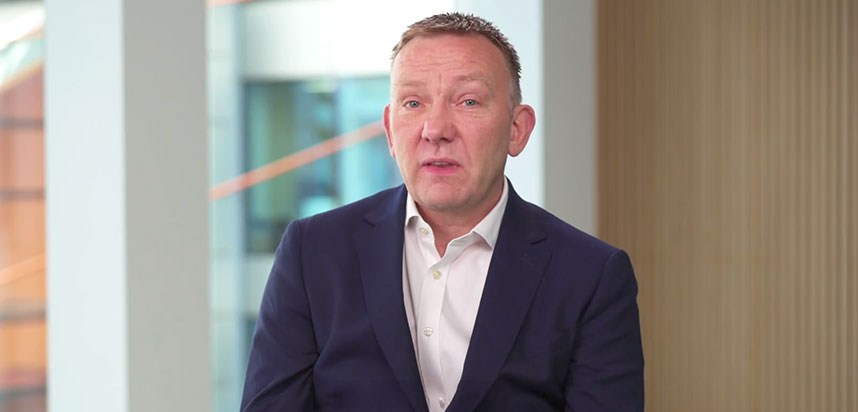
Joe Topinka: I think having an enterprise risk management program is really huge, whether it's formal or not, somebody has to be responsible for risk overall, that it gets to this whole idea that it is a team sport and everyone has a role to play, especially business unit leaders that are making decisions on cloud platforms on their own. They're playing a huge role on there. The idea around cybersecurity several years ago wasn't quite where it is now, but the enterprise risk management team has done a really solid effort of elevating the dialog and giving everyone more cognitive and aware that cybersecurity is not just an IT thing, it's a company thing, and it fits into the whole cyber security framework overall.
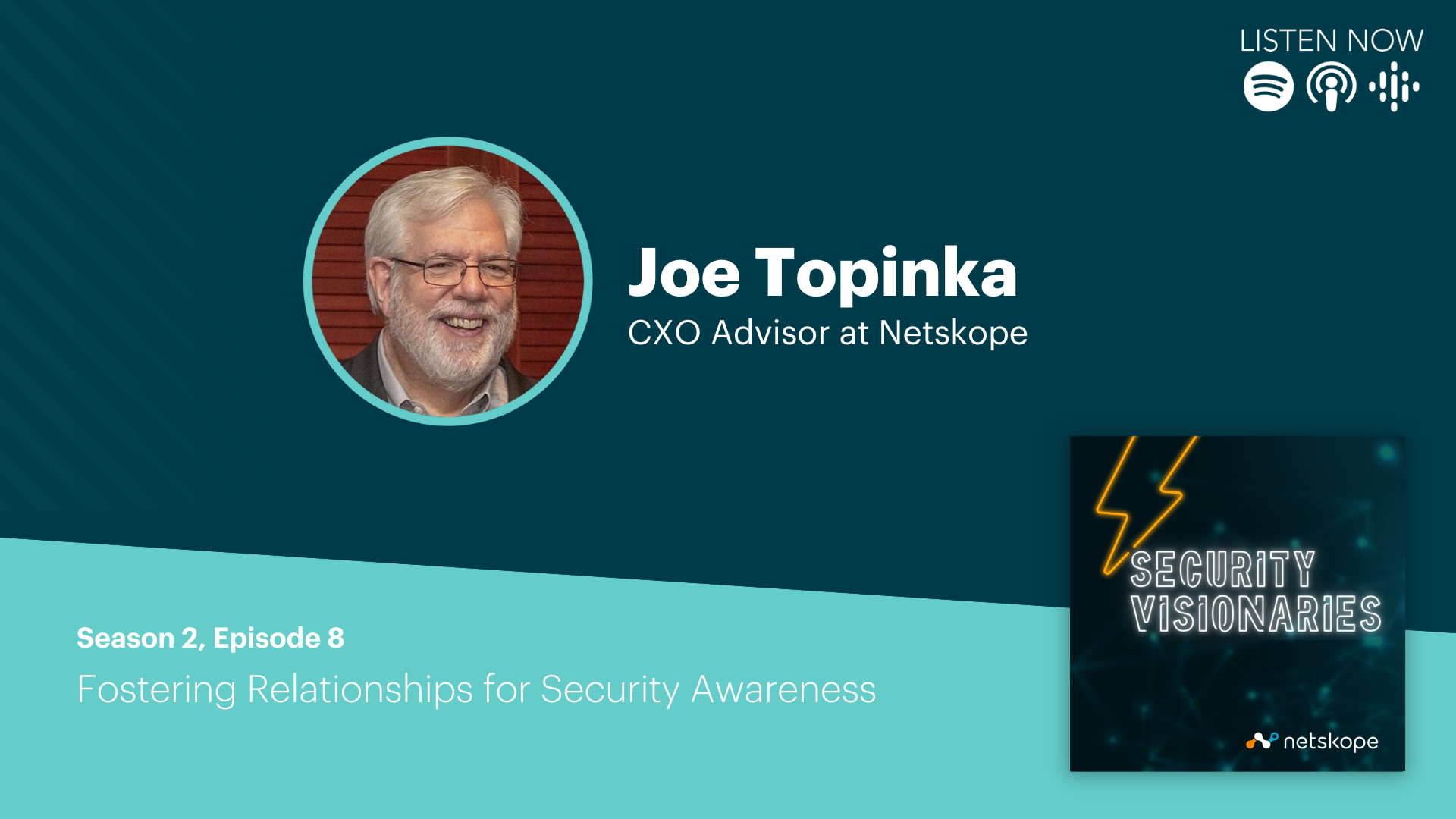
Speaker 2: Hello and welcome to Security Visionaries. You just heard from today's guest, Joe Topinka, CXO Advisor at Netskope. The responsibility of cybersecurity doesn't only fall on the shoulders of that team, it takes all of us working together. Getting folks on board with security begins by fostering relationships across the organization, particularly with IT and business unit leaders. This allows folks to have vulnerable conversations that ultimately help the organization grow. Before we dive into Joe's interview, here's a brief word from our sponsor.
Speaker 2: The Security Visionaries podcast is powered by the team at Netskope. At Netskope, we are redefining cloud, data and network security with a platform that provides optimized access and zero trust security for people, devices, and data anywhere they go. To learn more about how Netskope helps customers be ready for anything on their sassy journey, visit N-E-T-S-K-O-P-E.com.
Speaker 2: Without further ado, please enjoy episode 18 of Security Visionaries with Joe Topinka, CXO Advisor at Netskope and your host, Mike Anderson.
Mike Anderson: Welcome to today's episode of Security Visionaries podcast. I'm your host, Mike Anderson. I'm the Chief Digital and Information Officer here at Netskope. Today I am joined by Joe Topinka. Joe, how are you doing today?
Joe Topinka: I'm doing well. Well, better, I should say, I'm on my 11th day of COVID, hopefully coming out of it, I tested positive again today, but there's always another day tomorrow, but doing well, thanks for asking. And thanks for having me on the podcast.
Mike Anderson: Absolutely, I'm glad you're getting back into it, hopefully you'll get that negative test soon so you can get out of quarantine. I know that's never fun.
Joe Topinka: Not at all. Not at all.
Mike Anderson: So one of the things, it's interesting is we... Before we get into this, Joe, you and I met several years ago. I had this habit of when I read a book I really love, I like to reach out to the author and connect, and I did that, and you and I instantly had a great... Some great conversations. I brought you in to talk to the team when I was the CIO with Schneider Electric for the North America business. And you and I have remained friends since then, and so it's just... It's real privilege to have you on here, and especially with just your insight in the industry being a super successful CIO and a mentor to CIOs around the world. So maybe just we start the conversation off me, just talk about your journey and being a CIO and how that came about, and some of the learnings along the way.
Joe Topinka: Sounds good. Well, again, thanks for having me on and it's an absolute pleasure to be with you today and also to be working with you here over the last year or so. My career started many, many years ago in the mid-19... Well, late 1980s... Not '80s. 1970s, early 1980s, there we go. See, that's what happens when you get COVID. And I started off as a software engineer. I thought I would never wanna do anything else but write code. And I did that for a large financial institution, actually it's now FIS, so I spent many years there building software. And I was really fortunate, Mike, in that, our leadership team at the time had a different vision around technology, and since they were surrounded by technologists, they really wanted us to start thinking more like business people, business technologists. And so they sent us to a tailored program, they sent us to Northwestern and we learned about product management, this is in probably 1990s or so. And I was just so fortunate to have gotten introduced to the idea of thinking about my area of business like a business person and not a technologist. And so I started thinking about markets and customers and value proposition and things that were, in my past life, pretty foreign to me, and I just really glommed on to it, and one thing led to another, and I got my first CIO opportunity with the bank in New York in Manhattan.
Joe Topinka: And it was just so game-changing for me, so much fun. And the learnings that I was able to acquire through that experience with my colleagues at Northwestern was just absolutely amazing. I still speak to some of them today. But it was a real eye-opening experience and I've never looked back.
Mike Anderson: That's amazing, the whole business relationship piece, your book around IT, business partnerships and your... How you foster that. Fits perfectly, honestly, with our theme this year around security as a team sport, is technology is a team sport. So what made you say, you know what? I'm gonna write this book and share my thoughts. Talk a little bit about that and the role you've got in the Business Relationship Management Institute, I think it'd be great just for our listeners to hear about.
Joe Topinka: Sure, one of the things that I learned early on in my career is this value of networking and interacting and learning and meeting other people and hearing their stories, finding out what their issues and challenges are. There's so many common themes out there and learning from one another there's nothing better than that. And as I started to develop some techniques around the ideas that I ultimately incorporated into the book, I had a number of people ask me to share them. And so I started doing that and doing some informal coaching kind of my side hustle in a way. And it just grew from there, and a number of people asked me to write about it, and I started doing some articles on LinkedIn early in the early days on LinkedIn. Got some good traction there, and I got this bright idea, I actually didn't get that idea from myself, I got it from other people, my wife in particular, who said you should really put a book together around this, which I thought was ludicrous, like who would ever wanna read a book that I wrote?
Joe Topinka: But that's ultimately what I ended up doing. So I wrote a book on my own experiences, largely coming from the opportunity that I was given at FIS, which was called M&I Data Services at the time. And I learned to share that knowledge about how to run IT like a business, think about it, your product area as a true product, meeting with customers. It's really around relationships and understanding those relationships, especially customer relationships, and seeing how they interact with your company, where the roadblocks are and how they're engaging or not engaging, those are all clues to how you can strengthen the relationship, knock down barriers. And I started to think about how can I, as a CIO, make that a more repeatable process within the organizations that I was leading, and that's what ultimately lead to the book and to the stories that I wrote in the book. Most of those stories are... In fact all those stories are true stories.
Joe Topinka: Many of the names were changed to protect the innocent, and not all the stories I told in the book were perfect. A lot of my learnings have come from mistakes that I've made, and I wanted to share those mistakes and how I course corrected and just share those ideas to help people avoid them, if possible. Obviously making mistakes sometimes is one of the best teachers, assuming you're willing to look at your mistakes with a good self-reflection and honesty.
Mike Anderson: No, I totally agree. You shifted now into the CIO mentors, kinda then the shift, kinda the post-CIO journey now for you. Talk a little bit about that move, and then also when you do that, that advising people, how have you taken and continued to foster that sharing and that thinking and the learnings with others?
Joe Topinka: One of the things that I was taught as a young child, my parents sort of drove into us the idea that each of us has our own value we bring. They were very good about not letting us sort of judge other people. We had seven kids in the family, a mom and dad, so there were nine of us, and dinner was always a fun experience. And four of us, we're brothers, we're all big guys, I'm 6'7" and my brothers are well over six feet tall as well, and I remember there'd be a column of bread there, and then my mom would put it down in about two seconds later, there would be no bread left, 'cause everybody would grab as much as they could. But we learned respect, we learned how to have relationships, we learned how to listen. And those life lessons carried through for me. And I think one of the challenges that I see in the marketplace today is that we're releasing people into the wild as professionals and we don't really spend a whole lot of time on how to teach people how to have good relationships and how to have good self-reflection in terms of your own performance.
Joe Topinka: And so I started thinking about how I can share those ideas and concepts with people, how to have good personal accountability, how to think about yourself and your own performance with honest vision and eyes, clear eyes. And so one thing led to another and that's... I had some good success with that and it helped some people become CIOs, had good traction with it, and I just really enjoy it. It's one of those things that just never stopped giving back, and so I'm just sort of addicted to it and in my late 60s, and I have no intention of stopping. I really love this stuff. And I love helping people. It's just a phenomenal experience. And you asked about the Business Relationship Management Institute. When I wrote my book and released it, the institute was just coming online, I didn't know anything about them, and somehow or another, they discovered my book and reached out to me, much like you did, one thing led to another, and they asked me to participate. I joined some committees, I started listening to what they were up to and one thing led another and now I've been in the board chair for the last four or five years, and I've enjoyed it.
Joe Topinka: There's probably 30,000 members worldwide now. They're looking at, I think, crossing a pretty big threshold here soon with 10,000 certified business relationship management professionals. So we're pretty excited about that. So we're watching to see who that person is, and it's a big celebration online when that happens, so it's a great organization. Had a lot of fun with it, and COVID has been a real challenge for a lot of organizations, especially not-for-profits, with the ability to actually do in-person conferences has been sort of a real challenge. But for many of us, we're still making it, still active and people are still coming to our doors and so it's been a lot of fun. And they're all about the same sorts of things: Relationships and people and driving value, and a lot of common themes. So a lot of overlap. If you're looking at a Venn diagram between my book and the institute, there's a lot of common ground there.
Mike Anderson: Well, I know I got a ton of value out. You and I have had a lot of conversations around some of the concepts and agility and how those have come forward, and we can maybe have a whole podcast on that topic on another day. So if we shift our thinking and we come over to security, I can't help but look at the relationship aspect from a security standpoint, and how security leaders need to foster those same kind of relationships, just like all IT leaders have, all technology leaders have, security needs to do the same thing. How have you translated as you... 'Cause you've been directly involved in security now for the last couple of years, how are you advising people on how you take the things from a business relationship management side and IT business partnership side into the security world?
Joe Topinka: That's a great question. And what I'm leaning on are the same principles. There is a trend that I'm seeing where really successful chief information security officers that I've interacted with are starting to think about how they can enhance their business knowledge. So they're beginning to meet more frequently with business leaders around the organization, and in some cases, I see the meeting with external customers, which to me is the holy grail. As a CIO I can't emphasize how important it is, but even as a chief information security officer or any sort of security professional, understanding your customers and how they engage, keeping in mind that you wanna keep their data private and secure, that's your personal brand, that's your company's brand. So just getting that knowledge that helps you to build more effective security programs. And I would add to that the incredibly widening fast speed that we see CORD adoption happening in organizations.
Joe Topinka: We were talking about that 10 years ago, and it was fun to sort of discuss that at every technology professional conference you'd ever go to, that was the topic to your [0:12:18.8] ____... You don't hear about it as much, but what I see now are digital natives coming into the business, and these are people that grew up with an iPad in their hand, so they're completely comfortable with technology. They may not understand all the inner workings like we do as lifetime career IT pros, but they're not afraid to leverage technology, they're not afraid to go grab salesforce.com or any other platform that they think is gonna add value and deliver the right results for them. The thing that I've been really focused in on is helping those business leaders understand that when they go out on their own, we used to talk about shadow IT, I don't hear about that so much anymore largely because the cloud has given rise to the option now. It's very viable for a business unit to go out on their own and procure a platform.
Joe Topinka: I've been working with a number of companies to expand the knowledge of that business leader, to know that they now have a new set of responsibilities that comes along with that cloud platform they just procured. They're now the business owner, they've gotta think about how to secure the data, they gotta make sure their vendors are toeing the line in terms of security protocols, and if there are cyber events they gotta be on top of those and know about them. And so there's a whole set of responsibilities that I've been talking about with those business leaders, and it's been very eye-opening. And in some ways, I think that's the true digital transformation that we're living through right now. It's more around how business leaders are starting to think about cyber security and technology, and it's becoming part of their lexicon. I think it's becoming something that is... Well, it's not optional, they have to understand it, one way or the other, security is not part of the business, and so it's no longer throw it over the wall to the technology group of data analytics now. We, as a business community, have to understand the cyber security aspects of whatever solution we're undertaking and make sure that that vendor is toeing the line, and there's an accountability framework there. So I'm seeing a lot of that, I'm having really good conversations around that in the marketplace. So those are some of the things that I'm seeing and hearing.
Mike Anderson: Yeah man, I think it's a great point. We call it shadow IT, and I've been re-framing that in a lot of our... Some of the things we're writing is really business-led IT. I was with Ryan Talbott over at BorgWarner and he was telling me his CEO told him, he said, "Stop trying to control it and start figuring out how to enable and support it." I think that's the mindset shift we have to get to is technology leaders is our job is not to control it, our job is to help it grow and flourish because in today it's the people closest to the problem are those digital natives now, and they're the best people equipped to solve it, how do we create the right framework and the right... Our own technology mesh inside of our organization so that we can do it, but do it in a safe and secure way.
Joe Topinka: Yeah, absolutely. Gartner last year had published like they do every year, so one of their top 10 or 15 cybersecurity projections or forecasted items. And one of those aspects is just the distributed decision making. And I think it goes right to the heart of this where with cloud and digital natives now running big parts of businesses, you're gonna see less central control over business applications. And so having the right cybersecurity architecture and framework in place and finding the right partners is crucial. And there's another aspect of this that I've been harping on for the last several years, and I think back to Gartner's old design, build, run model, I've kind of reinvented that. I call it the new CIO, and that stands for collaborate, integrate, and orchestrate.
Joe Topinka: So collaborate means with all these cloud platforms that are out there, it's incumbent on you as a business professional to understand those platforms, who's out in the market, who might be able to help you, who might help drive value, and as you select those platforms and you integrate them into your environment, you're not only integrating them, but you're pulling information out of them, you're making them run seamlessly. So there's the collaborate part with cloud and vendor partners, cybersecurity partners, they're integrating it into your environment, making the information available and useful. And then the third leg is orchestrate, making sure the platform runs and that there is oversight and management of that platform on an ongoing basis. So I call that collaborate, integrate, orchestrate instead of design, build, run. And that sort of embodies this whole idea of cloud and how we're doing much more collaboration. And there's a lot more vendor partners in the mix, and finding the right vendor partner is absolutely paramount in your thinking, and that's a new skillset or an enhanced skill set, I think, that has really become critically important for business leaders to know how to manage that vendor partner, select the vendor partner, and work with that vendor partner as you're looking to deliver value and keep your environments secure overall.
Mike Anderson: No, I couldn't agree more. It's unfortunate because I use my own technology, our own technology internally, but what I love is, you know what, I can pull up a dashboard and a new application comes in, and I can simply ask up the question to someone, what problem are you trying to solve? I'm not trying to stop him, I just want to know what problem they're trying to solve, because if they've got that problem, there's probably a 100 other people that have that same problem, or we may already have licenses to the tool they're looking to use, or we may already have licenses to a similar tool. And we can have a conversation about that and see if they looked at it, do they not know about it, because I think we always assume, as IT practitioners, that we publish a catalog and voila, everyone knows all the apps we've got available, but unfortunately, the world doesn't work that way.
Joe Topinka: That's right. Yeah, there's a term I've created too to help IT organizations talk about the platforms that they actually manage and own and operate, and oftentimes I find a business unit leader who's procured that cloud platform, gets themselves into trouble and they ask IT for help. So I created this notion of advocated systems, so those are sanctioned platforms that are owned by the IT organization website, and the company has approved those platforms and asked IT to provide those services on an ongoing basis.
Joe Topinka: So when a business unit leader does something out on their own, that's not necessarily an advocated platform. It could become one, especially if you look at all aspects of managing it, and oftentimes, business unit leaders don't really wanna, ultimately, at the end of the day, manage the vendor or experts at that in IT, and I see that transition happening in some instances now where a business unit leader went out on their own, procured a platform and now is asking IT to pick up at least some aspects of it from a cybersecurity operating platform perspective as well as just managing the vendor relationship. So that advocated system language has become useful because it's given IT a way to describe and talk about what platforms they're actually sanctioned to support, and it gives them an opportunity to talk about taking new things on in addition to what they've been asked to do in a business-oriented way versus just feeling like the business units are just dumping new things on top of them, and every time you turn around.
Mike Anderson: Yeah, that's a great one. Often times it happens where the person that actually was managing that platform, that business unit, leaves and goes somewhere else, and then they're like, "I don't know how to operate this thing. Who's gonna take over it now?" Unfortunately, that's a lot for... That's been a lot of my experience in, is that that's when that conversation tends to happen. But I've always said, "Hey, I'd be happy to support it as long as the budget to support it comes with it." Because [chuckle] we don't have endless resources on either side of the house.
Joe Topinka: No, and that's precisely it, I think. That's part of the transformation that happens, sometimes in real time, when you run into those situations where someone's kind of at their wit's end with a vendor partner that either they're having trouble with, or there was a cyber incident or something along those lines where they're just over their skis, don't really know what to do and they come back to IT. And that's when you reach out and grab their hand and say, "All right, let's figure this out together." That's part of working in a cross-team, cross-collaborative way.
Mike Anderson: Totally agree. I think back about something you said earlier in talking about the understanding of the business. And I think as CIOs, we've been orienting ourself for that way. Now it's really become like, if you're not doing that, you're probably not gonna be in the seat very long, 'cause you gotta know the business you're in in order to know how to directly align what you need to be doing. And not just align, but integrate into it and be that advocate.
Joe Topinka: That's right. Yeah, at the end of the day, the company's goals and objectives are everyone's goals and objectives. And so to the extent you can help contribute to achieving them while doing it with operating efficiency and security, then all the better. And that's the thing I think some business leaders are beginning to see, is that IT isn't necessarily a bad thing. [chuckle] We actually do add a lot of value. There's still a fair amount of ground to cover before I'd say we're to a point where that's universally true, but I think just the nature of the world and the cloud environments that we have, I think that's accelerating. And I think it's a good thing overall.
Mike Anderson: For me, it's always been you spend the first 90 days not just learning your team, but more importantly, learning the business you're in. Because I think one of the traps that all technology leaders fall into CIOs, CISOs, you name it is, "I did this here, so it must work there too." And so you go to your new organization, you take whatever blueprint you had at the previous organization, you bring it to the next one, but every business... Each business is different and they've got different business models, different go-to markets. And if you don't understand that business, you could very easily break things that are working instead of helping generate revenue and reduce risk and reduce cost, for the organization, you do all the opposite things, which is definitely a bad recipe.
Joe Topinka: Yeah, that's a really good point, Mike. And I've been encouraging cyber security professionals to spend more time in business units. One of the things I like to ask them is, "When was the last time you had a conversation with someone outside of the security team or with the IT leader or with the CIO?" And I'm starting to see more affirmative answers where, "Yeah, I'm actually meeting now on a regular basis." It's not informal meeting, or it's a formal meeting once a month, or once every other month. But I'm meeting with the head of marketing and I'm... This division or that division. I think that's crucially important to build those relationships. So they... It sort of demystifies who you are and what role you play, and you have an opportunity to have a one-on-one with someone where they can ask questions where they may not wanna ask them in a crowded conference room and expose their lack of knowledge.
Joe Topinka: I think that's a really safe way to build those relationships. And I... When I'm coaching, that's one of the things that I really zero in on, and to make sure that there's a regular routine interaction with people outside of IT, and more specifically, within business units and even the board. Meeting with board members to whatever. Sometimes the CEO or President doesn't really like IT, just randomly calling board members, so you certainly wanna clear that with your leadership, but you can actually have conversations with those folks outside the quarterly board meeting. And I think it's really healthy to do that now and then.
Mike Anderson: I can't agree more. And I was in a conversation this week, and it's like a lot of times you get people that wanna go build an app for the sake of building an app. I would have app development leaders go, "I've got this great idea, I wanna go build an app." And it's like, "Okay well, what problems is it gonna solve, and what value are we creating for the organization if we do it? And who from the business unit is working with you on that? And what's the... How's this gonna impact the ongoing profitability? What's the... " So we start having these kind of dialog conversations and understanding that business and the risk. When I think about security, it's really about, "What's my appetite for risk?"
Mike Anderson: Sometimes you got... You have a set of risks where those conversations can be harder conversations because maybe there's not an aligned appetite for risk. 'Cause definitely at a functional level, there may be one appetite, but at the CEO and board level, there's a different one. Because today, if I'm a board member, I don't wanna get myself personally in trouble because we don't have the right security governance in the organization. So it's a... I totally agree with you. Having it in a group session is like shaming the person for not knowing. Having it one on one fosters... Gives the ability to have a very vulnerable conversation with someone, but it all comes around like, "Hey, let's make sure we align to what our agreed level of risk is, and if there's an exception to that, let's make sure that we're all locking hands around that and everyone knows it. So if it comes back in the future that the risk bites in the future, that we didn't consciously, not unconsciously."
Joe Topinka: Yeah, and what you're describing to me is a technique that I've recommended and use personally, where if you're looking to make an investment in cyber security or IT in general, I like to shop that idea around to individuals on the executive team, ahead of having the big meeting. So that that gives them an opportunity to ask questions, probe, challenge you, it might even have you go back and rethink what you're asking for. But that's... Someone called it pre-selling, well, I guess it is technically. That doesn't sound as much... Like much fun. But it's just getting people one-on-one where you're sharing why you think the investment makes sense and why you think it's critically important now, and letting them have that opportunity to interact and dialog with you and ask questions. And I'm glad you brought it up, 'cause that's just an incredibly powerful way to make progress and make investments where maybe in the past you struggled and you bring the big requests to the meeting and usually there's push back 'cause they're all hearing about it, even though they may have gotten the materials ahead of time, often times they're busy and they don't read the stuff. And that's just a better way to do it, I think.
Mike Anderson: No, I can't agree more. And it's interesting when you look at the technology community at large from the vendor side, 'cause this is obviously not the first time in my career I've... People have said, "Oh, you've gone to the other side." I'm like, "Well, everyone's selling something to somebody." But first, I'm working for a technology company. The interesting piece is I've seen the other side. Vendors come in and they talk about their features or their product and the road maps and where they're going. And when often gets lost in that is, "What business outcomes is this driving for me that's gonna help my business be better or reduce risk in my business?" The new concept in security is, it's revenue protection, 'cause if I damage my brand because I have a data breach, that's gonna impact my revenue 'cause I'm gonna lose... I'm gonna churn customers. People are not gonna do business with me unless they feel confident that their data is secure with them. And so that revenue protection is a way to think about security. How do you protect your existing revenue streams?
Joe Topinka: Yeah, absolutely. And there is... Fortunately or unfortunately, depending on how you look at it, there are plenty of very public incidents that you can look at in the marketplace and talk about openly about where companies didn't make investments, like Southwest Airline had a huge outage recently, and it turned out there were some investments that had been made over many years, and so it ultimately led to their system shutting down. And I'm not quite certain what happened with the FAA the other day, but now they're talking about some contract employee who did something to a file, and one thing led to another, and I'm sure we'll hear more about that. But yeah, those sorts of things can... While they're timely in the marketplace, you can certainly, as a cyber-security professional, leverage those real-time, real-world experiences as a way to have a discussion, especially when one-on-one. "Did you hear about that? Did you see what happened?" And draw some parallels in your own organization and talk about what you're doing and what needs be done. It's a perfect opportunity to do that.
Mike Anderson: Yeah, I remember when all the ransomware first started hitting the scene, I would get text messages or emails from CEOs saying, "Hey, are we you okay?" [chuckle] That would be the... I get a forward of the press announcement of something happening, "Are we okay?" No, it's interesting when you think about this, 'cause it's a... A lot of times in security you've got... And you've got varying degrees of accountability and budget responsibility between security, and I really look at it as more like the infrastructure side of the house inside companies. And there's been this natural friction there because a lot of the budget, when the investment started happening in security, the team that got most of the budget cut was the infrastructure team because they had to provide the budget for security, the carve out. And it's... That friction still lives. I think I saw a stat yesterday that 49% of security professionals have a good relationship with their infrastructure peers.
Joe Topinka: Sì, vedo lo stesso fenomeno. Sta cercando di... Se solo riuscissi a ricordare questa frase, vedrei se mi venisse in mente. Tuttavia, un gruppo è responsabile dello spostamento dei pacchetti, mentre l'altro è responsabile dell'arresto dei pacchetti. [risate] Aspetta un attimo, c'è qualcosa che non va in questa definizione. Ma ho sentito un professionista della sicurezza informatica dare questa definizione, ed è da lì che forse nasce il conflitto nelle infrastrutture, chissà.
Mike Anderson: Sì, per quel team di rete, è sempre il momento giusto per l'innocenza, perché tutti danno sempre la colpa alla rete, dev'essere la rete, c'è qualcosa che non va nella rete. E "Quanto velocemente posso dimostrare che non è colpa della rete?" E la prima chiamata del responsabile della rete è sempre rivolta al team di sicurezza, dicendo: "Ehi, cosa hai fatto... Hai messo qualcosa nella rete? Hai distribuito qualche New agente sui computer delle persone che sta causando problemi?"
Joe Topinka: Esatto, sono sicuro di averlo sentito dire più di una volta, in particolare nell'ultimo anno.
Mike Anderson: Sì, è un... E penso che questo sia il lavoro interfunzionale. Suo... Penso che, in quanto CIO, l'80% dei CISO risponda ancora ai CIO, se si considerano molte aziende. E penso che sia... In quanto CIO, in quanto leader, è necessario promuovere l'interconnettività tra i due team e queste relazioni, e bisogna farlo fino in fondo. Perché spesso la relazione può funzionare bene tra il responsabile delle operazioni infrastrutturali e il responsabile della sicurezza, che rispondono entrambi al CIO. La sfida è riuscire a trasferire tutto questo fino alla prima linea dei tuoi team e assicurarti che tutti lavorino bene insieme. E penso che sia qui che abbiamo molto lavoro da fare come CIO.
Joe Topinka: Sì, sono completamente d'accordo. E questo mi ricorda una sfida con cui vedo molte organizzazioni confrontarsi, e in molte delle organizzazioni con cui ho interagito e con cui ho lavorato, a parte una o due eccezioni, non esistono programmi di gestione del rischio aziendale realmente solidi. E in questi casi, avere una discussione su un livello più ampio è più difficile semplicemente perché non esiste una funzione riconosciuta. So che PwC ha condotto uno studio annuale, ma non ho verificato se lo hanno fatto negli ultimi due anni. Ma credo che circa il 20% o il 30% delle organizzazioni disponga di programmi formali di adeguamento del rischio aziendale e tendono ad essere grandi aziende perché devono averli. Ma le organizzazioni piccole e di medie dimensioni non hanno un programma formale. E penso che questa sia una vera sfida perché è più difficile arrivare a quel concetto di sport di squadra quando non si ha un offuscamento che sia realmente incentrato sul rischio e sulla privacy in un modo che possa davvero rafforzare questo concetto all'interno delle aziende.
Joe Topinka: Ma penso che le cose stiano cambiando. E parte di ciò che vedo anch'io, Mike, è che diverse compagnie assicurative stanno ora ponendo più domande a riguardo. Vogliono sapere: "Quanto è sofisticato il tuo programma?" E poi, "Hai un programma e si trova al di fuori dell'IT? Hai un rischio aziendale?" E quali misure e metriche state utilizzando, quali metodologie state utilizzando e le avete testate?" Stanno appena iniziando a essere più concreti al riguardo, credo in parte perché sono disposti a pagare per gli incidenti e stanno diventando più consapevoli di ciò che si aspettano dai loro clienti in generale. Ma non credo... Penso che avere un programma di gestione del rischio aziendale sia davvero fondamentale, che sia formale o meno, qualcuno deve essere responsabile del rischio complessivo, perché... Questo ci porta a questa idea generale che è... È uno sport di squadra e tutti hanno un ruolo da svolgere, in particolare i responsabili delle unità aziendali che prendono decisioni sulle piattaforme cloud in autonomia.
Joe Topinka: Stanno svolgendo un ruolo fondamentale in questo ambito: sto lavorando con un cliente per aiutarlo a definire un modello decisionale distribuito che comprenda requisiti relativi al rischio aziendale, agli aspetti legali, alla privacy e alla sicurezza informatica. Cercando di pensare a come appare questo quadro, in modo che, se le unità aziendali sono indipendenti, utilizzino un quadro sancito dalla gestione del rischio aziendale per prendere buone decisioni. E poi c'è una metodologia di verifica e verifica della fiducia in atto per garantire che... Non per fare il lavoro sporco, ma solo per assicurarci che le persone seguano effettivamente le regole e che le cose accadano come dovrebbero, e cercare modi per migliorare l'intero processo. Ma spero che ciò accada sempre più spesso. Un'azienda in particolare ha fatto un ottimo lavoro, direi il suo nome, ma non credo che vorrebbero che lo facessi. Ma è davvero interessante vedere che si tratta di un'organizzazione in cui l'idea di sicurezza informatica di diversi anni fa non era esattamente quella di oggi, ma il team di gestione del rischio aziendale ha fatto uno sforzo davvero notevole per elevare il dialogo e rendere tutti più consapevoli e consapevoli del fatto che la sicurezza informatica non è solo una questione IT, ma una questione aziendale. E si inserisce nel quadro generale della sicurezza informatica.
Mike Anderson: Lo impariamo nelle scuole di economia. Cosa ci interessa? Ci preoccupiamo di aumentare il fatturato, di ridurre i costi per poter reinvestire e diventare più efficienti, di ridurre i rischi nella nostra attività e di rimanere strategicamente un passo avanti rispetto alla concorrenza. E ora come includiamo l'ESG e come possiamo rendere un'organizzazione più sostenibile? È spesso un tema chiave dal punto di vista ambientale. Penso al rischio e, se lo si inquadra in questo modo, c'è un motivo per cui nel mondo degli affari si ricorre alla pianificazione degli scenari. Perché se certe cose... Se i prezzi delle mie materie prime aumentano, quale rischio si creerà per l'azienda?
Joe Topinka: Sì, esattamente. Si tratta di una conversazione sana e gli esercizi pratici, se si riesce a convincere le organizzazioni a farli, hanno un impatto notevole; provare quegli scenari e chiedere ai dirigenti di pensare a cosa fanno in una situazione di risposta reale è davvero molto indicativo. Ho visto alcune organizzazioni farlo in modo davvero efficace, ed è uno dei modi in cui ho visto quell'istruzione e quelle lampadine iniziare ad accendersi. Quando si vive un'esperienza simulata e si comincia a pensare a mercati, clienti, problemi e impatti, le persone cominciano a prendere sul serio la questione della situazione all'interno dell'organizzazione e come reagiremmo. Quindi l'ho visto come un modo sano per promuovere l'idea che si tratti davvero di uno sport di squadra.
Mike Anderson: Sì, sono pienamente d'accordo e tu me l'hai appena fatto venire in mente perché penso che la sicurezza sia uno sport di squadra che va oltre le persone all'interno della mia azienda, si estende all'ecosistema in cui mi trovo, ai fornitori con cui lavoro. Se sono un produttore e ho un fornitore, se ho un fornitore unico, perché sto cercando di ottenere un prezzo davvero buono sulle materie prime, ma quel fornitore non ha un buon programma di sicurezza e viene compromesso, ciò potrebbe paralizzare la mia catena di fornitura. Quindi, introdurre il rischio informatico nella discussione sulla strategia di approvvigionamento è, secondo me, un altro aspetto della sicurezza come sport di squadra. Come possiamo aiutare l'ecosistema e la comunità in generale a migliorare?
Joe Topinka: Un paio di anni fa ero CIO presso un'azienda manifatturiera di medie dimensioni a Charlotte. È un'azienda che produce e realizza apparecchiature per l'intrattenimento domestico. Quindi cose come altoparlanti, amplificatori, TV, router e switch, punti di accesso, tutto ciò di cui potresti aver bisogno per una rete domestica. E lì ho creato una piattaforma cloud che ha permesso all'installatore professionista di configurare e gestire tutti quei dispositivi da uno smartphone. Quindi, uno dei prodotti è un limitatore di sovratensione e abbiamo dato loro la possibilità, tramite firmware, di accedere a ogni singola presa di quel limitatore di sovratensione. Quindi, se un cliente chiamasse e dicesse: "Ehi, il mio Roku è bloccato." Oppure: "La mia Apple TV è bloccata". L'installatore o l'azienda che ha installato il prodotto può recarsi in quel luogo, raggiungere il dispositivo di protezione da sovratensioni e riavviare la presa per rimetterla in funzione. E quindi tutta quell'esperienza in cui stavamo sviluppando un firmware incorporato in tutte queste piattaforme hardware mi ha reso davvero nervoso, e così ho incaricato un'azienda innovativa di sicurezza informatica di venire a prendere i nostri 10 prodotti migliori, e ho chiesto loro di fare quello che volevano, per vedere quali falle potevano trovare.
Joe Topinka: E quindi quella è stata la prima volta in questa organizzazione che abbiamo davvero dedicato un qualche tipo di sforzo concertato o tempo concentrato a pensare a come avremmo potuto proteggere quelle piattaforme. Perché l'ultima cosa che volevo era che una di quelle piattaforme subisse una violazione e che la reputazione dell'azienda andasse a rotoli. Quindi è davvero un'esperienza illuminante e noi... Hanno trovato dei problemi e hanno avviato una serie di iniziative di sicurezza informatica, per cui abbiamo dovuto rinnovare l'architettura del nostro firmware in modo che fosse più resistente e che i kernel non fossero più accessibili. E abbiamo inventato un modo per effettuare gli aggiornamenti del firmware tramite la piattaforma. Fu quindi una vera svolta per l'organizzazione. Mentre in passato non avevano pensato a quel firmware, ai suoi aspetti di sicurezza informatica e ai potenziali rischi. Per me è stata un'esperienza davvero divertente. Mi sentivo come un pioniere nei boschi quando lo facevamo, solo qualche anno fa. È stato molto divertente. E rimango in contatto con loro e sono ancora molto, molto concentrati sulla sicurezza informatica, perché gli svantaggi evidenti del non risolvere questo problema sono piuttosto gravi, quindi hanno fatto davvero un ottimo lavoro.
Mike Anderson: Assolutamente. Perché non mi sposto un po'? Voglio che tu faccia il futurista per me. Quindi, mentre noi CIO riflettiamo su dove sta andando il settore, e forse questa è una domanda in due parti. Facendo un salto in avanti di 5-10 anni, secondo te in cosa i CIO avrebbero voluto investire? Forse, innanzitutto, se pensi in particolare all'ambito della sicurezza informatica, dove ritieni che avrebbero dovuto investire? E poi, dall'altro lato, la tecnologia in generale?
Joe Topinka: Innanzitutto la sicurezza informatica, direi che la fiducia zero è... Detesto usare questa frase perché a volte fa sì che gli occhi delle persone diventino vitrei. Ma penso che come architettura filosofica di un'organizzazione, se si inizia a pensare alla fiducia zero e a come implementarla in modo efficace su tutte le piattaforme, siano esse cloud o meno o on-prem. L'intero concetto di fossato del castello scompare e si passa all'autenticazione degli utenti su dispositivi e luoghi. Quella mentalità, quel concetto e quel... Penso che la capacità di un'organizzazione di adattare tali principi sia uno dei modi più solidi e forti per proteggere i dati dei clienti e l'organizzazione stessa. Quindi, come CIO, se potessi vedere il futuro, probabilmente desidererei aver speso più soldi e investito più tempo per far sì che quella piattaforma diventasse realtà nell'azienda con cui lavoro. Perché in termini di tecnologia in generale, penso che ci sarà una continua accelerazione del Cloud, dell'IoT, dell'intelligenza artificiale e dell'apprendimento automatico. Queste saranno tutte realtà vivide per noi, e credo che investire nella comprensione dei propri dati e nella conoscenza di come proteggerli diventerà un'area in cui, guardando al futuro, spero che i CIO stiano investendo fin da ora.
Joe Topinka: Tra 5 o 10 anni, non sono sicuro se lavorerò ancora, ma se lo farò, sarà divertente ripensare a ciò di cui abbiamo parlato oggi e vedere come si è evoluta la realtà nei prossimi anni.
Mike Anderson: Sono d'accordo. E c'è una cosa che hai detto quando hai parlato di zero trust, penso sia davvero importante che i CIO e i CISO ci pensino: NIS ha pubblicato un documento sull'architettura zero trust e quando lo leggi, le immagini stesse tendono a un'applicazione on-premise o a un'applicazione privata. E alcune di queste possono ovviamente risiedere nel cloud, perché quando creo nel cloud pubblico, quelle sono comunque app private. Ma credo che dovremmo davvero pensare a tutte le applicazioni. Quindi, anche per quell'applicazione SaaS, devo applicare gli stessi principi di un'architettura zero trust alle applicazioni SaaS, proprio come faccio con le mie applicazioni cloud pubbliche. Perché in effetti la console che utilizzo per creare applicazioni nel cloud e negli hyperscaler è un'applicazione SaaS. E deve esserci una governance al riguardo, quindi non c'è un'unità aziendale, tornando al termine precedente, piattaforme consigliate, potrei avere un'istanza consigliata all'interno di AWS. Bene, voglio che le persone costruiscano lì non nella loro istanza non autorizzata perché, A, questo non conta nel mio contratto che ho firmato con AWS sul mio... Non ho diritto agli sconti e, tra l'altro, non c'è nessuna tessera di sicurezza. Penso che i professionisti, i CIOS e i CISO debbano considerare tutte le app, non solo quelle che risiedono nei loro data center o negli ambienti cloud pubblici.
Joe Topinka: Sì, assolutamente. E alla fine, qualunque app, ovunque si trovi, fa comunque parte del marchio dell'azienda, e se... Se succede qualcosa, a nessuno importerà se è in sede o meno, importerà solo che si è verificato un incidente e che forse i dati sono stati esfiltrati o peggio. Penso quindi che tu stia sollevando un'ottima osservazione. E non credo che il problema stia diventando più semplice perché, da quello che vedo, ci sono... Ogni giorno c'è un'altra soluzione cloud e viene fuori con più funzionalità di cui le aziende potranno trarre vantaggio.
Mike Anderson: Bene, stiamo arrivando alla fine del nostro episodio e concludiamo sempre i nostri episodi con qualche colpo di scena veloce. Un'altra domanda che ho per voi oggi, visto che stiamo parlando di libri. Qual è il libro preferito che hai letto quest'anno e perché?
Joe Topinka: Ho appena finito di leggere No Ego di Cy Wakeman. Sono un grande fan di Cy Wakeman da anni e ho avuto modo di conoscerla un po'. Ma il suo libro parla in realtà di responsabilità personale, di autoriflessione, semplicemente... Per me, come coach e leader, è davvero significativo il fatto che tutto inizi da te come individuo. E quindi le sue storie sono crude e reali, e le lezioni che insegna nel suo libro sono lezioni per tutti noi. Quindi incoraggerei davvero le persone a prenderlo e a dargli un'occhiata, è stato davvero un grande vantaggio per me. Penso davvero che la semplicità dei suoi messaggi, del suo linguaggio e dei suoi insegnamenti siano davvero potenti. L'auto-riflessione è uno degli aspetti chiave della mia performance come leader, perché mi permette di riflettere sulla mia performance. Se riesci a riflettere su te stesso e a valutare onestamente le tue prestazioni senza giudicare, è semplicemente straordinario ciò che puoi fare per te.
Mike Anderson: Beh, forse dovrei aggiungerlo alla mia lista di lettura, sembra fantastico. L'unica altra domanda che ti farò oggi è: visto che hai una tale ricchezza di informazioni e saggezza in questo campo, qual è il miglior consiglio sulla leadership che tu abbia mai ricevuto?
Joe Topinka: Beh, credo che oltre all'auto-riflessione, ci sia semplicemente l'idea che la leadership inizi da sé stessi, inizi da te. E c'è una definizione di responsabilità personale secondo cui vivo, e inizia con l'impegnarsi al 100% in qualsiasi cosa si faccia. E quando lo fai, significa che probabilmente sarai resiliente e quindi affronterai qualcosa, sai che incontrerai degli ostacoli, ma troverai un modo per avere successo nonostante le circostanze. Quindi, impegno e resilienza sono parte di questo, poi il pilastro successivo è la responsabilità, il dovere dei risultati, siano essi buoni o cattivi. E poi il quarto pilastro è imparare da tutto questo, quindi senso di responsabilità, resilienza, impegno, apprendimento, tutte queste cose in realtà. Se entri in ufficio o virtualmente, in qualunque modo tu lo faccia, e inizi la giornata pensando a questi quattro pilastri, è straordinario come questo possa cambiare il modo in cui affronti le relazioni e il lavoro, persino la tua vita a casa.
Mike Anderson: È stata una conversazione davvero fantastica. E Joe, ogni volta che io e te ci incontriamo, non riesco proprio a esprimere quanto apprezzo il dialogo. Penso di imparare qualcosa New ogni volta che parliamo, ed è questo che apprezzo della nostra amicizia e del rapporto che abbiamo instaurato nel corso degli anni. Grazie mille per essere stato nostro ospite oggi. IL... Cerco sempre di riassumere la conversazione. È difficile scegliere tre cose, ma proverò a scegliere tre cose che mi sono rimaste impresse. Innanzitutto, adoro il New acronimo, collaborare, integrare, orchestrare, perché esprime il concetto che la sicurezza è uno sport di squadra e che dobbiamo coltivare relazioni, dobbiamo instaurare relazioni individuali in modo da poter avere quella conversazione vulnerabile che ci permetterà di crescere insieme. Quella sarebbe la prima. Il secondo, mi piace il concetto di piattaforme sostenute. Ciò ci aiuta davvero a riformulare il pensiero su... Dall'IT ombra all'IT guidato dal business, e come possiamo collaborare con le persone in modo da non doverci occupare del tutto in un secondo momento, quando qualcuno ha lasciato l'organizzazione, ma da essere partner fin dall'inizio. E poi la terza cosa che ho davvero scelto va oltre l'auto-riflessione, perché quella semplicemente... Potremmo avere un altro podcast solo su questo concetto.
Mike Anderson: Gli obiettivi aziendali sono gli obiettivi di tutti e, quando pensiamo alla sicurezza informatica, dobbiamo assicurarci che la sicurezza informatica sia integrata negli obiettivi dell'intera organizzazione e che comprendiamo qual è la propensione al rischio; ne stiamo parlando con i nostri leader aziendali, in modo da essere tutti integrati e lavorare insieme verso lo stesso obiettivo unificato. È stato fantastico averti qui oggi, Joe. Grazie mille per aver dedicato del tempo.
Joe Topinka: Beh, vorrei solo ringraziarti per avermi invitato, è sempre un piacere e adoro le nostre discussioni e interazioni, inoltre imparo sempre qualcosa anche da te. Grazie per avermi invitato, lo apprezzo davvero.
Mike Anderson: Assolutamente. Grazie mille, Joe. Vorrei ringraziare tutti i nostri ascoltatori che oggi stanno ascoltando questa puntata del podcast Security Visionaries. Sono il vostro ospite, Mike Anderson, CIO e Chief Digital Officer di Netskope. Buona giornata.
[musica]
Relatore 2: Il podcast Security Visionaries è realizzato dal team di Netskope. Veloce e facile da usare, la piattaforma Netskope garantisce un accesso ottimizzato e una sicurezza zero trust per persone, dispositivi e dati, ovunque si trovino. Aiutiamo i clienti a ridurre i rischi, accelerare le prestazioni e ottenere una visibilità senza pari su qualsiasi attività di applicazioni cloud, web o private. Per saperne di più su come Netskope aiuta i clienti a essere pronti a tutto nel loro viaggio impertinente, visita Netskope.
Relatore 2: Grazie per aver ascoltato Security Visionaries. Prendetevi un momento per valutare e recensire lo spettacolo e condividetelo con qualcuno che conoscete e che potrebbe apprezzarlo. Restate sintonizzati per gli episodi che usciranno ogni due settimane. Ci vediamo al prossimo.





 Indietro















)