Andreas Rohr: The most convincing story for works council who were actually not there to prevent security or the company doing the right things, they're there to make sure that the data is not abused against the employee's rights. It's their mission, their task, and it's a valid one. When I was in a CISO position in such companies where there were actually a strong works council, the best relationship is if you're really being transparent to what you do, why you're doing that?
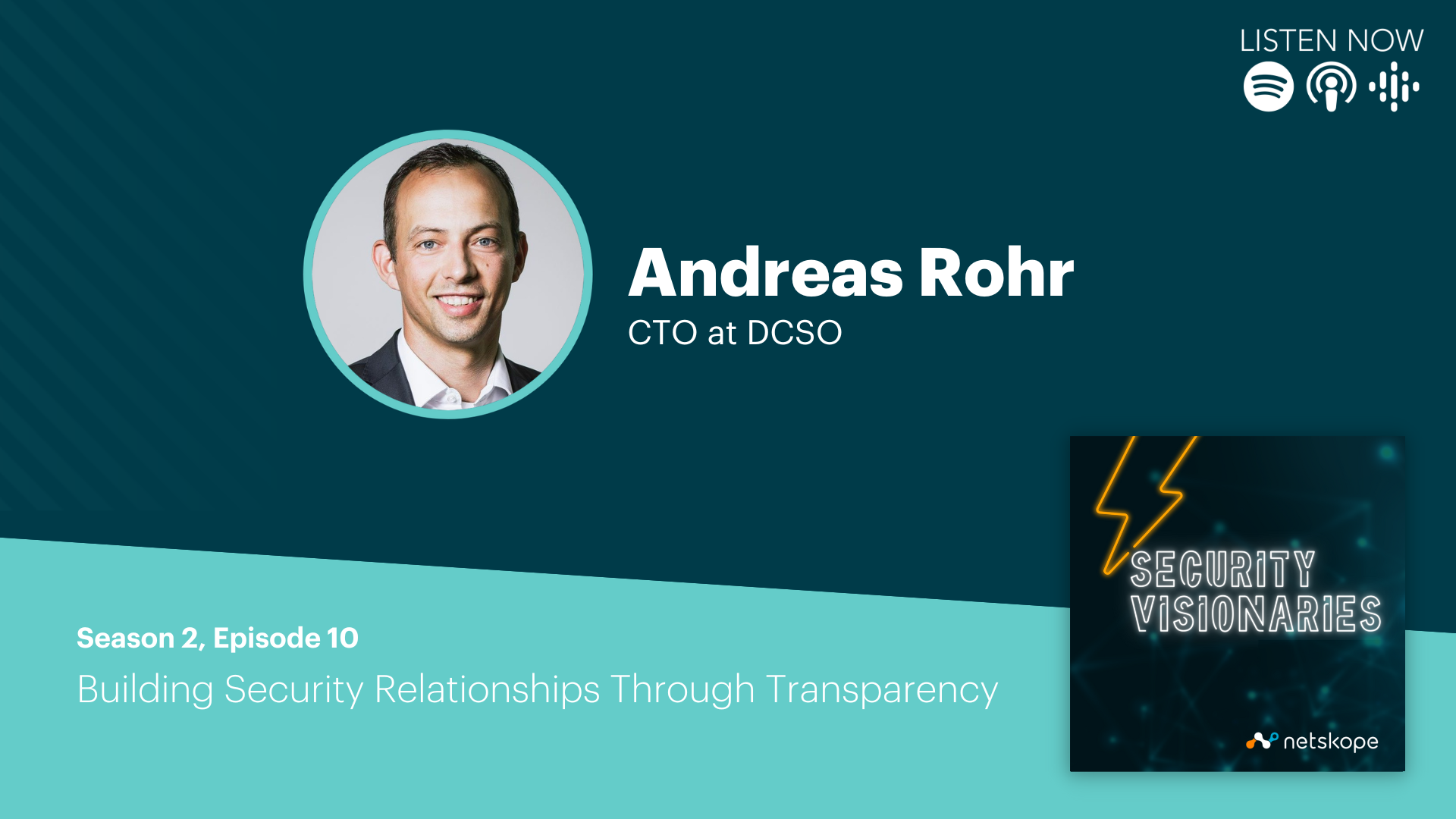
Speaker 2: Hello, and welcome to Security Visionaries. You just heard from today's guest, Andreas Rohr, CTO at DCSO. Aligning organizations on security requires many skills, most importantly, transparency. From establishing top-down communication to collaborating with work councils, transparency answers many questions along the way. Like, who has access to the sensitive information? What is an organization's appetite for risk? And how is the data of employees protected? Before we dive into Andreas's interview, here's a brief word from our sponsor. This Security Visionaries podcast is powered by the team at Netskope. At Netskope, we are redefining cloud, data and network security with a platform that provides optimized access and zero trust security for people, devices, and data anywhere they go. To learn more about how Netskope helps customers be ready for anything on their sassy journey, visit N-E-T-S-K-O-P-E.com. Without further ado, please enjoy episode 20 of Security Visionaries with Andreas Rohr, CTO at DCSO and your host, Mike Anderson.
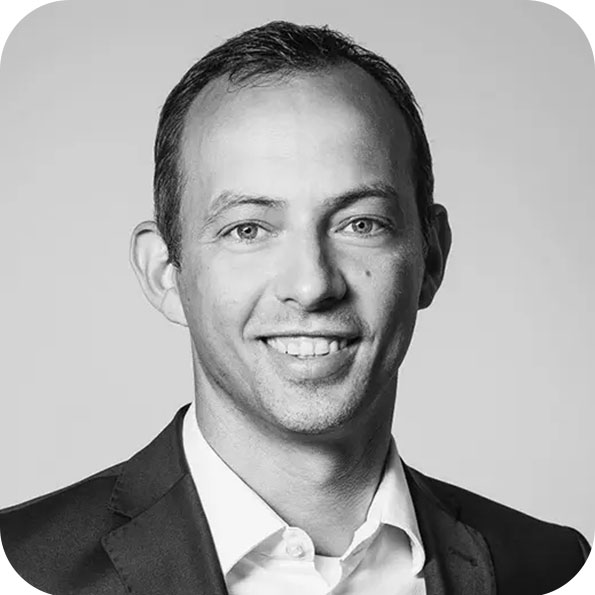
Mike Anderson: Welcome to today's episode of Security Visionaries. I'm your host, Mike Anderson. I'm the Chief Digital and Information Officer here at Netskcope. Today, we are joined by Andreas Rohr who's joining us from Germany. How are you doing today, Andreas?
Andreas Rohr: Oh, very good. Thanks for pronouncing the name very nicely.
Mike Anderson: I'm super excited about this conversation today because when we think about cyber security, you've done some very interesting things around bringing people together in the DACH region and thinking about companies of all sizes as you think about the cyber topic. And so can you tell us more about DCSO, how it started, the mission you've got, what you're trying to accomplish and how you're working with companies?
Andreas Rohr: So DCSO stands for German Cyber Security Organization. So the D is for Deutsche, for those that are maybe familiar with the language. And what basically four companies in the DACH region; Allianz, BASF, Volkswagen and Bayer, you might have heard of, some of the largest companies in Europe, they saw that they should basically combine forces and get exchanging ideas with other peers of themselves to not reinvent always the security topics by themselves and bringing together their experts. Because they have one thing in common, which is 90%, 80% of what they're challenging and security is more or less the same despite that they're competing on the market. And second, the talents are not enough on the market. So bringing them together under one roof and tasking them with things they're all interested in, would make things even better. And resource enabled testing of new ideas. So this is one of the things. The second one is they all have their supply chain they're dependent on. And this was seven years ago, so supply chain attack as a term was not born back then, but they already realized that the weakest link basically is not their secure and their security team and the maturity of them, but their supply chain ones, which are most dependent on.
Andreas Rohr: And digesting or making things in a way digestible from their security insights and learnings, is what DCSO as a community-driven exchange to operationalize such insights and technology as what we also have been founded for, to find ways to make it easier to use and also to apply for those companies that do not have a huge security team or even any knowledge. So operationalizing with security services was the second task, basically during the foundation of the company.
Mike Anderson: No, that's great. And I definitely know that we've got so many open cyber roles out there today. Anything you can do to help companies combat the bad actors that are out there that wanna cause harm to companies. As you said, these are competitors in some cases coming together at the table to figure out how they can basically protect ourselves from the adversaries that live out there in the wild. So it's definitely a strong mission. Have you had other companies that have joined in as part of that? And you've talked about the four that joined originally, but have you had more that have joined in that mission as well?
Andreas Rohr: So that's a good question. So that's not only the four. We very early started this with around 16 of tax companies we're now about 20, 21 or so of like and a few family owned and likewise and size companies. And they basically steer DCSO's kind of development of the portfolio and what we should talk about and what you should research in terms of topics and directions and help us, in an advisory also so to speak, where to develop into. And the second one is what we also like to and actually achieve to implement is a very regular format where they learn not only with new topics, but also the existing things where they failed or how they solved certain challenges and what did not work out. So that's even more important to shortcut learning curves. And this is not only for the less mature companies, it's also amongst the mature ones. And this proves that bringing folks together, despite their competing on a market, actually useful, effective, and should not only be limited to the companies itself, but also to the relationship for authorities and maybe even also for these research institutes. So really bridging the different fields of expertise and insights, especially to also intelligence services. Makes sense in both ways to have a flow, to not make that visible to the takers or adversaries, as you said.
Mike Anderson: I definitely feel that need for that private-public partnership around exchange of intelligence and what's going on from a threat standpoint. Again, it kinda brings this whole concept that security is a team sport. It's not just the four walls of my organization, but it's the whole ecosystem working together. When you look at that, I'm just curious, when you think about the authorities that are out there, have you been able to influence policy or changes that would help companies have better guideposts or things to align to?
Andreas Rohr: Yep, definitely. That was one of the things which I basically learned from the States. So I've seen the NCFTA, where the FBI and other law enforcement and industry was working together. I think as the early years, in the zero days of 2000s and also other formats for which something that's state-driven. But in general, I like the idea a lot that there's a fluent relationship where the necessary things to help each other is actually exchanged. And this drove also my way of influencing how we do that, and in fact, we have a very good relationship to the Ministry of Interior who actually is responsible for being the advisory function and the supervision of the federal police of the BSI, the federal office for information security, and also the one who's protecting the constitution. Not sure what that translates to English. So having those authorities that have all their own insights from [0:07:13.7] ____, from their peers at the FBI for instance, or from other law enforcement or intelligence services, and making sure it's getting passed on via DCSO as a trusted clearinghouse if you want to, where they can trust this will not leak to the public, especially to the attackers.
Andreas Rohr: But helping companies to find certain things where they have no clear indication that a particular company is threatened by a particular actor. But in general and helping to identify if those attackers are active in those networks, has proven to be very valuable because we've helped also the authorities to find out that a particular group was active by us operationalizing the information they gave us in a trusted way. And we could basically tell them back, "Okay, look, this thing you gave us, we have no idea where it came from, but we have seen that here." And so we help the law enforcement and also the intelligence services to have their targets to be better monitored when they have no sensors, because on the domestic side, the authorities are limited to what they can do in contrast to outside of Germany. And the same thing on the other hand, companies who are sometimes maybe very conservative on letting authorities look into their networks could use us to make sure there's only those things that are actually necessary to fulfill to each individual mission is passed on. And having basically us as a bridge to also cover then not always giving trust in the beginning.
Andreas Rohr: So it's developed into something where there's a more trustworthy exchange where those initial fears, they have not vanished, but they're definitely lower than before. So this helps in the end everyone. Not getting pathetic here, but also helping to get a better protection of the democracy itself where you have influencing parties out there.
Mike Anderson: Well, it sounds like you said lack of no trust, so it sounds like zero trust. So it seems like that's a common theme everywhere. I see a lot of organizations trying to align to it. Look at guidepost, like in the US and even beyond, sometimes we see people aligning to the NIST controls that are out there because the insurance companies which; that'll be a topic we'll talk about a little bit later, they're using that as a guidepost. Auditors use it as a guidepost. What do you see as the guidepost for companies that you're working with today? What is that guidepost that they're trying to align to?
Andreas Rohr: So it's not so much NIST-driven, that's just treated in nature that we are in Europe and trying to sometimes, invent the wheel ourselves instead of putting our forces together. But anyhow, so the guidepost here is more the ISO 27000 or something which is similar to it. It's a very German version of it. They all try to go after making sure that you manage your security correctly. And even more in this, the developer of the last years, the maturity level of those control implementations matters more than the actual compliance of it. So think of having compliance things first and then maybe 10 years ago where they started to implement those things, the effectiveness of that is what matters. So there's actually a shift, and what I like with the NIST and also other frameworks, is that they try to get more into the direction, how effective are you actually protecting yourselves and not necessarily only are you managing basically your risks and having controls. And this is where actually things should develop further into. So compliance is needed, but it's only a necessary condition, its not a sufficient one, 'cause a sufficient one is being effective. And effective actually matters more than the full compliance. But this might be not be cited to a regulator, please.
Mike Anderson: Well, it's interesting, 'cause what I see a lot of times is people will acquire tools because the auditors say you need to have the tool. But as you said, the effectiveness is actually, are you using the tool to accomplish the objective that you want to accomplish or drive the business outcome? And a lot of times that's a missing link because people collect tools to satisfy auditors, but they're not getting the effectiveness they need. And so they're now exposing themselves for business disruption from whether it's ransomware, they're exposing themselves to a data breach in their organization.
Andreas Rohr: Yeah. That's something really that the auditors and the regulators should think differently maybe in future because they drive this development by how they put their regulation. And there's a good change, which I saw was a local security guideline that actually became effective or will get effective fully in 1st of May in Germany, which indicates that you need to have... Like in the ISO 27000 new version, that you need to have systems for detecting attacks. That's what they call it. So basically, ISO detection mechanisms and also response. And this is really the things which you also refer to. It's not only a tool thing, they also mandate that you organizationally need to make sure that you are able to analyze those things, in a human and making sense of that, whether that's something serious to go after or not. And then even more important, being able and having things implemented to react. So it's also organizational-driven thing that you need to have 24/7 ability to, to do something about. If there's an indication of a ransomware group being at an early stage. Because you might only have a few hours or at max, days left to prevent the max damage.
Andreas Rohr: And having these organizational things on top of the tooling and the integration and making use of that in an effective manner is where the regulation should... Like insurance companies actually do, they'll rather look for whether something is effectively secure or not. And this is where it actually needs to develop into. But the regulator, for them it's easier to say you need to have a SIM, you need to have a network detection monitoring. So if you have an own data center and what not. But in the end it might be a good advice also to the regulator, maybe that's one of the next missions of DCSO to influence that to be more practically relevant what they actually tell them. And there's a good example for the national security law that was released two years ago in Germany.
Mike Anderson: No, that's great. You mentioned about managing the impact. I remember a peer of mine at a global consumer package goods company said that when NotPetya hit, it infected their entire network and all their systems within 15 minutes, globally. And so I think that thinking is the traditional, "How do I get things as quickly as possible from point A to point B, to C to D, and around my corporate network." That whole thing has to be rethought because then if I get compromised in one node, can it quickly just take over my entire network and bring my entire business down?
Andreas Rohr: Exactly. And when you also search on that matter, think about, this NotPetya was something which most of the folks could have prevented by doing more hygiene on their patching. But before those things happening, at least with ransomware vectors, they make some noise in the network. So there's almost 100% of the cases which we have been involved, doing incident response, we saw enough signals that could have been basically analyzed and triggered action to stop the attack. It would not necessarily make them to remediate those systems and building things from scratch, but they could have prevented the entire damage that actually happened after a few days. And the same thing is also with NotPetya, if you could have patched those things that are known or have been known to be critical, and a few other good practices that actually mandated in those standards, you have mentioned earlier, then this is the homework, the necessary condition. And the sufficient one is to build on top of that a good net of detection that actually gives you the trigger to act. And, not sure whether it would've been worked out in 15 minutes, but in general there is a timeframe which is shrinking to be fair.
Andreas Rohr: But there's a timeframe where you could detect things and can assume that that not all protective measures will always 100% protect you. And it's either being a user click on something or you have not patched or there's unsecure configuration or whatever in there. But if you assume that's the case and you have a detection grid on top of it, that will tell you, "Okay, there's something you don't want to have here. Please have a look and take action." Maybe even in a very automated or predefined way to stop such attacks is what needs to be done for really good companies in terms of security state.
Mike Anderson: Yeah, I fully agree man. If it's manual, you're always depending on the person in the chair and with a skill gap that can become problematic. So exactly to your point, the automation. So I can take preventative measures and run my play as quickly as possible is critical. Going back on thinking about the security side, and I think about data privacy, everyone talks about GDPR. I always remind people, you think GDPR is tough, wait till you have to go in front of German worker council and talk about data privacy for German citizens. When you think about a lot of security tools, you're inspecting what people are doing. How are you helping companies navigate the German worker council to make sure that they can get the right protections in place, but also preserve the privacy of German citizens?
Andreas Rohr: That's a tricky question. There's no silver bullet to making this happen. That works council is happy with what's happening when massive amount of data is inspected, which is needed for detection, to be fair. But the most convincing story for works council who are actually not there to prevent security or the company doing the right things, they're there to make sure that the data is not abused against their employees. It's their mission, their task, and it's a valid one. And to get along with works councils... And when I was in a CISO position in such companies where there were actually a strong works council, the best relationship is if you are really being transparent to what you do, why you're doing that. So I was pretty young back then. I was not really good in arguing potentially, basically on their mission because they're also having the mission to protect the employees from harm. And this also includes cyber attacks or violations of data privacy and breaches, et cetera. So back then I should have argued, what I do now, that helping to prevent attacks by inspecting some traffic or acquiring certain data would've been the right avenue to go. And that's one of the things which they cannot deny if you know how the constitution basically works.
Andreas Rohr: If you tell them the only use case to use this data, where it's valid to use the data, is for detecting malicious activities and not tracking employees and whatnot, and if you give that in writing, that this is what you do and if you adhere to your own rules for that sense, then they basically will in the first place, put some stones in your way and see whether you behave or not. But if you do that constantly that way that you're only using it for detecting malicious things and by that preventing basically their constituents if you want to, then the next time let you easier pass the door than than before. At least I never failed with getting things through the works council. It's just the way how you put that and that you really adhere to most principles to not use the data for something else that you acquire them for.
Mike Anderson: That's great. Well, hopefully, that's a product line offering that you're offering it at DCSO.
Andreas Rohr: Whenever you buy managed services from DCSO, this is included. So we help the customer to get through the door of the works council and I guess we have a pretty good reputation. And since I've worked with works councils before in the Volkswagen world, but also in the utility where they have really strong works council and tell from my past with them and how good the relationship et cetera, then that's the other part of the story. So we bring our experience in and they like that typically and make their life easier in terms of helping them to argue with their folks. And then it's a matter of trust in the end, not like zero trust, it's really the other way around. So if you build a trust then you can do most things with the works council. And even if you give them just a small hint, a read-only account to the technology you are deploying, this also helps a lot. So they're left to have transparency and helping them to see what you're looking at and what you make out of that and how you comment cases, et cetera, this is also helping to build trust. So they might not grasp everything as they see, but this is where they do not have the feeling there's something in the dark that's happening, which might harm my people. And it's not a secret success ingredient, but it's something which if you adhere to it, that actually will get you likely to a good outcome.
Mike Anderson: That's great. I 100% agree with, transparency is what builds trust. When people don't have transparency, people are guessing and guessing doesn't lead to trust. And so that's a great advice there when dealing with German Worker Council, and just generally as a business principle. Transparency is what builds trust. If I look at the role you have today, and you talked about some of your roles, what are some of the learnings you brought into DCSO? You mentioned that you were a CISO in the past, and now the CTO for DCSO. Talk a little bit about that journey and how have things evolved in your thinking as you've transitioned into the role you have today versus more the practitioner and CISO type roles you had in the past?
Andreas Rohr: When I was CISO back then, I had the same challenge as most CISOs that also have technical teams. So I had a fortune to not only be responsible for the governance and the security management system, but also having an own operational security team and the luxury to play around with technology, et cetera. So what I started most was what that I had all those tools in place that does island wise an okay or even a nice job, but there was no coherent way of utilizing that for an entire picture. And I don't want to say single pane of glass things. So I mean this is often used, but making use of the strengths of the different technologies and combining them is what basically made me successful to be very cost efficient in getting actually the entire value out of the different technology I was employing. And also got my team back then in a position to do some nice things that have been not average to what teams can achieve. So taking this, like, a set of or different tools, an army knife, if you want to, a swiss army knife, then the team that's operating that knife actually matters most. So getting them to deal with different types of input technologies, streams, insights, and operationalizing the different capabilities and skills of the people to maximize the outcome and also helping to solve certain homework for our clients in DCSO, is what drove me when we developed the portfolio.
Andreas Rohr: So one of the things I didn't mention earlier was that I have been also tasked to come up with a managed security service portfolio seven years ago. So put yourself back to that time, there was not very common, having maybe an outsourced SARC or so, but not outsourced managed security services so much and solving homework to those organizations so they can focus on the most interesting and hard nuts to crack and not doing the day-to-day job and making this very efficient was possible because I was in the position before. And at the same time having not the speech to the customer saying, "We do that for you." And like taking your job away, which is really something which you get a lot of resistance from security teams which you try to do business with. But helping them, "Look, we know that you need to do that and it's sometimes painful and we also have been in the position before, so we would like to blend into your team, and just accept us being the one who does the super homework every day, 24/7 and why you no focusing on the interesting things?" And we give you all the ingredients for that. So that's one of the things which helped a lot from a CISO and also fear perspective of those mature teams and the customer space to accept that we bring in added value. So it's not a technical question, it's rather how you blend in and complement team skills and capacity. And this is when you are able to convince also the technical folks on the customer side.
Andreas Rohr: And this helped a lot building the portfolio, how we put it, and also getting the community part in each of the services into the game where they talk and exchange with peers, not only how they like us, but also how they solve certain problems in the real world in a day-to-day fashion without having a consultant in place who helps them to solve it in the one or the other way. But learning from the others facilitated to us is what actually makes our success possible. And this is also kind of unique. So we are not focusing only on numbers within customer amount for VC, but really going purpose-driven on that they can help each other and we do kind of their homework in the most innovative way we can. That's where my past actually helped to do a different kind of a portfolio set up.
Mike Anderson: No, that's great. I have to ask, one of the questions that I always get asked, and then I saw a debate going online yesterday on LinkedIn between CISOs about, how do you determine the budget for security? And the debate is always around, is it a percentage of revenue the company? Is it a percentage of the IT budget? Is it based on the risk posture of the organization and what they wanna invest around that? How are you... I gotta imagine that's a question you get all the time from companies. How are you answering that question?
Andreas Rohr: It's rather the CISOs should get a, if you ask me, a trusted, neutral advisor who has no own interest in selling something. Sometimes I actually find myself similar positions. We get hired from board of directors and basically looking at their estate, et cetera, and then knowing that I also sell those services, but tell them what's needed and what's... I'm not saying rubbish, but where they overspend things and being really frank and not only looking for benchmark and going, after effective things. So what is those things that you wanna protect most, which actually makes your business running? Like a business impact analysis. If you know you're 10%, you are most dependent on, and if you put all the effective security roles on top of that and do a medium job for the remaining things, is the better advice to go after, rather than looking for the, pure numbers. And either you wanna protect your business or not, the 10%. And this is the way how I talk to them, then, okay, what's needed for that? Obviously is the next question. And so how much is an appropriate amount of money to spend? While they're getting top-down first, I was the critical business processes and then bottom-up. What's needed for that? And, then say, "Okay, for the remaining one, I can use a benchmark." So this is how I would approach it.
Mike Anderson: Yeah, it's good advice if I think across the business. You talked about supply chain risk early on in the conversation. When I was at Schneider Electric, I would talk to our head of supply chain about, what's the security posture of our suppliers? How does that fit into our sourcing strategy? And it all becomes into this whole enterprise risk conversation, not just cyber, but what's the financial stability of that company that I'm working with? Security now becomes another question that's right alongside that because if I can't get steel, it's hard to manufacture products without steel. And so looking through that, so I think you're spot on with that. I would hope that would fit for most of the companies that manufacturing summit and that 10% that they're really focused in on, that they wanna protect.
Andreas Rohr: Absolutely. And we have learned the disruption of supply chain with the Suez Canal, which is a very physical event, now we had this pandemic thing, we have this maybe trade war and related things, and then we have this shortage of resources due to the crisis in Europe with the war and also with China maybe not being able to operate their factories because they can't or they don't want to. So whatever it is. So knowing exactly where your weak links are and managing them actually will basically, or have already reset our way of measuring risk. And we also should factor in, that's one of the learnings of last year, that not always the adversaries act rational. So having a risk management and evaluation based on rational behavior of others, this might true for most of the things, like the financial market maybe and other things, but not necessarily for states like Russia. And we should also assume that there is a disruptive way of acting without any obvious reward to those who do that, which would be rational. And this is one of the things where you should be more conservative in terms of evaluating those risks, rather than, "Yeah, that's so unlikely, so it will not happen." This is also something which we should actually take into account.
Mike Anderson: Absolutely. I'm gonna pivot a little bit, as you talked about work with board of directors and others, when you think about security as a team sport, often times the CISO is the one that takes all of the... It's like probably one of the hardest jobs in the world, because there's no a dollar amount you can spend that's gonna protect you a 100%, and so it's always a risk-reward trade off. But it's also not just the CISO's job. How are you seeing, and how are you helping advise companies on how do they make security become part of the fabric of their organization and their people across the organization in all different units, business units and functions? How are you driving that and are you seeing that evolution occur at the pace you would expect it to?
Andreas Rohr: So the advice is to split it up into two different disciplines. One is more from a compliance perspective and getting the frame in place, and also the backing from the board for the most general things, which are not business-driven by itself. And the second one is making the teams end-to-end responsible. So the modern way of development and running applications is the DevOps team. So this has proven to be for most things the best setup. And adding security, and that one was the buzzword, DevSecOps, actually means that you embed the security for operations, but also for the developers in a very close loop. And this is the way how you actually make everyone aware what they're doing, what the impact is, and what in a best case should be implemented rather than a gateway centric development cycle. And by that you can react much faster on vulnerabilities, on insights, on things, attackers abuse, that it might be normal function. And this is the most modern setup you want to have in IT anyhow, and adding the security to it. And by that, also developing the developers and then the operations folks to know what they should do, because basically they have not been raised with that knowledge. And training on the job, so to speak, is the best way of implementing that in the most effective way.
Andreas Rohr: Don't talk down in terms of their skill in terms of doing that the right way. But if there's something sitting next to them having that thing and they're basically backing each other up on certain aspects, it's the most effective way to do. And this is the second one, which should be implemented. And the functional lead or the tribe lead, so to speak, for the subject matter of security should be with the CISO. So having a matrix organized way of implementing that, but they should be embedded in sitting with the developers and the operations folks, so as a normal security would be. So that's, in my opinion, the best way to do, there are industries where this does not work out, so where we need to act differently, but for IT driven companies, this is the best way to ensure that's happening. And maybe there, the security folks cannot be there 100% of their time because lack of talents as we know, but having this in general will implement it and swapping teams and making this possible is the way how it should go.
Mike Anderson : C'est très bien. Et les choses que j'ai vues en ce qui concerne... Si je pense aux équipes informatiques et numériques, DevSecOps est sans aucun doute le plan directeur, pour utiliser ce mot à la mode, la voie à suivre. Si je pense à mes fonctions financières, mes fonctions RH, si je pense à mes différentes unités commerciales, quelles sont les choses que vous voyez fonctionner pour faire entrer la sécurité dans l'esprit des gens en dehors de l'organisation technologique et de l'entreprise ? Comment intégrer la sécurité dans le tissu de l'organisation ?
Andreas Rohr : Je ne suis pas sûr qu'il s'agisse d'une tâche active du RSSI uniquement, mais c'est le conseil d'administration qui commence à s'en occuper. Et ce n'est plus un défi, car l'impact des pairs, les cibles proches et les actions perturbatrices des attaquants de l'année dernière ont beaucoup aidé à sortir de l'improbable ce qui pourrait arriver à mon organisation pour en faire quelque chose de concret. D'accord, nous devons nous en occuper. Il ne s'agit pas d'un phénomène statistique, qui me touchera tous les dix ans, mais qui me touchera certainement au cours des deux prochaines années, et je dois donc m'en préoccuper. Et la sécurité n'est pas à mettre en œuvre à 100 % pour tout éviter, c'est bien connu. Cela vaut également pour les ressources humaines, les finances, etc. La différence, c'est qu'il faut leur donner un objectif [0:31:15.5]. ____ ce qu'ils doivent faire, ce qu'ils ne doivent pas faire, et comment et où demander s'ils ont des doutes sur certains points. Et il s'agit d'une prise de conscience en premier lieu, ou... Je pense que Netskope utilise également de temps en temps le terme de pare-feu humain pour cela. C'est bien de les conseiller et de leur enseigner, mais ce n'est pas aussi bien que de leur donner un coup de main s'ils en ont besoin, de leur indiquer ce qu'ils doivent faire s'ils sont incertains. C'est d'autant plus important qu'il peut y avoir quelque chose de suspect, mais s'ils obtiennent de l'aide au bout d'une heure ou de quelques minutes, c'est encore plus important.
Mike Anderson : Oui. Vous aviez évoqué le pare-feu humain. Cela a été une grande campagne de notre CISO ici à Lamont en interne, parce que nous considérons toujours que le maillon le plus faible de tout programme de sécurité est le personnel en place qui fait son travail tous les jours. Nous disposons de tous les outils nécessaires pour trouver les personnes qui veulent faire du mal intentionnellement. Ce sont les personnes qui causent des dommages accidentels chaque jour en cliquant sur des liens qu'elles ne devraient pas faire. Ils introduisent des applications qu'ils ne devraient pas utiliser. Ils introduisent dans ces applications des données qui ne devraient pas s'y trouver. C'est ce que nous essayons de faire. L'une des questions qui me tient le plus à cœur est de savoir comment créer de meilleurs citoyens numériques. Vous entendez parler de l'informatique fantôme comme d'un concept qui existe aujourd'hui. Et si vous interrogez le PDG, vous constaterez qu'aujourd'hui, c'est davantage l'entreprise qui dirige l'informatique, car nous avons une nouvelle génération de travailleurs qui sont des natifs du numérique. Comment leur permettre de résoudre les problèmes en toute sécurité ? C'est ma nouvelle mission en tant que DSI d'une entreprise de sécurité : comment permettre à la personne assise dans le fauteuil de résoudre le problème de manière sécurisée afin de débloquer cet état d'esprit de natif numérique ? Comment les gens évoluent-ils dans ce domaine ? L'informatique fantôme a toujours été la grande affaire, mais si vous regardez les usines d'approvisionnement que vous avez mentionnées, le dirigeant de l'usine engagera quelqu'un pour construire un tableau de bord pour lui. Comment voyez-vous l'évolution de cette pensée ?
Andreas Rohr : L'informatique fantôme découle du fait que vous ne bénéficiez pas d'une assistance flexible pour votre appareil personnel ou votre serveur, quel qu'il soit. Obtenir en premier lieu un moyen plus agile et plus fiable d'obtenir des ressources de calcul et de stockage aiderait beaucoup cette informatique fantôme, parce qu'ils ne veulent pas avoir un serveur sous leur bureau. Personne ne veut donc de cela. Ils ne le font que parce qu'ils ne reçoivent pas l'aide dont ils ont besoin. Il s'agit donc de résoudre ce problème de manière progressive et d'accepter le risque que ces personnes ne soient pas les meilleures pour administrer un serveur, mais c'est toujours mieux que d'avoir un système informatique fantôme. C'est la première chose à faire. La seconde est destinée aux utilisateurs, par exemple en les laissant apporter leurs propres affaires et en construisant autour d'eux un petit mur qui permet de résoudre les problèmes d'hygiène les plus importants, sans pour autant avoir un appareil géré à 100 %. Cela pourrait donc également vous aider. Et puis il y a des indices, vous recevez un courriel provenant d'un fuseau horaire ou d'un lieu, ce centre avec lequel vous avez interféré précédemment n'est pas correct ou aussi différent, puis vous pouvez obtenir une petite chose, "Ouais, ce courriel ne provient pas de votre organisation ou il a été envoyé à une heure inhabituelle." Le hinting permet donc aux utilisateurs de surveiller de plus près ce qu'ils sont en train de faire et de prendre de meilleures décisions en fin de compte.
Mike Anderson : Non. C'est un excellent conseil. J'aimerais donc passer un peu à ce que nous appellerons les questions futuristes. Alors que nous regardons vers l'avenir, je suis sûr que vous avez appris que si vous regardez les cinq dernières années, il y a probablement un tas de choses que vous auriez dites, "Si je pouvais faire cela différemment, je l'aurais fait de cette manière." Si je me projette dans cinq ou dix ans, disons en 2030, dans quoi les responsables de la sécurité et de l'informatique regretteront-ils de ne pas avoir investi aujourd'hui lorsqu'ils regarderont en arrière, en 2030 ?
Andreas Rohr : 2030 est une période assez longue, mais disons les cinq prochaines années. Cela reste assez difficile à faire, mais je pense que ce qui aurait été important, c'est de s'adapter à l'écosystème de partenaires dans lequel vous agissez, ce qui permet d'intégrer des ressources non contrôlées. Le fait d'être soit des flux de données, soit des services, etc., était une manière très souple de les brancher sur une connexion et d'appliquer, sur cette couche très abstraite, certaines politiques et certaines choses que vous pourriez vouloir changer, si vous changez de partenaire, si vous changez de plateforme, etc. Cela conduit à un principe de confiance zéro et, deuxièmement, à une sorte de tissu que vous contrôlez, mais qui est suffisamment souple pour ne pas être un monolithe au fil du temps et vous permettre d'utiliser différents services en nuage, différents réseaux de partenaires, etc. Et si vous n'investissez pas dans la capacité de rendre ces éléments enfichables, vous aurez beaucoup plus de temps à consacrer à la commercialisation de nouvelles installations. Et cela se traduira en fin de compte par un avantage concurrentiel, voire pas du tout, si vous ne le faites pas. C'est pourquoi vous devez investir dans des solutions pluggables et des points d'application pour vous assurer que vos décisions sont régies de la bonne manière. Et en fin de compte, c'est, dans une certaine mesure, une confiance zéro.
Mike Anderson : C'est très bien. Puisque vous avez parlé de la confiance zéro, nous pensons souvent à la cybernétique, pourquoi investir dans la cybernétique ? Il s'agit d'éviter les violations et les interruptions d'activité. Comment voyez-vous l'évolution de la confiance zéro ? Comment cela se répercute-t-il sur la façon dont les entreprises envisagent la protection de leurs données ? Car c'est évidemment l'essentiel de ce que nous essayons de protéger du point de vue de la violation des données.
Andreas Rohr : Je pense que la confiance zéro apporte une aide différente de celle à laquelle la plupart des gens pensent en termes de prévention des violations et d'amélioration de la gouvernance autour des clôtures de données, si vous voulez. Il s'agit plutôt d'être plus flexible lorsque vous modifiez votre architecture, votre paysage applicatif, vos partenaires, vos acquisitions, etc. et de pouvoir ainsi réagir plus rapidement aux changements. C'est la raison pour laquelle il n'est pas souhaitable de formuler beaucoup d'hypothèses dans votre architecture et vos flux de données. Ainsi, la confiance zéro et les approches de flux de travail très centrées sur les données vous permettent de rester plus flexible. Et le meilleur avantage pour le site est que, si vous êtes très bon dans ce domaine et que vous contrôlez qui peut utiliser quel service de données, à partir de quel endroit, de quel type d'appareil et de quel niveau d'authentification, il est probable que vous fassiez également un meilleur travail de protection pour éviter une grande brèche. Vous pouvez perdre l'un ou l'autre système ou l'une ou l'autre donnée, mais pas l'ensemble, si vous avez cette façon micro segmentée de gouverner les différentes parties, si vous le souhaitez. Et la capacité de le faire vous procurera des avantages concurrentiels, si vous me demandez sous le côté, si vous le mettez en œuvre correctement avec une bonne gouvernance et des opérations de sécurité, alors vous aurez également l'effet secondaire de mieux protéger vos données.
Mike Anderson : Non, c'est bien. C'est un excellent conseil. Et si je réfléchis un instant, toutes les entreprises avec lesquelles vous travaillez aujourd'hui, la confiance zéro est évidemment un sujet brûlant, parce que vous allez à RSA et tous les vendeurs l'ont sur leur stand. Je suis sûr qu'il en sera de même cette année. Quelles sont les deux ou trois choses les plus importantes que vous entendez de la part des DSI, des RSSI et des conseils d'administration avec lesquels vous travaillez aujourd'hui ? Quels sont les sujets d'actualité dont vous entendez parler aujourd'hui ?
Andreas Rohr : Le plus urgent, c'est que nous savons que personne ne peut se protéger à 100 %. C'est vraiment [0:38:05.0] ____ par des personnes qui craignent de ne pas voir les signaux suffisamment tôt et d'avoir un temps d'arrêt moyen faible et de perdre des millions, voire des milliards, pendant ce temps d'arrêt, sans parler du fait qu'elles ne peuvent pas faire de nouvelles affaires, etc. Il s'agit donc véritablement du risque numéro un, pour lequel ils ont également du mal à obtenir une couverture d'assurance, ce qui perturbe leur activité principale et les empêche d'agir suffisamment en termes de devoir de diligence. La plupart des directeurs savent donc qu'ils ne peuvent pas négliger ce type de risque statistique, mais qu'ils doivent s'en préoccuper. Ils veulent également s'assurer que ce qu'ils font n'est pas quelque chose qu'ils auraient pu éviter avec un peu plus d'attention ou de budget. Et la deuxième chose, également liée à cela, c'est qu'ils veulent s'assurer que leurs partenaires les plus importants de la chaîne d'approvisionnement sont dans la même situation qu'eux. Il s'agit donc d'une perturbation des activités, pas nécessairement pour leurs propres systèmes et environnement, mais pour ceux de leur chaîne d'approvisionnement, qu'elle soit en amont ou en aval. Il faut également veiller à ce qu'ils ne perdent pas de flux de revenus. C'est en fait ce que j'entends le plus souvent et la sécurité est le dénominateur commun de tout cela.
Andreas Rohr : Il s'agit donc de rendre le flux de données des flux de valeur résistant à de telles attaques. Les autres éléments en découlent. C'est ce que j'entends le plus souvent et la confiance zéro est, malheureusement, un sujet qui n'est pas artificiel parce qu'il s'agit d'une chose plus stratégique pour s'améliorer, ce qui est un second agenda par rapport à ce qui les préoccupe réellement aujourd'hui. Cela résoudra donc le problème dans 3 à 5 ans, mais pas nécessairement aujourd'hui, car la confiance zéro n'est pas un produit. Ils commencent à le comprendre. Et puis je leur dis aussi : "Ne vous faites pas avoir par ceux qui vous disent que c'est un produit." C'est simplement que Greenfield était une nouveauté, que vous avez appris, que vous avez adapté à vos besoins et qu'au fil du temps, vous avez essayé de migrer et d'accepter que 20 % de la population n'ait jamais une confiance zéro. Il suffit de laisser l'héritage en l'état et de construire de plus grandes clôtures autour de celui-ci, de s'assurer que ces choses sont sous contrôle et de ne pas trop réfléchir.
Mike Anderson : Non. C'est un excellent conseil. Et il y a trop d'entreprises qui disent : "Achetez mon produit et vous n'aurez plus aucune confiance." Et cela, comme vous l'avez dit, n'existe pas. C'est donc un excellent conseil. Vous avez parlé un peu de l'assurance et si je pense à la base de l'assurance, je commence à voir beaucoup de gens dire : "Vous savez quoi ? Nous allons nous auto-assurer ou nous allons prendre les dollars que nous dépensons pour l'assurance et les investir dans notre programme de sécurité." Parce qu'ils ont l'impression qu'il y a tellement de façons pour les compagnies d'assurance de ne pas payer, en évitant par exemple de parler d'attaque d'un État-nation, que cela ne s'applique pas. Comment voyez-vous la pensée des gens ? Voyez-vous le même genre de situation où les gens se disent : "Vous savez quoi, pourquoi ne pas nous auto-assurer et investir cet argent dans notre programme de sécurité ?" Voyez-vous cela ? Quel est l'avenir de l'assurance dans le cyberespace ?
Andreas Rohr : De grandes compagnies d'assurance ont déclaré que les risques cybernétiques ne sont pas... Nous ne pouvons plus assurer ces risques parce que, du point de vue des compagnies d'assurance, elles ne peuvent pas vraiment mesurer l'état de maturité. Quelle est donc la probabilité qu'une entreprise soit victime d'une attaque ? La seconde est que les conditions à remplir sont parfois arbitraires, page les compagnies d'assurance. C'est différent et c'est en fait un cauchemar de remplir ces questionnaires et parfois nous les aidons à faire la croix stratégiquement au bon endroit et aussi à ne pas dire des choses fausses, mais la chose réelle, de sorte que ce sont les choix que l'on ne peut pas dire par la suite. "Oui, vous l'avez déclaré ici et vous n'y avez pas adhéré ou ne l'avez pas mis en œuvre." Ainsi, si vous dépensez un dollar pour votre propre sécurité au lieu de l'assurer, dans le cadre d'une bonne gestion des risques, vous devez toujours avoir recours à une compagnie d'assurance, ce qui est une pratique de gestion classique. Je vous conseille donc de ne pas le faire du tout. Il est donc raisonnable de prévoir également une couverture si les choses tournent mal, afin de couvrir certains coûts ou l'interruption des activités, ce qui est tout à fait logique.
Andreas Rohr : Si le coût est ridiculement élevé, on peut se dire : "Je ferais mieux de l'affecter à ma capacité de réaction et de détection." Et peut-être donner un coup de fouet à certaines initiatives en matière de sécurité, mais je n'échangerais pas l'un pour l'autre. Vous devez faire preuve de stratégie en faisant confiance à l'architecture et en vous assurant que vous faites vous-même les bons travaux à domicile, l'hygiène complète, et que vous essayez de convaincre les compagnies d'assurance que vous faites du bon travail en matière de sécurité et que vous obtiendrez toujours ce qu'elles demandent. Mais avec le temps, je pense que le marché de l'assurance ne proposera pas de polices très lucratives pour s'assurer contre les cyber-risques. C'est mon intuition. Je ne peux pas le prouver. Mais ce que je vois et ce que j'entends et la manière dont nous pourrions mesurer cela d'un point de vue statistique et de masse, qui était l'une de mes études avant de commencer ma carrière professionnelle, je ne vois pas comment nous pourrions calculer avec des modèles qui décrivent correctement avec, parce que ce n'est pas un élément statistique fondamental.
Mike Anderson : Je vais maintenant passer à une partie amusante de notre podcast, que nous appelons les quick hits. Je vais vous poser quelques questions, à brûle-pourpoint, et nous verrons quelles sont vos réponses. Tout d'abord, quel est le meilleur conseil que vous ayez jamais reçu en matière de leadership ?
Andreas Rohr : C'était très tôt dans ma carrière professionnelle. Le PDG m'a dit : "Même si vous êtes le meilleur expert en la matière dans ce que vous essayez de résoudre ici dans le monde, vous préférez écouter votre équipe et vous dire que vous serez surpris par les réponses qu'ils vous donneront." Cela ne sera peut-être pas aussi bien ou aussi valable que ce que vous auriez pu faire vous-même, mais le plus important, c'est que leur contribution garantira la durabilité du projet et vous permettra de mieux dormir et de relever le prochain défi. Et c'est tout à fait vrai. Et 90% de ce que vous percevez comme étant la meilleure solution est basé sur votre propre expérience et d'autres expériences. Il en va de même pour la diversité. Ils ont donc écouté et ont été surpris, et je l'ai été très souvent, ce que j'aime le plus. J'encourage donc vraiment tout le monde à l'essayer et à lui donner une chance.
Mike Anderson : C'est un très bon conseil. Très bien. Quel serait votre dernier repas ?
Andreas Rohr : J'ai passé quelque temps en Inde, à Mumbai, tous les deux mois pendant deux ou trois semaines. Et je pense que j'aimerais avoir, et ils mangent très épicé là-bas. Ce que j'ai préféré, c'est le poulet masala épicé et le pain naan à l'ail. Cela me manque donc beaucoup. C'est donc peut-être celui que je commanderais.
Mike Anderson : Très bien, c'est la dernière. Quel est votre livre préféré cette année ?
Andreas Rohr : J'ai lu un livre d'Ellis Miller qui est en fait déjà assez ancien, je pense qu'il date d'une trentaine d'années. Il s'intitule "Le drame de l'enfant surdoué". Il s'agit d'élever un enfant de manière à ce qu'il n'adhère pas aux attentes qui l'entourent, qu'il s'adapte et fasse ce qu'il veut, mais plutôt qu'il trouve ce qui le passionne vraiment et qu'il le développe. C'est donc un très bon livre à lire pour aider votre enfant à trouver son chemin. J'aime donc beaucoup cela.
Mike Anderson : Il faudra que je mette cela sur ma liste de lecture, en tant que père de quatre enfants, il y a probablement de bonnes choses à retenir. Merci Andreas. C'est à peu près tout le temps dont nous disposons aujourd'hui et j'apprécie vraiment la conversation. Nous avons donc eu une grande conversation avec Andreas aujourd'hui. Les trois choses que j'ai retenues, d'abord et avant tout, et Andreas en a parlé à plusieurs reprises, c'est de travailler au sein de notre organisation, d'observer notre environnement, de tirer parti des personnes qui nous entourent dans l'écosystème, parce que cela nous aidera à avoir beaucoup plus de succès. La deuxième chose à laquelle je pense, c'est que lorsque nous examinons les outils, il ne suffit pas de les rassembler, mais de s'assurer qu'ils sont intégrés et alignés sur les résultats que je veux obtenir dans mon organisation, ce qui vous aidera à être plus efficace et plus efficient en même temps. Et la dernière chose que j'ai retenue de notre conversation, c'est qu'il faut réfléchir aux flux de valeur de votre organisation et à la manière d'y intégrer la sécurité afin d'avoir la bonne posture de risque liée à ce flux de valeur particulier dans mon organisation. J'espère que vous avez apprécié cette conversation très instructive. Ne manquez pas notre prochain épisode qui sera bientôt diffusé sur le Podcast des Visionnaires de la Sécurité.
Speaker 2 : Le Podcast des Visionnaires de la Sécurité est alimenté par l'équipe de Netskope, rapide et facile à utiliser. La plateforme Netskope offre un accès optimisé et une sécurité sans faille pour les personnes, les appareils et les données, où qu'ils se trouvent. Aider les clients à réduire les risques, à accélérer les performances et à obtenir une visibilité inégalée sur l'activité de n'importe quelle application cloud, web ou privée. Pour en savoir plus sur la façon dont Netskope aide ses clients à être prêts à tout au cours de leur voyage insolent, visitez le site N-E-T-S-K-O-P-E.com.
Intervenant 4 : Merci d'avoir écouté les visionnaires de la sécurité. Veuillez prendre un moment pour évaluer et commenter l'émission et la partager avec quelqu'un que vous connaissez et qui pourrait l'apprécier. Restez à l'écoute des épisodes qui paraîtront toutes les deux semaines et nous vous donnons rendez-vous pour le prochain.















)