Andreas Rohr: The most convincing story for works council who were actually not there to prevent security or the company doing the right things, they're there to make sure that the data is not abused against the employee's rights. It's their mission, their task, and it's a valid one. When I was in a CISO position in such companies where there were actually a strong works council, the best relationship is if you're really being transparent to what you do, why you're doing that?
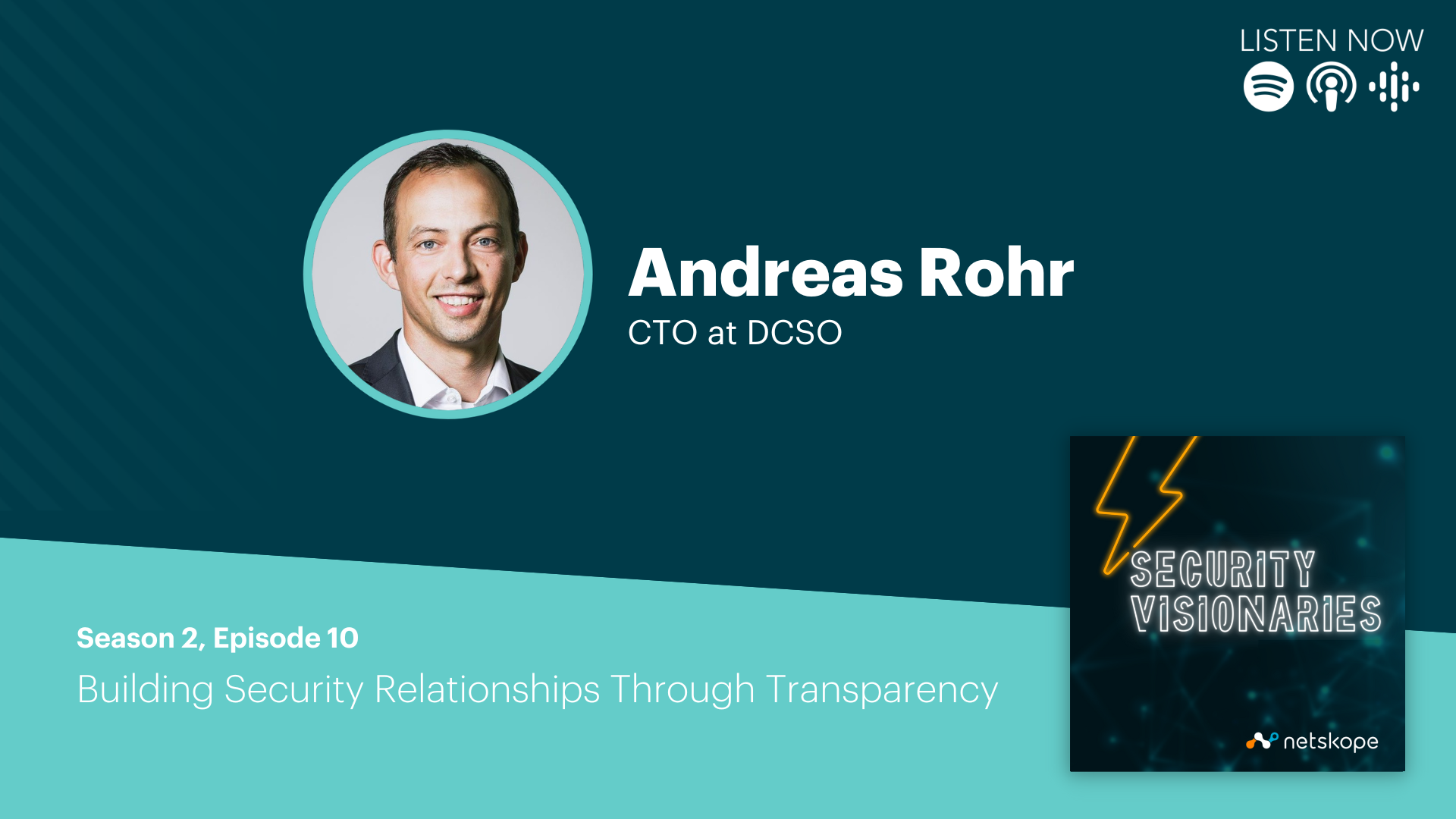
Speaker 2: Hello, and welcome to Security Visionaries. You just heard from today's guest, Andreas Rohr, CTO at DCSO. Aligning organizations on security requires many skills, most importantly, transparency. From establishing top-down communication to collaborating with work councils, transparency answers many questions along the way. Like, who has access to the sensitive information? What is an organization's appetite for risk? And how is the data of employees protected? Before we dive into Andreas's interview, here's a brief word from our sponsor. This Security Visionaries podcast is powered by the team at Netskope. At Netskope, we are redefining cloud, data and network security with a platform that provides optimized access and zero trust security for people, devices, and data anywhere they go. To learn more about how Netskope helps customers be ready for anything on their sassy journey, visit N-E-T-S-K-O-P-E.com. Without further ado, please enjoy episode 20 of Security Visionaries with Andreas Rohr, CTO at DCSO and your host, Mike Anderson.
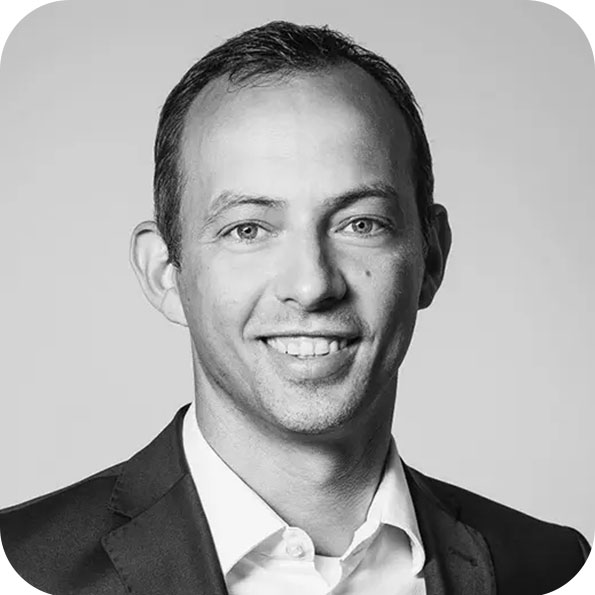
Mike Anderson: Welcome to today's episode of Security Visionaries. I'm your host, Mike Anderson. I'm the Chief Digital and Information Officer here at Netskcope. Today, we are joined by Andreas Rohr who's joining us from Germany. How are you doing today, Andreas?
Andreas Rohr: Oh, very good. Thanks for pronouncing the name very nicely.
Mike Anderson: I'm super excited about this conversation today because when we think about cyber security, you've done some very interesting things around bringing people together in the DACH region and thinking about companies of all sizes as you think about the cyber topic. And so can you tell us more about DCSO, how it started, the mission you've got, what you're trying to accomplish and how you're working with companies?
Andreas Rohr: So DCSO stands for German Cyber Security Organization. So the D is for Deutsche, for those that are maybe familiar with the language. And what basically four companies in the DACH region; Allianz, BASF, Volkswagen and Bayer, you might have heard of, some of the largest companies in Europe, they saw that they should basically combine forces and get exchanging ideas with other peers of themselves to not reinvent always the security topics by themselves and bringing together their experts. Because they have one thing in common, which is 90%, 80% of what they're challenging and security is more or less the same despite that they're competing on the market. And second, the talents are not enough on the market. So bringing them together under one roof and tasking them with things they're all interested in, would make things even better. And resource enabled testing of new ideas. So this is one of the things. The second one is they all have their supply chain they're dependent on. And this was seven years ago, so supply chain attack as a term was not born back then, but they already realized that the weakest link basically is not their secure and their security team and the maturity of them, but their supply chain ones, which are most dependent on.
Andreas Rohr: And digesting or making things in a way digestible from their security insights and learnings, is what DCSO as a community-driven exchange to operationalize such insights and technology as what we also have been founded for, to find ways to make it easier to use and also to apply for those companies that do not have a huge security team or even any knowledge. So operationalizing with security services was the second task, basically during the foundation of the company.
Mike Anderson: No, that's great. And I definitely know that we've got so many open cyber roles out there today. Anything you can do to help companies combat the bad actors that are out there that wanna cause harm to companies. As you said, these are competitors in some cases coming together at the table to figure out how they can basically protect ourselves from the adversaries that live out there in the wild. So it's definitely a strong mission. Have you had other companies that have joined in as part of that? And you've talked about the four that joined originally, but have you had more that have joined in that mission as well?
Andreas Rohr: So that's a good question. So that's not only the four. We very early started this with around 16 of tax companies we're now about 20, 21 or so of like and a few family owned and likewise and size companies. And they basically steer DCSO's kind of development of the portfolio and what we should talk about and what you should research in terms of topics and directions and help us, in an advisory also so to speak, where to develop into. And the second one is what we also like to and actually achieve to implement is a very regular format where they learn not only with new topics, but also the existing things where they failed or how they solved certain challenges and what did not work out. So that's even more important to shortcut learning curves. And this is not only for the less mature companies, it's also amongst the mature ones. And this proves that bringing folks together, despite their competing on a market, actually useful, effective, and should not only be limited to the companies itself, but also to the relationship for authorities and maybe even also for these research institutes. So really bridging the different fields of expertise and insights, especially to also intelligence services. Makes sense in both ways to have a flow, to not make that visible to the takers or adversaries, as you said.
Mike Anderson: I definitely feel that need for that private-public partnership around exchange of intelligence and what's going on from a threat standpoint. Again, it kinda brings this whole concept that security is a team sport. It's not just the four walls of my organization, but it's the whole ecosystem working together. When you look at that, I'm just curious, when you think about the authorities that are out there, have you been able to influence policy or changes that would help companies have better guideposts or things to align to?
Andreas Rohr: Yep, definitely. That was one of the things which I basically learned from the States. So I've seen the NCFTA, where the FBI and other law enforcement and industry was working together. I think as the early years, in the zero days of 2000s and also other formats for which something that's state-driven. But in general, I like the idea a lot that there's a fluent relationship where the necessary things to help each other is actually exchanged. And this drove also my way of influencing how we do that, and in fact, we have a very good relationship to the Ministry of Interior who actually is responsible for being the advisory function and the supervision of the federal police of the BSI, the federal office for information security, and also the one who's protecting the constitution. Not sure what that translates to English. So having those authorities that have all their own insights from [0:07:13.7] ____, from their peers at the FBI for instance, or from other law enforcement or intelligence services, and making sure it's getting passed on via DCSO as a trusted clearinghouse if you want to, where they can trust this will not leak to the public, especially to the attackers.
Andreas Rohr: But helping companies to find certain things where they have no clear indication that a particular company is threatened by a particular actor. But in general and helping to identify if those attackers are active in those networks, has proven to be very valuable because we've helped also the authorities to find out that a particular group was active by us operationalizing the information they gave us in a trusted way. And we could basically tell them back, "Okay, look, this thing you gave us, we have no idea where it came from, but we have seen that here." And so we help the law enforcement and also the intelligence services to have their targets to be better monitored when they have no sensors, because on the domestic side, the authorities are limited to what they can do in contrast to outside of Germany. And the same thing on the other hand, companies who are sometimes maybe very conservative on letting authorities look into their networks could use us to make sure there's only those things that are actually necessary to fulfill to each individual mission is passed on. And having basically us as a bridge to also cover then not always giving trust in the beginning.
Andreas Rohr: So it's developed into something where there's a more trustworthy exchange where those initial fears, they have not vanished, but they're definitely lower than before. So this helps in the end everyone. Not getting pathetic here, but also helping to get a better protection of the democracy itself where you have influencing parties out there.
Mike Anderson: Well, it sounds like you said lack of no trust, so it sounds like zero trust. So it seems like that's a common theme everywhere. I see a lot of organizations trying to align to it. Look at guidepost, like in the US and even beyond, sometimes we see people aligning to the NIST controls that are out there because the insurance companies which; that'll be a topic we'll talk about a little bit later, they're using that as a guidepost. Auditors use it as a guidepost. What do you see as the guidepost for companies that you're working with today? What is that guidepost that they're trying to align to?
Andreas Rohr: So it's not so much NIST-driven, that's just treated in nature that we are in Europe and trying to sometimes, invent the wheel ourselves instead of putting our forces together. But anyhow, so the guidepost here is more the ISO 27000 or something which is similar to it. It's a very German version of it. They all try to go after making sure that you manage your security correctly. And even more in this, the developer of the last years, the maturity level of those control implementations matters more than the actual compliance of it. So think of having compliance things first and then maybe 10 years ago where they started to implement those things, the effectiveness of that is what matters. So there's actually a shift, and what I like with the NIST and also other frameworks, is that they try to get more into the direction, how effective are you actually protecting yourselves and not necessarily only are you managing basically your risks and having controls. And this is where actually things should develop further into. So compliance is needed, but it's only a necessary condition, its not a sufficient one, 'cause a sufficient one is being effective. And effective actually matters more than the full compliance. But this might be not be cited to a regulator, please.
Mike Anderson: Well, it's interesting, 'cause what I see a lot of times is people will acquire tools because the auditors say you need to have the tool. But as you said, the effectiveness is actually, are you using the tool to accomplish the objective that you want to accomplish or drive the business outcome? And a lot of times that's a missing link because people collect tools to satisfy auditors, but they're not getting the effectiveness they need. And so they're now exposing themselves for business disruption from whether it's ransomware, they're exposing themselves to a data breach in their organization.
Andreas Rohr: Yeah. That's something really that the auditors and the regulators should think differently maybe in future because they drive this development by how they put their regulation. And there's a good change, which I saw was a local security guideline that actually became effective or will get effective fully in 1st of May in Germany, which indicates that you need to have... Like in the ISO 27000 new version, that you need to have systems for detecting attacks. That's what they call it. So basically, ISO detection mechanisms and also response. And this is really the things which you also refer to. It's not only a tool thing, they also mandate that you organizationally need to make sure that you are able to analyze those things, in a human and making sense of that, whether that's something serious to go after or not. And then even more important, being able and having things implemented to react. So it's also organizational-driven thing that you need to have 24/7 ability to, to do something about. If there's an indication of a ransomware group being at an early stage. Because you might only have a few hours or at max, days left to prevent the max damage.
Andreas Rohr: And having these organizational things on top of the tooling and the integration and making use of that in an effective manner is where the regulation should... Like insurance companies actually do, they'll rather look for whether something is effectively secure or not. And this is where it actually needs to develop into. But the regulator, for them it's easier to say you need to have a SIM, you need to have a network detection monitoring. So if you have an own data center and what not. But in the end it might be a good advice also to the regulator, maybe that's one of the next missions of DCSO to influence that to be more practically relevant what they actually tell them. And there's a good example for the national security law that was released two years ago in Germany.
Mike Anderson: No, that's great. You mentioned about managing the impact. I remember a peer of mine at a global consumer package goods company said that when NotPetya hit, it infected their entire network and all their systems within 15 minutes, globally. And so I think that thinking is the traditional, "How do I get things as quickly as possible from point A to point B, to C to D, and around my corporate network." That whole thing has to be rethought because then if I get compromised in one node, can it quickly just take over my entire network and bring my entire business down?
Andreas Rohr: Exactly. And when you also search on that matter, think about, this NotPetya was something which most of the folks could have prevented by doing more hygiene on their patching. But before those things happening, at least with ransomware vectors, they make some noise in the network. So there's almost 100% of the cases which we have been involved, doing incident response, we saw enough signals that could have been basically analyzed and triggered action to stop the attack. It would not necessarily make them to remediate those systems and building things from scratch, but they could have prevented the entire damage that actually happened after a few days. And the same thing is also with NotPetya, if you could have patched those things that are known or have been known to be critical, and a few other good practices that actually mandated in those standards, you have mentioned earlier, then this is the homework, the necessary condition. And the sufficient one is to build on top of that a good net of detection that actually gives you the trigger to act. And, not sure whether it would've been worked out in 15 minutes, but in general there is a timeframe which is shrinking to be fair.
Andreas Rohr: But there's a timeframe where you could detect things and can assume that that not all protective measures will always 100% protect you. And it's either being a user click on something or you have not patched or there's unsecure configuration or whatever in there. But if you assume that's the case and you have a detection grid on top of it, that will tell you, "Okay, there's something you don't want to have here. Please have a look and take action." Maybe even in a very automated or predefined way to stop such attacks is what needs to be done for really good companies in terms of security state.
Mike Anderson: Yeah, I fully agree man. If it's manual, you're always depending on the person in the chair and with a skill gap that can become problematic. So exactly to your point, the automation. So I can take preventative measures and run my play as quickly as possible is critical. Going back on thinking about the security side, and I think about data privacy, everyone talks about GDPR. I always remind people, you think GDPR is tough, wait till you have to go in front of German worker council and talk about data privacy for German citizens. When you think about a lot of security tools, you're inspecting what people are doing. How are you helping companies navigate the German worker council to make sure that they can get the right protections in place, but also preserve the privacy of German citizens?
Andreas Rohr: That's a tricky question. There's no silver bullet to making this happen. That works council is happy with what's happening when massive amount of data is inspected, which is needed for detection, to be fair. But the most convincing story for works council who are actually not there to prevent security or the company doing the right things, they're there to make sure that the data is not abused against their employees. It's their mission, their task, and it's a valid one. And to get along with works councils... And when I was in a CISO position in such companies where there were actually a strong works council, the best relationship is if you are really being transparent to what you do, why you're doing that. So I was pretty young back then. I was not really good in arguing potentially, basically on their mission because they're also having the mission to protect the employees from harm. And this also includes cyber attacks or violations of data privacy and breaches, et cetera. So back then I should have argued, what I do now, that helping to prevent attacks by inspecting some traffic or acquiring certain data would've been the right avenue to go. And that's one of the things which they cannot deny if you know how the constitution basically works.
Andreas Rohr: If you tell them the only use case to use this data, where it's valid to use the data, is for detecting malicious activities and not tracking employees and whatnot, and if you give that in writing, that this is what you do and if you adhere to your own rules for that sense, then they basically will in the first place, put some stones in your way and see whether you behave or not. But if you do that constantly that way that you're only using it for detecting malicious things and by that preventing basically their constituents if you want to, then the next time let you easier pass the door than than before. At least I never failed with getting things through the works council. It's just the way how you put that and that you really adhere to most principles to not use the data for something else that you acquire them for.
Mike Anderson: That's great. Well, hopefully, that's a product line offering that you're offering it at DCSO.
Andreas Rohr: Whenever you buy managed services from DCSO, this is included. So we help the customer to get through the door of the works council and I guess we have a pretty good reputation. And since I've worked with works councils before in the Volkswagen world, but also in the utility where they have really strong works council and tell from my past with them and how good the relationship et cetera, then that's the other part of the story. So we bring our experience in and they like that typically and make their life easier in terms of helping them to argue with their folks. And then it's a matter of trust in the end, not like zero trust, it's really the other way around. So if you build a trust then you can do most things with the works council. And even if you give them just a small hint, a read-only account to the technology you are deploying, this also helps a lot. So they're left to have transparency and helping them to see what you're looking at and what you make out of that and how you comment cases, et cetera, this is also helping to build trust. So they might not grasp everything as they see, but this is where they do not have the feeling there's something in the dark that's happening, which might harm my people. And it's not a secret success ingredient, but it's something which if you adhere to it, that actually will get you likely to a good outcome.
Mike Anderson: That's great. I 100% agree with, transparency is what builds trust. When people don't have transparency, people are guessing and guessing doesn't lead to trust. And so that's a great advice there when dealing with German Worker Council, and just generally as a business principle. Transparency is what builds trust. If I look at the role you have today, and you talked about some of your roles, what are some of the learnings you brought into DCSO? You mentioned that you were a CISO in the past, and now the CTO for DCSO. Talk a little bit about that journey and how have things evolved in your thinking as you've transitioned into the role you have today versus more the practitioner and CISO type roles you had in the past?
Andreas Rohr: When I was CISO back then, I had the same challenge as most CISOs that also have technical teams. So I had a fortune to not only be responsible for the governance and the security management system, but also having an own operational security team and the luxury to play around with technology, et cetera. So what I started most was what that I had all those tools in place that does island wise an okay or even a nice job, but there was no coherent way of utilizing that for an entire picture. And I don't want to say single pane of glass things. So I mean this is often used, but making use of the strengths of the different technologies and combining them is what basically made me successful to be very cost efficient in getting actually the entire value out of the different technology I was employing. And also got my team back then in a position to do some nice things that have been not average to what teams can achieve. So taking this, like, a set of or different tools, an army knife, if you want to, a swiss army knife, then the team that's operating that knife actually matters most. So getting them to deal with different types of input technologies, streams, insights, and operationalizing the different capabilities and skills of the people to maximize the outcome and also helping to solve certain homework for our clients in DCSO, is what drove me when we developed the portfolio.
Andreas Rohr: So one of the things I didn't mention earlier was that I have been also tasked to come up with a managed security service portfolio seven years ago. So put yourself back to that time, there was not very common, having maybe an outsourced SARC or so, but not outsourced managed security services so much and solving homework to those organizations so they can focus on the most interesting and hard nuts to crack and not doing the day-to-day job and making this very efficient was possible because I was in the position before. And at the same time having not the speech to the customer saying, "We do that for you." And like taking your job away, which is really something which you get a lot of resistance from security teams which you try to do business with. But helping them, "Look, we know that you need to do that and it's sometimes painful and we also have been in the position before, so we would like to blend into your team, and just accept us being the one who does the super homework every day, 24/7 and why you no focusing on the interesting things?" And we give you all the ingredients for that. So that's one of the things which helped a lot from a CISO and also fear perspective of those mature teams and the customer space to accept that we bring in added value. So it's not a technical question, it's rather how you blend in and complement team skills and capacity. And this is when you are able to convince also the technical folks on the customer side.
Andreas Rohr: And this helped a lot building the portfolio, how we put it, and also getting the community part in each of the services into the game where they talk and exchange with peers, not only how they like us, but also how they solve certain problems in the real world in a day-to-day fashion without having a consultant in place who helps them to solve it in the one or the other way. But learning from the others facilitated to us is what actually makes our success possible. And this is also kind of unique. So we are not focusing only on numbers within customer amount for VC, but really going purpose-driven on that they can help each other and we do kind of their homework in the most innovative way we can. That's where my past actually helped to do a different kind of a portfolio set up.
Mike Anderson: No, that's great. I have to ask, one of the questions that I always get asked, and then I saw a debate going online yesterday on LinkedIn between CISOs about, how do you determine the budget for security? And the debate is always around, is it a percentage of revenue the company? Is it a percentage of the IT budget? Is it based on the risk posture of the organization and what they wanna invest around that? How are you... I gotta imagine that's a question you get all the time from companies. How are you answering that question?
Andreas Rohr: It's rather the CISOs should get a, if you ask me, a trusted, neutral advisor who has no own interest in selling something. Sometimes I actually find myself similar positions. We get hired from board of directors and basically looking at their estate, et cetera, and then knowing that I also sell those services, but tell them what's needed and what's... I'm not saying rubbish, but where they overspend things and being really frank and not only looking for benchmark and going, after effective things. So what is those things that you wanna protect most, which actually makes your business running? Like a business impact analysis. If you know you're 10%, you are most dependent on, and if you put all the effective security roles on top of that and do a medium job for the remaining things, is the better advice to go after, rather than looking for the, pure numbers. And either you wanna protect your business or not, the 10%. And this is the way how I talk to them, then, okay, what's needed for that? Obviously is the next question. And so how much is an appropriate amount of money to spend? While they're getting top-down first, I was the critical business processes and then bottom-up. What's needed for that? And, then say, "Okay, for the remaining one, I can use a benchmark." So this is how I would approach it.
Mike Anderson: Yeah, it's good advice if I think across the business. You talked about supply chain risk early on in the conversation. When I was at Schneider Electric, I would talk to our head of supply chain about, what's the security posture of our suppliers? How does that fit into our sourcing strategy? And it all becomes into this whole enterprise risk conversation, not just cyber, but what's the financial stability of that company that I'm working with? Security now becomes another question that's right alongside that because if I can't get steel, it's hard to manufacture products without steel. And so looking through that, so I think you're spot on with that. I would hope that would fit for most of the companies that manufacturing summit and that 10% that they're really focused in on, that they wanna protect.
Andreas Rohr: Absolutely. And we have learned the disruption of supply chain with the Suez Canal, which is a very physical event, now we had this pandemic thing, we have this maybe trade war and related things, and then we have this shortage of resources due to the crisis in Europe with the war and also with China maybe not being able to operate their factories because they can't or they don't want to. So whatever it is. So knowing exactly where your weak links are and managing them actually will basically, or have already reset our way of measuring risk. And we also should factor in, that's one of the learnings of last year, that not always the adversaries act rational. So having a risk management and evaluation based on rational behavior of others, this might true for most of the things, like the financial market maybe and other things, but not necessarily for states like Russia. And we should also assume that there is a disruptive way of acting without any obvious reward to those who do that, which would be rational. And this is one of the things where you should be more conservative in terms of evaluating those risks, rather than, "Yeah, that's so unlikely, so it will not happen." This is also something which we should actually take into account.
Mike Anderson: Absolutely. I'm gonna pivot a little bit, as you talked about work with board of directors and others, when you think about security as a team sport, often times the CISO is the one that takes all of the... It's like probably one of the hardest jobs in the world, because there's no a dollar amount you can spend that's gonna protect you a 100%, and so it's always a risk-reward trade off. But it's also not just the CISO's job. How are you seeing, and how are you helping advise companies on how do they make security become part of the fabric of their organization and their people across the organization in all different units, business units and functions? How are you driving that and are you seeing that evolution occur at the pace you would expect it to?
Andreas Rohr: So the advice is to split it up into two different disciplines. One is more from a compliance perspective and getting the frame in place, and also the backing from the board for the most general things, which are not business-driven by itself. And the second one is making the teams end-to-end responsible. So the modern way of development and running applications is the DevOps team. So this has proven to be for most things the best setup. And adding security, and that one was the buzzword, DevSecOps, actually means that you embed the security for operations, but also for the developers in a very close loop. And this is the way how you actually make everyone aware what they're doing, what the impact is, and what in a best case should be implemented rather than a gateway centric development cycle. And by that you can react much faster on vulnerabilities, on insights, on things, attackers abuse, that it might be normal function. And this is the most modern setup you want to have in IT anyhow, and adding the security to it. And by that, also developing the developers and then the operations folks to know what they should do, because basically they have not been raised with that knowledge. And training on the job, so to speak, is the best way of implementing that in the most effective way.
Andreas Rohr: Don't talk down in terms of their skill in terms of doing that the right way. But if there's something sitting next to them having that thing and they're basically backing each other up on certain aspects, it's the most effective way to do. And this is the second one, which should be implemented. And the functional lead or the tribe lead, so to speak, for the subject matter of security should be with the CISO. So having a matrix organized way of implementing that, but they should be embedded in sitting with the developers and the operations folks, so as a normal security would be. So that's, in my opinion, the best way to do, there are industries where this does not work out, so where we need to act differently, but for IT driven companies, this is the best way to ensure that's happening. And maybe there, the security folks cannot be there 100% of their time because lack of talents as we know, but having this in general will implement it and swapping teams and making this possible is the way how it should go.
Mike Anderson: Isso é ótimo. E coisas que tenho visto até agora no... Se eu pensar nas equipes de TI e digitais, o DevSecOps é definitivamente o modelo, para usar essa palavra da moda, o caminho a seguir. Se eu pensar nas minhas funções financeiras, nas minhas funções de RH, se pensar nas minhas diferentes unidades de negócios, quais são algumas das coisas que você vê trabalhando para trazer segurança à mentalidade das pessoas fora da organização e empresa de tecnologia? Como tornar a segurança parte da estrutura da organização?
Andreas Rohr: Não tenho certeza se esta é realmente uma tarefa ativa apenas do CISO, é totalmente uma espécie de conselho de administração começando com a jornada. E não é mais um desafio porque os ataques de colegas e alvos próximos e as ações perturbadoras dos invasores do ano passado realmente ajudaram muito a transformar isso do improvável que poderia ocorrer na minha organização em algo real. Ok, precisamos cuidar disso. Não é uma questão estatística, vai me atingir a cada 10 anos, mas com certeza vai me atingir nos próximos dois anos e, portanto, preciso cuidar disso. E a segurança não deve ser implementada 100% segura para evitar que tudo seja de conhecimento geral. E isso também se aplica a RH e finanças, etc. Então a diferença com eles é que eles precisam receber uma meta [0:31:15.5] ____ o que deveriam fazer, o que não deveriam fazer e como e onde perguntar se não tivessem certeza sobre certas coisas. E isso é consciência em primeiro lugar, ou... Acho que a Netskope também usa de tempos em tempos o termo firewall humano para isso. E é bom basicamente aconselhá-los e ensiná-los, mas não é tão bom quanto também ajudá-los se precisarem, o que fazer se não tiverem certeza. Então isso é ainda mais importante, para que possa haver algo suspeito, ok, mas se eles conseguirem ajuda num piscar de olhos de uma hora ou de alguns minutos, isso será ainda mais importante.
Mike Anderson: Sim. Você mencionou o firewall humano. Tem sido uma grande campanha interna do nosso CISO aqui em Lamont, porque sempre olhamos para o elo mais fraco em qualquer programa de segurança: as pessoas que estão na presidência fazendo seu trabalho todos os dias. Temos todas as ótimas ferramentas para encontrar as pessoas que gostariam de causar danos intencionais. São as pessoas que causam danos acidentais todos os dias que clicam em links que não deveriam. Eles trazem aplicativos que não deveriam usar. Eles colocam dados nesses aplicativos que não deveriam estar lá. É isso que estamos tentando resolver. Uma das grandes coisas de que sou um grande fã é como podemos criar melhores cidadãos digitais? Você ouve shadow IT como um conceito que existe hoje. E se você perguntar ao CEO agora, é mais TI liderada pelos negócios, porque temos uma nova geração de trabalhadores que são nativos digitais. E então, como podemos capacitá-los a resolver problemas, mas de forma segura. Essa é minha nova missão na vida, sendo o CIO de uma empresa de segurança: como posso permitir que a pessoa que está na presidência resolva o problema de maneira segura para que possamos desbloquear essa mentalidade nativa digital? Então, como as pessoas estão evoluindo isso? Shadow IT sempre foi uma grande novidade, mas se você olhar para muitas fábricas de suprimentos, como você mencionou, o líder da fábrica contratará alguém para construir um painel para elas. Então, como você está vendo a evolução de parte desse pensamento?
Andreas Rohr: A shadow IT evolui a partir de não obter suporte flexível com você, trazer seu próprio dispositivo ou ativar um servidor ou o que quer que seja. Obter em primeiro lugar uma forma mais ágil e também confiável de obter recursos de computação e armazenamento ajudaria muito essa TI paralela, porque eles não querem ter um servidor sob sua mesa. Então ninguém quer isso. Eles só fazem isso porque não recebem a ajuda de que precisam. Então, resolver isso de forma progressiva e também aceitar talvez algum risco de que eles não sejam os melhores na administração de um servidor, mas ainda é melhor do que ter uma TI paralela. E então a primeira coisa. E a segunda é para o usuário, por exemplo, deixá-lo trazer suas próprias coisas e construir em torno daquela talvez mureta que ajuda a resolver as coisas mais importantes em termos de higiene, mas não ter um dispositivo 100% gerenciado. Então isso também pode ajudar. E então há dicas, você recebe um e-mail de um fuso horário ou de um local, este centro no qual você interferiu anteriormente não está correto ou é tão diferente, então você pode receber alguma pequena coisa, "Sim, este e-mail está fora de sua organização ou este foi enviado em um horário incomum." Portanto, sugerir basicamente que os usuários tenham um olhar mais atento sobre o que estão fazendo e enfrentando no momento também ajuda a tomar decisões melhores no final.
Mike Anderson: Não. Esse é definitivamente um ótimo conselho. Então, quero mudar um pouco para chamarmos isso de questões futuristas. Então, enquanto olhamos para frente, tenho certeza de que você aprendeu que, se olhar para os últimos cinco anos, provavelmente há um monte de coisas que você teria dito: "Se eu pudesse fazer diferente, eu teria feito isso". Por aqui." Se eu avançar para cinco, dez anos, digamos apenas 2030, em que os líderes de segurança e TI gostariam de ter investido agora, quando olharem para 2030?
Andreas Rohr: 2030 é um período bastante longo, mas digamos que seja nos próximos cinco anos. Ainda bastante desafiador, basicamente adivinhar o que teria sido importante é se tornar flexível no ecossistema de parceiros em que você atua, e isso leva a uma forma de integração de recursos não controlados. Sendo fluxos de dados ou serviços, etc., era uma maneira muito flexível de conectá-los a uma conexão e impor, naquela camada muito abstrata, certas políticas e coisas que você pode querer mudar, se mudar de parceiro, se mudar de plataforma, etc. E isso leva a um princípio de confiança zero e o segundo a um tipo de estrutura que você controla, mas que é flexível o suficiente para não ser um monólito ao longo do tempo e, em vez disso, permitir que você faça uso de diferentes serviços em nuvem, de diferentes redes de parceiros, etc. cetera. E se você não investir na capacidade de ter essas coisas conectáveis, você terá muito mais tempo necessário para ir ao mercado para novas configurações. E isso será no final das contas, em vantagem competitiva ou até não se você não fizer isso. Portanto, investir de forma conectável e fazer cumprir pontos para garantir que suas decisões sejam governadas da maneira certa, é isso que você deseja. E no final é, até certo ponto, uma confiança zero.
Mike Anderson: Isso é ótimo. Então, já que você mencionou a palavra confiança zero, muitas vezes pensamos em cibernético, por que investimos em cibernético? É para realmente evitar violações e evitar interrupções nos negócios. Então, se olharmos para a confiança zero, como você vê isso evoluindo? Como isso influencia o modo como as empresas pensam sobre a proteção de seus dados? Porque obviamente isso é o que estamos tentando proteger do ponto de vista de violação de dados.
Andreas Rohr: Acredito que a confiança zero na verdade ajuda de maneira diferente do que a maioria das pessoas pensa em termos de prevenção de violações e obtenção de melhor governança em torno de barreiras de dados, se você quiser. É antes ser mais flexível quando você muda sua arquitetura, seu cenário de aplicativos, seus parceiros, sua aquisição, etc., e com isso ter tempo de lançamento no mercado para reagir às mudanças. E por esse motivo, você pode não querer colocar muitas suposições em sua arquitetura e em seus fluxos de dados. Portanto, abordagens de confiança zero e de fluxo de trabalho muito centradas em dados ajudam você a permanecer mais flexível. E o melhor benefício do site é que, se você for muito bom em fazer isso e controlar quem pode usar qual serviço de dados de qual local e tipo de dispositivo e outros enfeites e nível de autenticação, então provavelmente você também estará fazendo um trabalho melhor na proteção é para ter uma grande violação. Você pode perder um ou outro sistema ou um ou dados, mas não tudo, se você tiver essa forma microssegmentada de governar as diferentes partes, se quiser. E a capacidade de fazer isso lhe trará vantagens competitivas, se você me perguntar por outro lado, se você implementá-lo corretamente com uma boa governança e operações de segurança, então você também terá o efeito colateral de proteger melhor seus dados.
Mike Anderson: Não. Isso é bom. Esse é um ótimo conselho. E se eu pensar por um minuto, todas as empresas com as quais você trabalha hoje, a confiança zero obviamente é um tema quente, porque você vai para a RSA e cada fornecedor tem isso em seu estande. Tenho certeza que veremos o mesmo este ano. Se você dissesse, quais são as duas ou três principais coisas que você ouve, CIOs, CISOs e conselhos com os quais você trabalha hoje? Quais são os tópicos quentes que você está ouvindo hoje?
Andreas Rohr: O mais urgente é que sabemos que ninguém consegue se proteger 100%. É realmente [0:38:05.0] ____ por pessoas onde eles basicamente têm medo de não ver os sinais com antecedência suficiente e então basicamente têm uma varredura fraca no tempo de inatividade médio e perdem milhões ou até dois dígitos bilhões nesse sentido durante esse tempo de inatividade e não falam que não podem fazer novos negócios, etc. Portanto, este é realmente o risco número um, contra o qual eles também lutam para obter uma cobertura de seguro, o que representa uma interrupção de seu negócio principal e sem ter feito o suficiente em termos de dever de cuidado. Portanto, a maioria dos diretores do conselho sabe que não pode negligenciar esse tipo de risco estatístico, mas precisa cuidar disso. E eles também querem ter certeza de que tudo o que fazem não é algo que poderiam ter evitado com mais foco ou orçamento. E a segunda coisa, também relacionada a isso, é que eles querem ter certeza de que seus parceiros mais críticos da cadeia de suprimentos estejam na mesma posição que eles. Portanto, tendo a interrupção dos negócios, não necessariamente para os seus próprios sistemas e ambiente, mas para aqueles da sua cadeia de abastecimento, seja a montante ou a jusante. Certificando-se também de que basicamente não percam fluxos de receita. E isso é o que mais ouço e a segurança é apenas o denominador comum entre isso.
Andreas Rohr: Então, isso está realmente tornando o fluxo de dados dos fluxos de valor resiliente a esses ataques. E as coisas restantes surgem como um derivado disso. Isso é o que mais ouço e a confiança zero é, lamento dizer, algo que não é um tema artificial porque é a coisa mais estratégica para melhorar, que é uma segunda agenda em relação ao que realmente preocupa hoje. Portanto, isto resolverá o problema dentro de 3 a 5 anos, mas não necessariamente hoje, porque a confiança zero não é um produto. Eles começam a entender isso. E então eu também digo a eles: “Não caiam naqueles que dizem que é um produto”. Só que Greenfield era uma coisa nova, faça seus aprendizados, adapte-o às suas necessidades e depois com o tempo tente migrá-lo e aceite 20% de nunca ter confiança zero habilitada. Apenas deixe isso como legado e construa algumas cercas maiores em torno disso e certifique-se de ter essas coisas sob controle e não pense demais nas coisas.
Mike Anderson: Não. Esse é definitivamente um ótimo conselho. E há muitas empresas por aí que dizem: “Compre meu produto e agora você terá confiança zero”. E isso simplesmente, como você disse, não existe. Portanto, é definitivamente um ótimo conselho. Você tocou um pouco em seguros e se eu pensar na base de seguros, estou começando a ver muitas pessoas dizendo: “Quer saber? Faremos um auto-seguro ou pegaremos os dólares que gastamos em seguros e investiremos em nosso programa de segurança." Porque eles acham que há basicamente muitas maneiras pelas quais as seguradoras podem evitar pagar, como evitar que o Estado-nação diga que se for um ataque do Estado-nação, não se aplica. Como você está vendo o pensamento das pessoas? Você está vendo o mesmo tipo de coisa onde as pessoas dizem: "Quer saber, por que não fazemos um auto-seguro e investimos isso em nosso programa de segurança?" Você está vendo isso? Como será o futuro dos seguros no ciberespaço?
Andreas Rohr: Existem grandes companhias de seguros que basicamente declararam abaixo que o risco cibernético não... Não podemos mais segurar esses riscos porque, do ponto de vista das seguradoras, elas não conseguem realmente medir o estado de maturidade. Então, qual é a probabilidade de uma empresa cair no ataque? E a segunda é que os pré-requisitos a serem cumpridos são, às vezes, arbitrários, páginas das seguradoras. É diferente e na verdade é um pesadelo preencher esses questionários e às vezes nós os ajudamos a fazer estrategicamente a cruz no lugar certo e também a não dizer coisas erradas, mas sim a coisa real, então são as escolhas que não podem ser ditas depois. "Sim, você declarou isso aqui e não aderiu ou não implementou de fato." Portanto, gastando o dólar talvez em segurança própria, em vez de segurá-lo, em uma boa combinação de gerenciamento de risco, você sempre quer ter caminhos diferidos para uma seguradora que é uma prática clássica de gerenciamento. Então eu aconselho a não fazer isso de jeito nenhum. Portanto, é razoável cobrir também se realmente as coisas correrem da pior maneira para ter alguns custos ou interrupções nos negócios cobertos, absolutamente faz sentido.
Andreas Rohr: Se for uma oferta de custo ridiculamente alta, então você pode pensar: “É melhor atribuir isso à minha capacidade de reagir e detectar as coisas”. E talvez impulsionar algumas das iniciativas de segurança, mas eu não trocaria uma pela outra. Você deve agir estrategicamente com sua confiança nas coisas arquitetônicas e certificar-se de fazer você mesmo os trabalhos de casa corretos, a higiene completa, e também tentar fazer com que as seguradoras acreditem que você faz um bom trabalho em segurança e ainda obterá que. Mas com o tempo penso que a marca de seguros não oferecerá apólices muito lucrativas para obter seguro contra riscos cibernéticos. Esse é o meu instinto. Eu não posso provar isso. Mas o que vejo e ouço e vejo como mediríamos isso de uma perspectiva estatística e de massa, que foi um dos meus estudos antes de iniciar a carreira profissional, então não vejo que sejamos capazes de calcular com modelos que realmente descrevam corretamente, porque não é um fundamento estatístico.
Mike Anderson: Vou passar agora para uma parte divertida do nosso podcast, que chamamos de sucessos rápidos. Vou fazer algumas perguntas, rápido, e vamos ver quais respostas você obteve. Então, a primeira é: qual foi o melhor conselho de liderança que você já recebeu?
Andreas Rohr: Isso foi muito cedo na minha carreira profissional. E isso basicamente o CEO me disse: "Mesmo que você seja o melhor especialista no assunto que está tentando resolver aqui no mundo, então você prefere ouvir sua equipe e dizer o que você ficará surpreso com as respostas que eles darão venha até você com." E isso pode não ser tão bom ou válido quanto você mesmo poderia ter feito, mas o mais importante é que a contribuição deles garantirá que seja sustentável e que você possa basicamente dormir melhor e partir para o próximo desafio. E isso é verdade. E 90% do que você percebe como seria a melhor solução para a questão é baseado em sua própria experiência e outros têm outras experiências. Então isso também vale para a diversidade. Então, enquanto eles ouviam e ficavam surpresos, eu ficava surpreso com muita frequência, o que eu mais gosto. Então, eu realmente incentivo todos a experimentarem e darem uma chance.
Mike Anderson: Definitivamente um bom conselho. Tudo bem. Qual seria sua última refeição?
Andreas Rohr: Eu costumava estar na Índia, em Mumbai por algum tempo, então a cada dois meses, durante duas ou três semanas. E eu acho que gostaria de comer, e eles comem muito picante lá. Então o que eu mais gostei foi frango masala picante e um pouco de pão Naan de alho. Então sinto muita falta disso. Então talvez seja esse o que eu pediria.
Mike Anderson: Tudo bem, último. Qual é o seu livro favorito que você leu este ano?
Andreas Rohr: Eu li um livro de Ellis Miller que já é um livro bem antigo, acho que tem cerca de 30 anos. E se chama 'O Drama da Criança Superdotada'. E trata-se de criar um filho de uma forma que ele não atenda às expectativas ao seu redor e se adapte e faça o que quiser, mas sim encontre o que realmente o apaixona e desenvolva isso ainda mais. Então esse é um livro muito bom para ler e ajudar seu filho a encontrar o caminho. Então eu gosto muito disso.
Mike Anderson: Terei que colocar isso na lista de leitura, como pai de quatro filhos, provavelmente há algumas pepitas boas aí para eu levar embora. Bem, obrigado Andréas. Isso é todo o tempo que temos hoje e eu realmente aprecio a conversa. Então tivemos uma ótima conversa com Andreas hoje. As três coisas que tirei disso, em primeiro lugar, e Andreas tocou nisso algumas vezes, é trabalhar em toda a nossa organização, olhando para o nosso entorno, alavancando as pessoas ao nosso redor no ecossistema, porque isso vai nos ajudar ter muito mais sucesso. A segunda coisa que observo é quando olhamos para as ferramentas, não apenas colete ferramentas, mas certifique-se de que estejam integradas e alinhadas aos resultados que desejo gerar em minha organização, o que ajudará você a ser mais eficaz e eficiente ao mesmo tempo. E a última coisa que tirei da nossa conversa é: pense nos fluxos de valor da sua organização e como posso incorporar segurança nisso para ter a postura de risco correta relacionada a esse fluxo de valor específico na minha organização? Conversa super esclarecedora e espero que tenham gostado. Sintonize nosso próximo episódio em breve no Podcast Security Visionaries.
Palestrante 2: O Podcast Security Visionaries é desenvolvido pela equipe da Netskope, rápido e fácil de usar. A plataforma Netskope fornece acesso otimizado e segurança de confiança zero para pessoas, dispositivos e dados onde quer que estejam. Ajudar os clientes a reduzir riscos, acelerar o desempenho e obter visibilidade incomparável de qualquer atividade na nuvem, na Web ou em aplicativos privados. Para saber mais sobre como a Netskope ajuda os clientes a estarem prontos para qualquer coisa em sua jornada atrevida, visite NETSKOPE.com.
Orador 4: Obrigado por ouvir os visionários da segurança. Reserve um momento para avaliar e comentar o programa e compartilhe-o com alguém que você conhece e que possa gostar dele. Fique ligado nos episódios que serão lançados a cada duas semanas e nos vemos no próximo.

























)