











Duas vezes líder no Quadrante Mágico do Gartner ® para plataformas SASE. Baixe o relatório

fechar
fechar
Sua Rede do Amanhã
Sua Rede do Amanhã
Planeje seu caminho rumo a uma rede mais rápida, segura e resiliente projetada para os aplicativos e usuários aos quais você oferece suporte.
Experimente a Netskope
Coloque a mão na massa com a plataforma Netskope
Esta é a sua chance de experimentar a plataforma de nuvem única do Netskope One em primeira mão. Inscreva-se em laboratórios práticos e individualizados, junte-se a nós para demonstrações mensais de produtos ao vivo, faça um test drive gratuito do Netskope Private Access ou participe de workshops ao vivo conduzidos por instrutores.
Líder em SSE. Agora é líder em SASE de fornecedor único.
A Netskope é reconhecida como a líder mais avançada em visão para as plataformas SSE e SASE
2X é líder no Quadrante Mágico do Gartner® para plataformas SASE
Uma plataforma unificada criada para sua jornada
Protegendo a IA generativa para leigos
Saiba como sua organização pode equilibrar o potencial inovador da IA generativa com práticas robustas de segurança de dados.
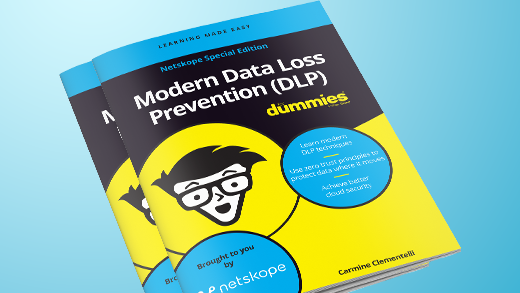
E-book moderno sobre prevenção de perda de dados (DLP) para leigos
Prevenção Contra Perda de Dados (DLP) Moderna para Leigos
Obtenha dicas e truques para fazer a transição para um DLP fornecido na nuvem.
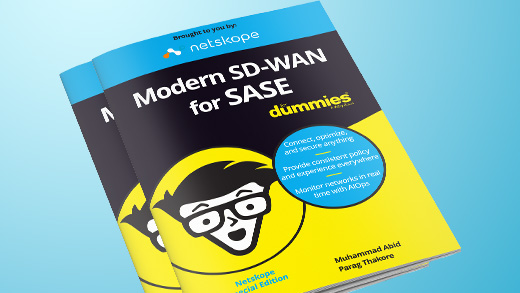
Livro SD-WAN moderno para SASE Dummies
SD-WAN moderno para leigos em SASE
Pare de brincar com sua arquitetura de rede
Compreendendo onde estão os riscos
O Advanced Analytics transforma a maneira como as equipes de operações de segurança aplicam insights orientados por dados para implementar políticas melhores. Com o Advanced Analytics, o senhor pode identificar tendências, concentrar-se em áreas de preocupação e usar os dados para tomar medidas.
Suporte Técnico Netskope
Nossos engenheiros de suporte qualificados estão localizados em todo o mundo e têm diversas experiências em segurança de nuvem, rede, virtualização, fornecimento de conteúdo e desenvolvimento de software, garantindo assistência técnica de qualidade e em tempo hábil.
Vídeo da Netskope
Treinamento Netskope
Os treinamentos da Netskope vão ajudar você a ser um especialista em segurança na nuvem. Conte conosco para ajudá-lo a proteger a sua jornada de transformação digital e aproveitar ao máximo as suas aplicações na nuvem, na web e privadas.

This report analyzes the primary cybersecurity risk trends impacting organizations within the Japan region. It addresses the increasing adoption of generative AI (genAI) tools and their associated data security challenges. Furthermore, it highlights the growing number of data policy violations, where sensitive information is increasingly being leaked through unauthorized cloud services, personal applications, and genAI platforms.

10 minutos de leitura

link link

The 2026 Netskope Threat Labs Japan report details the increasing adoption of generative AI, trends in data policy violations, and malware distribution via cloud applications observed over the last year.

Neste relatório link link

This report explores recent trends in the adoption and governance of generative AI applications, enterprise AI platforms, API usage, cloud app activity, and data policy violations across Japan. It highlights how organizations are balancing rapid innovation with the need for stronger data protection, compliance, and risk management controls.

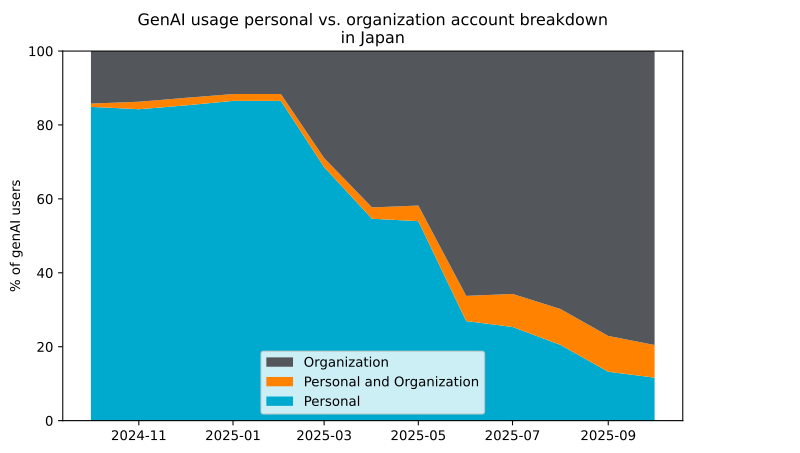
Mitigating shadow AI risk: While genAI adoption continues to rise, organizations in Japan are working aggressively to curtail shadow AI risks by guiding their employees to organization-managed genAI apps, rising to 79% (up from 15% one year ago) of AI users now using managed genAI apps instead of personal ones, which fell sharply from 85% to 11% over the same time period. In both instances, Japan is well ahead of global averages.

A new top genAI application: Google Gemini has overtaken ChatGPT as the most popular genAI app in Japan. This is the first region in the world where Netskope Threat Labs has reported this, with more expected in 2026.

Data exposure risks: Users continue to expose sensitive data to third parties in violation of organization policies, with intellectual property accounting for 50% of data policy violations involving personal cloud apps and regulated data accounting for 48% of data policy violations involving genAI apps.

Uso do GenAI link link

GenAI: tendências de adoção e uso

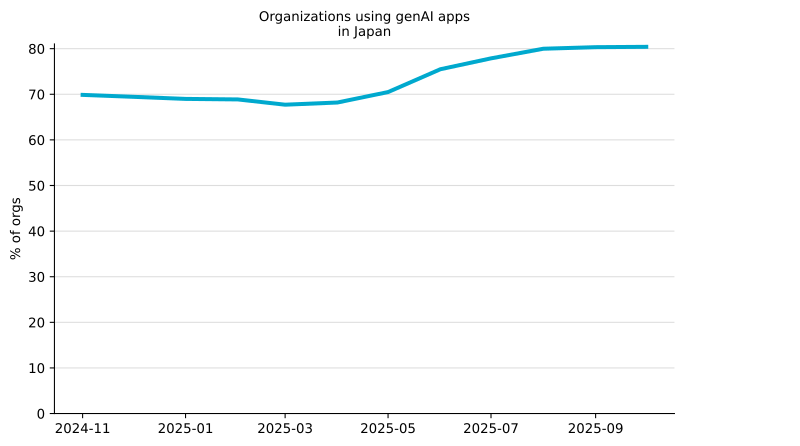
GenAI adoption in Japan has steadily increased over the past year, with genAI usage now observed in 80% of organizations, up from 69% a year ago. This upward trend reflects growing maturity and confidence in genAI technologies across Japanese organizations, which are gradually closing the adoption gap with global counterparts.

Organizations using genAI apps in Japan

Organizations in Japan have aggressively mitigated the shadow AI risk associated with genAI adoption by aggressively driving their user base away from using personal instances, and toward company-managed tools. The following chart illustrates the radical change in behaviour that occurred over the past year as the use of personal genAI accounts dropped sharply, falling from 85% to just 11%, while the adoption of organization-managed genAI solutions surged from 15% to 79% over the same period. In both of these areas, Japan is doing much better than the other regions, where 62% of employees use organization-managed AI apps and 47% still use personal genAI apps. This dramatic change points to a strong move toward company-managed platforms that provide better data protection, governance, and compliance controls. As this transition accelerates, organizations in Japan are increasingly prioritizing enterprise-grade genAI solutions that enable innovation while reducing risk.

GenAI usage personal vs organization account breakdown in Japan

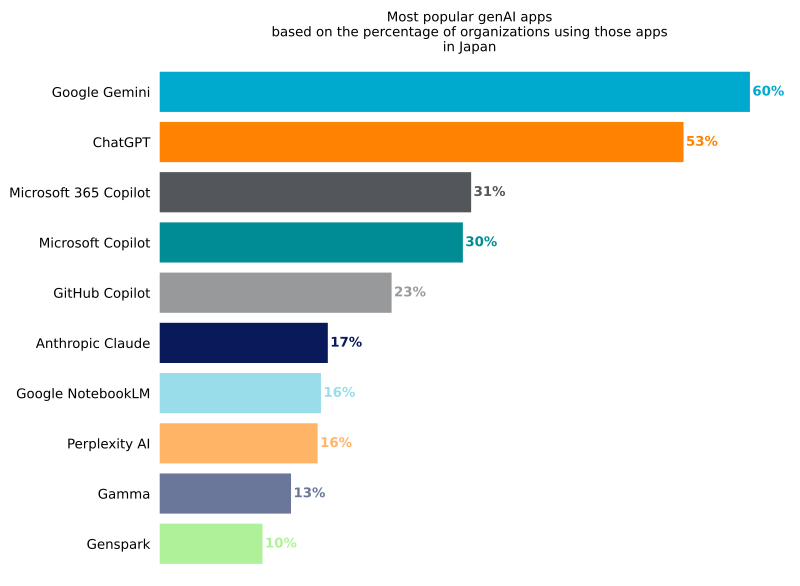
In Japan, the top genAI applications differ from global usage patterns. While ChatGPT is still the most popular genAI app globally. Google Gemini has become the most popular genAI app in Japan, where 60% of organizations are using it compared to 53% using ChatGPT. In fact, this is the first time that we are reporting the dethroning of ChatGPT as the most popular genAI app in any region. As usage of genAI apps managed by organizations continues to increase across the globe, we expect more regions to follow suit in 2026. Microsoft 365 Copilot is used by 31% of organizations, with Microsoft Copilot close behind at 30%. The remaining top applications include a mix of specialized and embedded AI tools tailored to local business and operational needs.

Most popular genAI apps based on the percentage of ogranizations using those apps in Japan

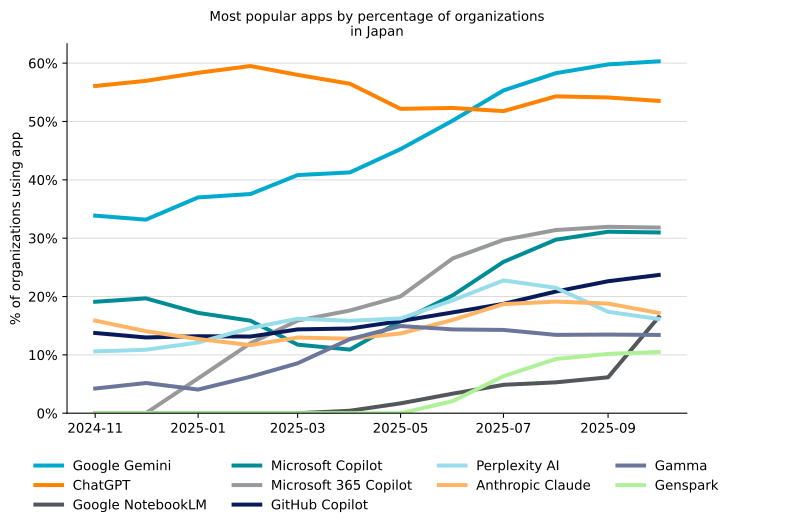
The chart below shows how usage of the top genAI applications in Japan has evolved over the past year, highlighting rapid shifts in the genAI landscape. Google Gemini surpassed ChatGPT in June 2025, marking a notable change in leadership among genAI tools that we expect to see occurring in other regions in 2026. ChatGPT usage declined over the year, while Gemini continued to gain momentum. Microsoft 365 Copilot also showed steady growth, driven by its integration into core productivity and enterprise workflows. In addition, Google NotebookLM emerged as a new entrant, with adoption beginning in April 2025 and reaching 16% by the end of the year, reflecting growing interest in specialized, knowledge-focused genAI tools.

Most popular apps by percentage of organizations in Japan

GenAI: uso de aplicativos e violação da política de dados

As genAI adoption continues to grow across Japan, concerns around data exposure are becoming increasingly important. Organizations are using genAI tools for tasks such as summarizing documents, generating reports, and supporting development workflows, all of which can involve sharing sensitive information and expanding the potential attack surface. As genAI becomes more embedded in daily operations, data protection has become a top priority, particularly as shadow AI remains a challenge.

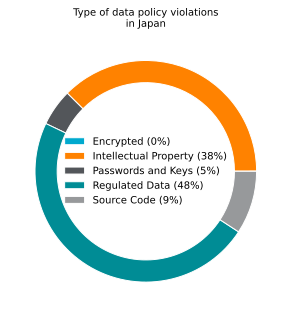
Recent analysis of data policy violations in Japan shows that regulated data is the most frequently exposed category, accounting for 48% of incidents, followed by intellectual property at 38%. Source code represents 9% of exposures, while passwords and API keys account for 5%. On average, organizations in Japan experience more than 500 genAI-related data policy violations per month, underscoring the scale of the challenge. This shift highlights a higher risk around compliance-sensitive and proprietary information, reinforcing the need for robust DLP controls and secure, well-governed genAI deployments.

Type of data policy violations in Japan

Aplicativos GenAI mais bloqueados

Organizations across Japan are taking a cautious approach to genAI adoption, with many choosing to block specific applications due to security, privacy, and compliance concerns. While policies vary by organization, certain tools are restricted far more often than others, highlighting where perceived risk is highest. In some cases, blocking entire categories of genAI apps may offer more consistent protection than managing individual tools.

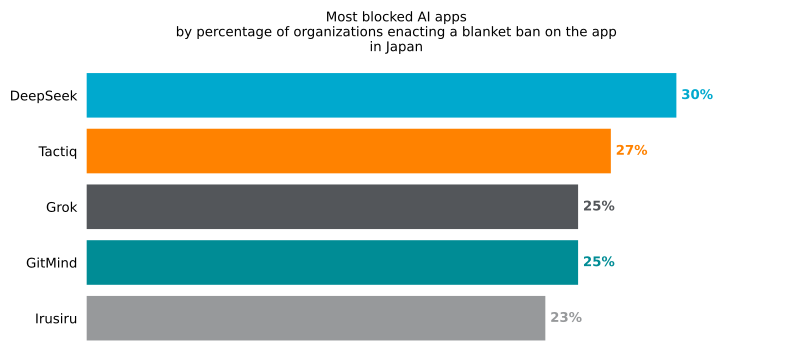
DeepSeek is the most frequently blocked genAI application at 30%, followed by Tactiq at 27% and Grok at 25%. These blocking patterns suggest that organizations in Japan are not only responding to risks associated with individual applications, but also strengthening broader governance strategies to manage genAI usage within established security and compliance frameworks.

Most blocked AI apps by percentage of organizations enacting a blanket ban on the app in Japan

Adoção de IA Agentic link link

Aumento do uso de APIs GenAI fora do navegador

Even when genAI agents and applications are deployed on-premises in Japan, the underlying models are often hosted in the cloud through SaaS or enterprise genAI platforms. These agents and applications typically connect via dedicated API endpoints rather than browser-based interfaces. For example, browser interactions with OpenAI occur through chatgpt.com, while internal tools, workflows, and AI agents commonly access models programmatically through api.openai.com.

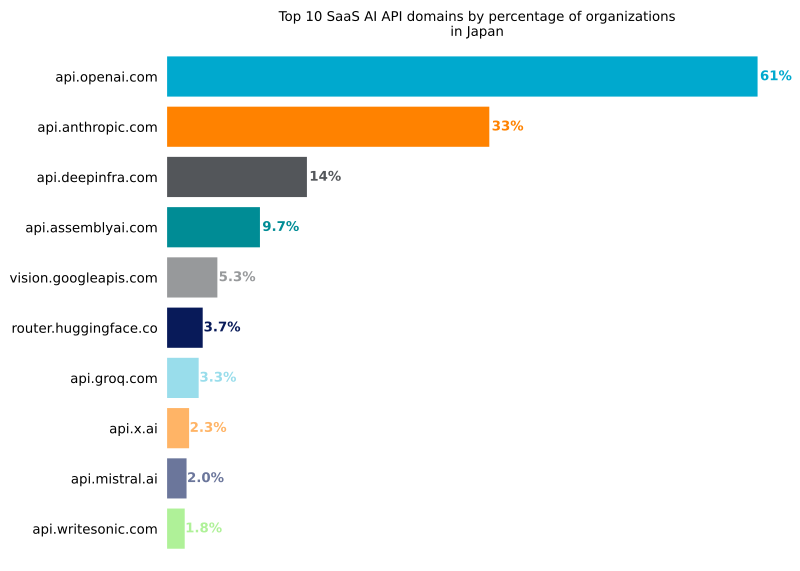
Despite Google Gemini surpassing ChatGPT in application usage, api.openai.com remains the most widely used genAI SaaS API in Japan, with 61% of all organizations connecting to it. This is followed by api.anthropic.com at 33% and api.deepinfra.com at 14%, underscoring the continued importance of API-based genAI integrations in enterprise systems and agent-driven workflows.

The Top 10 SaaS API domains by percentage of organizations in Japan

Downloads de malware link link

Distribuição de malware por meio de aplicativos em nuvem

Attackers frequently abuse trusted cloud platforms in Japan to distribute malware, taking advantage of the fact that users are more likely to open files hosted on familiar services. While these platforms work to remove malicious content, even short delays before detection can be enough for attacks to succeed and for infected files to spread internally.

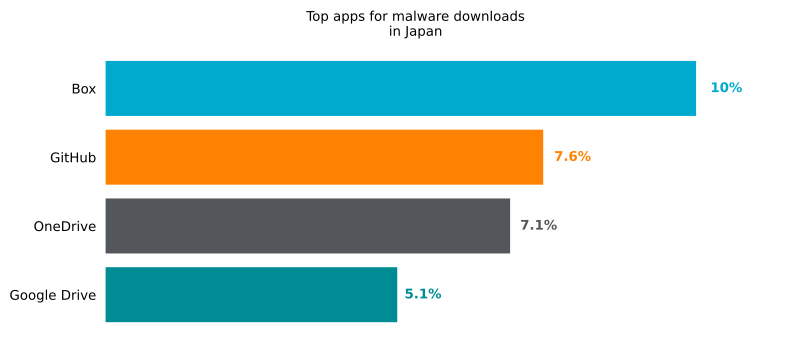
In Japan, Box has emerged as one of the most commonly abused cloud platforms for malware distribution, impacting 10% of organizations, followed by GitHub at 7.6% and Microsoft OneDrive at 7.1%. These trends highlight how attackers adapt to regional cloud usage patterns and continue to leverage widely trusted services to deliver malicious payloads.

Top apps for malware downloads in Japan

Uso de aplicativos em nuvem link link

Atividade de aplicativos pessoais

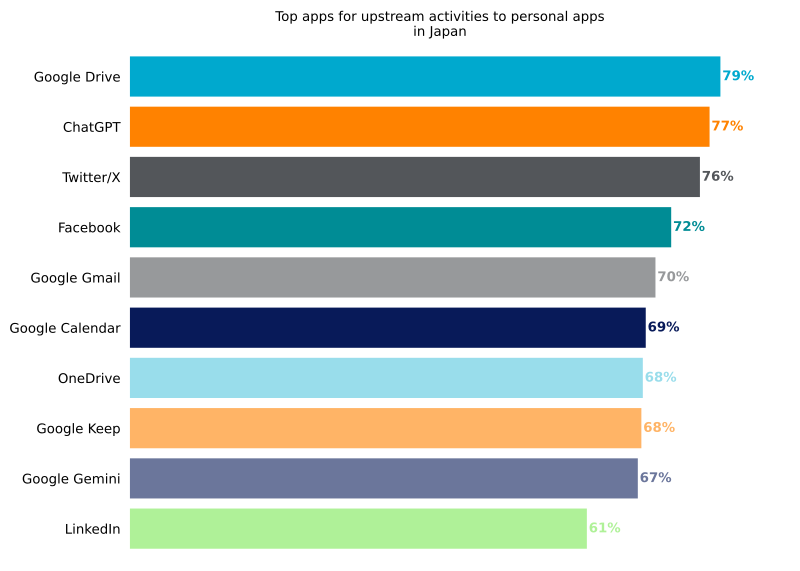
Across Japan, the widespread use of personal cloud and online applications in workplace environments continues to blur the boundaries between corporate and personal data management. Google Drive is the most commonly used personal app at 79%, followed closely by ChatGPT at 77% and Twitter/X at 76%. While much of this activity supports legitimate use cases such as collaboration, research, and productivity, it also introduces meaningful data security risks when sensitive information is involved. From personal genAI accounts to social and collaboration platforms, these applications remain key points of potential data exposure, particularly when used outside approved workflows or during employee transitions.

Top apps for upstream activities to personal apps in Japan

Violações de política de dados em aplicativos pessoais

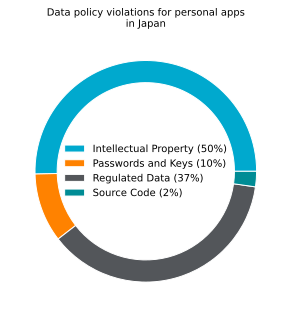
Across Japan, many organizations actively use DLP controls to monitor and manage the movement of sensitive data into personal applications, aiming to reduce accidental exposure or misuse. Recent incident analyses show that intellectual property accounts for 50% of policy violations, followed by regulated data at 37%, passwords and API keys at 10%, and source code at 2%. On average, organizations experience around 17 data policy violation incidents per month involving personal applications, reinforcing the scale and persistence of the risk. These figures continue the same trend observed last year, highlighting the persistent challenge of protecting commercially sensitive information in unmanaged or personal apps. Strengthening DLP coverage, improving employee awareness, and enforcing clear data-handling policies remain essential for minimizing both insider and external risks.

Data policy violations for personal apps in Japan

Violações de dados de aplicativos pessoais

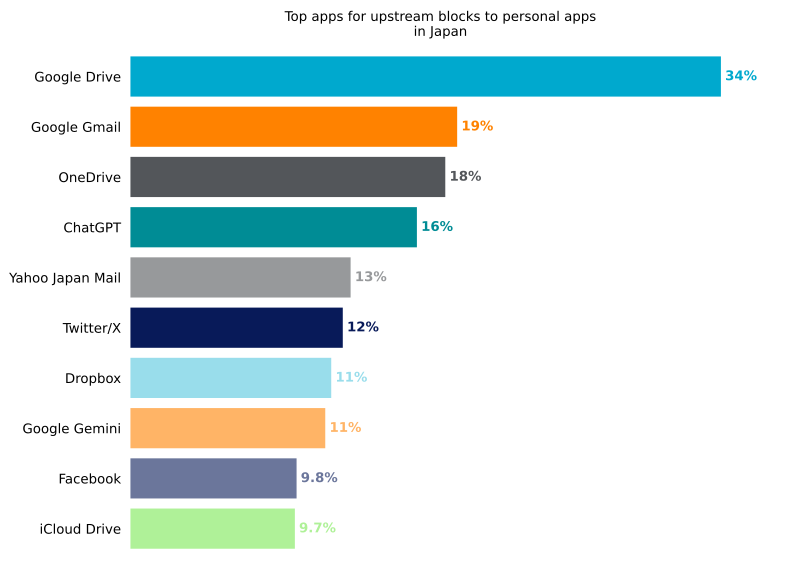
Organizations in Japan use a variety of tools to reduce the risk of data leaks through personal cloud and genAI applications. Measures include blocking uploads to personal apps, providing real-time guidance to employees to prevent sensitive information from reaching unmanaged services. Google Drive is the application that most frequently triggers such blocks, followed by Google Gmail at 19% and OneDrive at 18%. These efforts reflect ongoing attempts to limit unauthorized data movement and mitigate risks from personal accounts on unmanaged platforms.

Top apps for upstream blocks to personal apps in Japan

Recomendações link link

Com o uso crescente de ferramentas de genAI, tanto gerenciadas quanto pessoais, e o uso indevido de aplicativos de nuvem pessoal, é essencial fortalecer a visibilidade, refinar políticas e priorizar defesas proativas para proteger sua organização neste cenário de ameaças em rápida mudança.

Based on the trends uncovered in this report, Netskope Threat Labs strongly encourages organizations across the Japan region to take a fresh look at their overall security posture:

  • Inspecione todos os downloads HTTP e HTTPS, incluindo todo o tráfego da Web e da nuvem, para evitar que o malware se infiltre em sua rede. Os clientes da Netskope podem configurar seus Netskope One Next Gen Secure Web Gateway Com uma política de proteção contra ameaças que se aplica a downloads de todas as categorias e a todos os tipos de arquivo.
  • Bloqueie o acesso a aplicativos que não atendem a nenhum propósito comercial legítimo ou que representem um risco desproporcional para a organização. Um bom ponto de partida é uma política que permita aplicativos confiáveis atualmente em uso e, ao mesmo tempo, bloqueie todos os outros.
  • Uso DLP políticas para detectar informações potencialmente confidenciais, incluindo código-fonte, dados regulamentados, senhas e chaves, propriedade intelectual e dados criptografados, sendo enviadas para instâncias de aplicativos pessoais, aplicativos GenAI ou outros locais não autorizados.
  • Uso Remote Browser Isolation (RBI) Tecnologia para fornecer proteção adicional quando houver necessidade de visitar sites que se enquadram em categorias que podem apresentar maior risco, como domínios recém-observados e recém-registrados.

Netskope Threat Labs

Com a equipe dos principais pesquisadores de ameaças e malware na nuvem do setor, Netskope Threat Labs Descobre, analisa e desenvolve defesas contra as ameaças mais recentes na nuvem que afetam as empresas. Nossos pesquisadores são palestrantes e voluntários frequentes em importantes conferências de segurança, incluindo DEF CON, Black Hat e RSA.

Sobre este relatório

A Netskope oferece proteção contra ameaças a milhões de usuários em todo o mundo. As informações apresentadas neste relatório são baseadas em dados de uso anônimos coletados pelo Plataforma Netskope One relating to a subset of Netskope customers in Japan with prior authorization.

As estatísticas deste relatório são baseadas no período de 1º de outubro de 2024 a 31 de outubro de 2025. As estatísticas refletem as táticas dos atacantes, o comportamento dos usuários e as políticas da organização.