








Netskope apresenta: IA segura em qualquer lugar

Inscreva-se

fechar
fechar
""
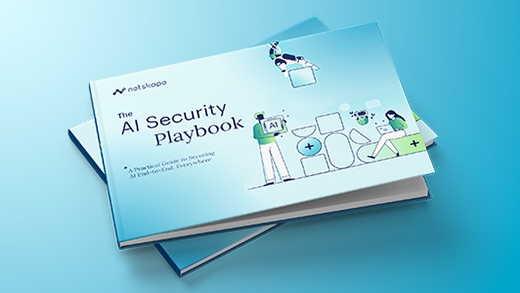
O AI Security Playbook
Este manual explora os seis principais desafios de segurança que as organizações enfrentam ao adotar a IA, juntamente com estratégias comprovadas e reais para enfrentá-los.
Experimente a Netskope
Coloque a mão na massa com a plataforma Netskope
Esta é a sua chance de experimentar a plataforma de nuvem única do Netskope One em primeira mão. Inscreva-se em laboratórios práticos e individualizados, junte-se a nós para demonstrações mensais de produtos ao vivo, faça um test drive gratuito do Netskope Private Access ou participe de workshops ao vivo conduzidos por instrutores.
MQ para SASE e SSE 2026
A Netskope é novamente reconhecida como Líder no Quadrante Mágico do Gartner® para Plataformas SASE e Security Service Edge.
Veja por que o Gartner® nomeou a Netskope Líder no Magic Quadrant™ 2026 para Secure Access Service Edge Platforms e para Security Service Edge
Relatório de Riscos e Prontidão para a IA
Compare o desempenho da sua organização com base em pesquisas sobre desafios e estratégias de segurança em IA, conduzidas pela Cybersecurity Insiders.
Relatório de Riscos e Prontidão para a IA
Compare o desempenho da sua organização com base em pesquisas sobre desafios e estratégias de segurança em IA, conduzidas pela Cybersecurity Insiders.
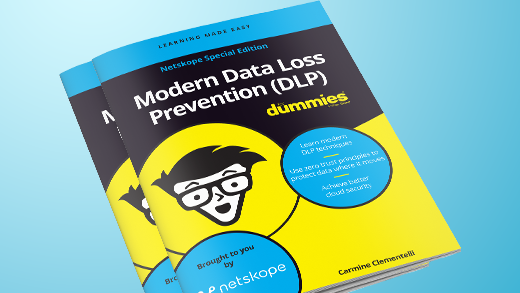
E-book moderno sobre prevenção de perda de dados (DLP) para leigos
Prevenção Contra Perda de Dados (DLP) Moderna para Leigos
Obtenha dicas e truques para fazer a transição para um DLP fornecido na nuvem.
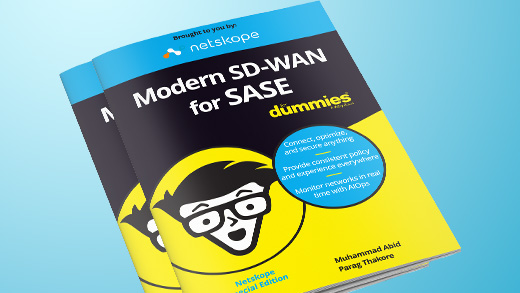
Livro SD-WAN moderno para SASE Dummies
SD-WAN moderno para leigos em SASE
Pare de brincar com sua arquitetura de rede
Compreendendo onde estão os riscos
O Advanced Analytics transforma a maneira como as equipes de operações de segurança aplicam insights orientados por dados para implementar políticas melhores. Com o Advanced Analytics, o senhor pode identificar tendências, concentrar-se em áreas de preocupação e usar os dados para tomar medidas.
The Lens
""
Leia as últimas notícias e opiniões da equipe da Netskope. O Lens combina nossos blogs, podcasts e estudos de caso, com conteúdo New adicionado toda semana.
Suporte Técnico Netskope
Nossos engenheiros de suporte qualificados estão localizados em todo o mundo e têm diversas experiências em segurança de nuvem, rede, virtualização, fornecimento de conteúdo e desenvolvimento de software, garantindo assistência técnica de qualidade e em tempo hábil.
""
Inteligência Artificial na Pista Rápida
O roadshow AI in the Fast Lane da Netskope reúne profissionais de segurança para discutir como as organizações estão usando IA atualmente e como uma estratégia de segurança abrangente pode criar um modelo mais inteligente, seguro e preparado para o futuro.
Vídeo da Netskope
Treinamento Netskope
Os treinamentos da Netskope vão ajudar você a ser um especialista em segurança na nuvem. Conte conosco para ajudá-lo a proteger a sua jornada de transformação digital e aproveitar ao máximo as suas aplicações na nuvem, na web e privadas.

This report examines four key trends in cybersecurity risks facing France organizations, including AI data risks, data policy violations, and malware distribution via popular cloud applications.

11 minutos de leitura

Principais conclusões link link

This report examines how AI is becoming embedded across French organizations and the security challenges that come with that shift. It looks at the move toward managed AI, the growing role of AI in everyday applications and agentic workflows, and the data and malware risks emerging alongside this adoption.

AI is becoming deeply embedded in French organizations: Active AI users rose from 43% to 69% over the past year, and organization-managed adoption climbed from 28% to 66% as personal AI use fell from 80% to 51%. But AI now reaches far beyond standalone tools: 96% of employees use applications with embedded AI features, and 89% interact with systems that use customer or user data for training.

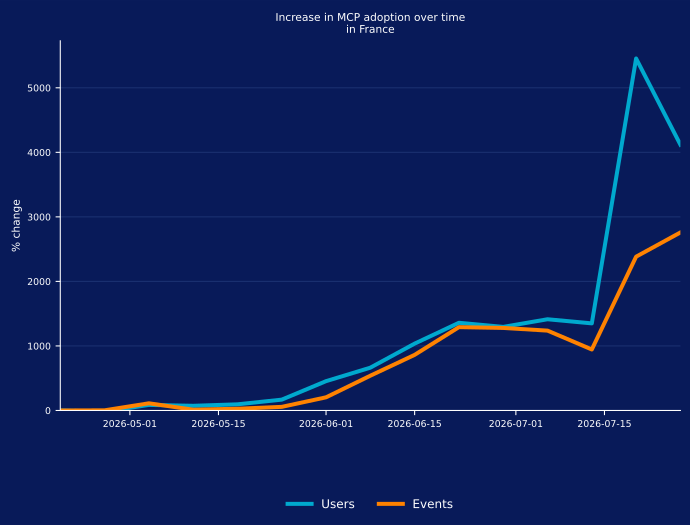
Sensitive data is following AI into the enterprise: Regulated data accounts for 58% of AI-related data policy violations in France, followed by source code at 26%, intellectual property at 9%, and passwords and API keys at 6%. Remote MCP activity has surged since May, with users up roughly 5000% and events up around 2800%. Organizations need to understand not just which AI applications employees use, but what those applications and agents can access.

Attackers are following the AI trend: AI lure activity has held steady at around 80 users per 100,000 since August 2025, making impersonation of trusted AI brands a persistent tactic rather than an occasional campaign. Encounters with malicious AI links have fallen from more than 100 per week per 100,000 users to around 35, though the residual volume still warrants attention. Familiar AI services are increasingly part of the attack chain.
 

uso de IA link link

IA: Tendências de adoção e utilização

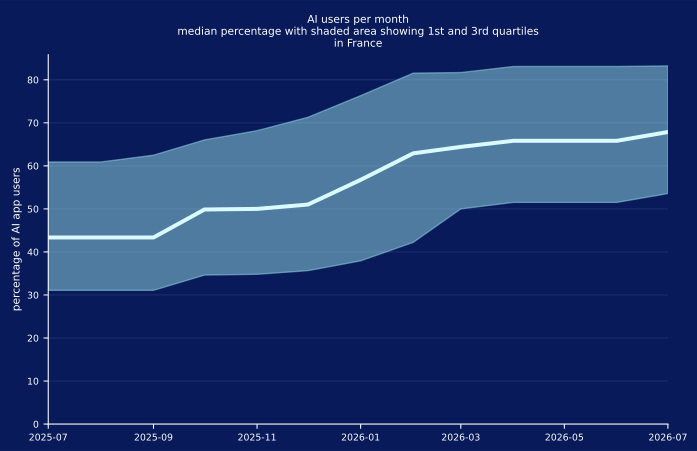
As organizations grow more confident in adopting AI, the technology is becoming a routine part of everyday business operations. AI use in France has continued to climb over the past year, with the share of users actively working with AI applications rising from 43% to 69%, in line with global trends.

diagram showing ai users per month median percentage with shaded area showing 1st and 3rd quartiles in France

In parallel, organizations in France have made steady progress in reducing shadow AI risk by moving users away from personal AI accounts and toward organization-managed tools. Over the past year, the use of personal AI applications fell from 80% to 51%, while adoption of organization-managed AI solutions rose from 28% to 66%. At the same time, the share of users switching between personal and enterprise accounts grew from 8% to 18%, suggesting that some employees still move between managed and personal accounts as they explore new tools. This points to the need for organizations to streamline the review and approval of new AI applications while maintaining tighter instance-level controls.

Overall, these changes show that French organizations have made meaningful progress toward managed AI deployments, improving data protection and compliance without holding back productivity. That progress has not continued at the same pace, however. Since the spring, the shift away from personal AI use has largely stalled, and the overlap between personal and enterprise usage remains. Shadow AI appears harder to eliminate once organizations reach a certain level of maturity, making long-term guardrails, clear policies, and simple processes for adopting new AI tools an important part of every French organization’s AI strategy.

chart showing ai usage personal vs. organization account breakdown in France

AI adoption patterns in France differ noticeably from global trends. Anthropic Claude Platform has overtaken ChatGPT as the most widely adopted AI application, used by 86% of organizations. Claude Code, Anthropic’s specialized coding tool, follows at 74%, with ChatGPT close behind at 73%. Anthropic’s broader presence reflects the different roles of its products: Claude Code supports software development, while the Claude Platform provides the APIs and tools businesses use to integrate Claude into their own applications. This strong adoption across Anthropic’s products points to growing AI use beyond conversational tools and into enterprise and development workflows.

chart showing most popular ai apps by workforce adoption across organizations in France

The chart below shows how adoption of the leading AI applications has evolved in France over the past year, highlighting a clear shift in application preference. ChatGPT has remained relatively stable throughout the period, maintaining consistently high adoption. Anthropic Claude Platform, by contrast, began climbing in September 2025 and continued to gain ground over the following months before overtaking ChatGPT and settling into first position from May 2026 onward. Google Gemini followed a different trend, slipping gradually from March 2026. Overall, the changes point to a growing preference for Anthropic’s platform, while ChatGPT remains stable and Gemini loses ground.

chart showing most popular apps by percentage of organizations in France

IA: Violação da política de uso e dados do aplicativo

As AI adoption continues to increase in France, concerns around data exposure are becoming more relevant. French organizations are using AI tools to summarize documents, generate reports, assist employees, and support everyday business processes. These use cases can involve sensitive customer, business, and operational information, creating additional opportunities for data exposure. Protecting sensitive information therefore remains a key priority, particularly as organizations work to identify and control the risks associated with shadow AI.

Analysis of AI-related data policy violations in France shows that regulated data represents the largest share of attempts to include sensitive information, accounting for 58% of observed activity. Source code follows at 26%, while intellectual property accounts for 9% and passwords and API keys make up the remaining 6%.

diagram showing type of data policy violations in france

Aplicativos de IA mais bloqueados

Organizations in France are taking a measured approach to AI adoption, with many restricting certain applications because of security, privacy, and compliance concerns. While specific policies differ by organization, the most-blocked applications indicate where French organizations see the greatest risks.

Tolk.ai is the most frequently blocked AI application, restricted by 34% of organizations. A French no-code platform for building generative AI chatbots and live chat agents for customer service, it typically connects to internal knowledge bases and CRM or ticketing systems. Particular Audience follows at 33%, and DeepSeek at 30%. Together, these applications cover a range of AI use cases, from customer-facing chatbots and personalization to general-purpose AI services. Where these tools interact with business information, customer data, or internal systems, they can create additional opportunities for sensitive information to leave the organization.

Overall, the pattern suggests that French organizations are taking a more cautious approach to AI governance, particularly around applications that could expose sensitive data or operate outside established security and compliance controls.

chart showing most blocked ai apps by percentage of organizations enacting a blanket ban on the app in france


Adoção de IA Agentic link link

Adoção de IA pelos usuários

AI adoption is now present across multiple layers of the French business environment. In France, 66% of employees use AI applications directly, while 96% use applications that include AI-powered features. In addition, 89% interact with AI systems that use customer or user data to train models.

These figures show how widely AI has become part of everyday work, often through features built into applications employees already use rather than through standalone AI tools. As adoption continues to grow, French organizations face a greater challenge in understanding where sensitive information is being shared and how it may be used, both through direct interactions with AI tools and through AI functionality operating in the background.

chart showing average percentage of users in france


MCP: Interconexão em rápido crescimento link link

MCP, the open-source standard that allows AI models to connect with external data sources and tools, is seeing a sharp increase in adoption in France. Growth began in May and accelerated from there, with the number of users interacting with remote MCP servers rising by roughly 5000% and MCP-related events by around 2800%.

This growth matters because remote MCP connections introduce additional pathways for data to move between AI applications and external systems. For French organizations, that makes visibility and control over these interactions increasingly important, particularly where AI agents can access business data or other sensitive resources.

These figures relate specifically to remote MCP usage, where AI agents connect to MCP servers hosted on the internet rather than locally or within an organization’s own network. The scale of the increase suggests that agentic AI is moving beyond experimentation and becoming more closely integrated into day-to-day business workflows, making MCP activity an area that organizations will increasingly need to monitor and govern.

chart showing the increase in MCP adoption over time in france


ameaças adjacentes à IA link link

Categorizing AI risks

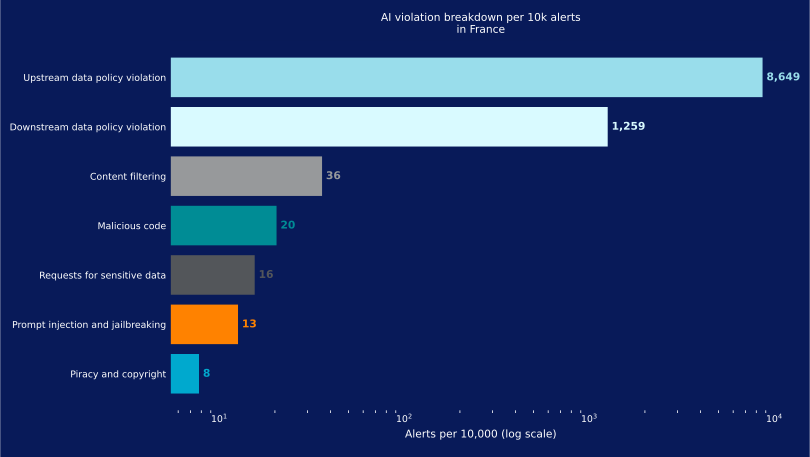
Effective AI visibility, governance, and protection start with a clear understanding of the risks organizations are facing. In France, upstream data policy violations account for 86% of AI-related violations, making them the most prevalent risk category. Downstream data policy violations are also widespread, reflecting the risk of exposing sensitive information both when it is entered into AI tools and when AI-generated content is shared or used elsewhere.

Malware-related violations remain less common, but they still pose a potentially high-impact risk because they can compromise systems, applications, and sensitive business data.

chart showing ai violation breakdown per 10k alerts in france


ameaças adjacentes à IA link link

Iscas de IA maliciosas

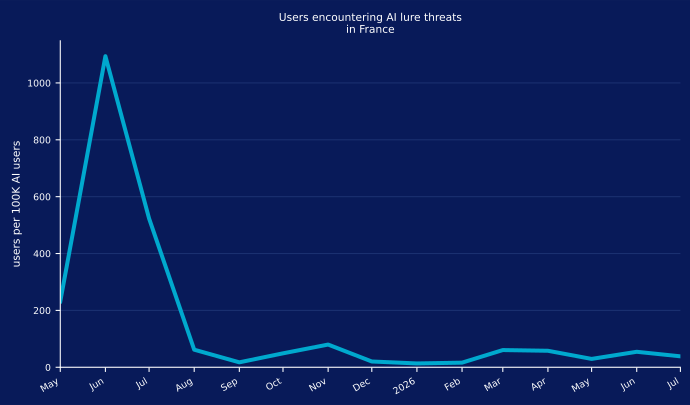
A malicious AI lure is designed to trick users into downloading malware or visiting a malicious website by posing as a trusted AI brand or tool. In France, this activity spiked sharply in June 2025, reaching more than 1,000 users per 100,000, before falling back and settling at around 80 users per 100,000 from August 2025 onward.

Both parts of that pattern matter. The June spike shows how quickly a single effective campaign can reach a large share of the workforce, while the level that followed has proven persistent rather than transient, remaining an ongoing threat as employees continue to use and search for new AI tools.

Recent campaigns have included fake AI application installers, trojanized developer tools, and other AI-themed lures designed to take advantage of the growing interest in AI. As AI adoption continues to expand, attackers are likely to keep adapting these techniques, including targeting software supply chains and distributing malicious packages that take advantage of AI-assisted development.

chart showing users encountering AI lure threats in france


Links maliciosos de IA

Um link de IA mal-intencionado é um link prejudicial retornado por uma aplicação de IA em que um usuário clica ou que um agente de IA acessa. Eles são semelhantes aos links mal-intencionados que os invasores colocam nos resultados de mecanismos de busca, onde os usuários podem clicar neles acreditando que levam a sites legítimos. Os invasores podem conseguir isso por meio de técnicas de SEO, anúncios pagos ou comprometendo infraestruturas que, de outra forma, seriam legítimas.

The approach is similar in the AI environment, although malicious content reaches users differently. Techniques such as artificial intelligence engine optimization (AIEO) are emerging as attackers look for ways to influence the content AI models surface, while advertising is also beginning to appear within AI applications.

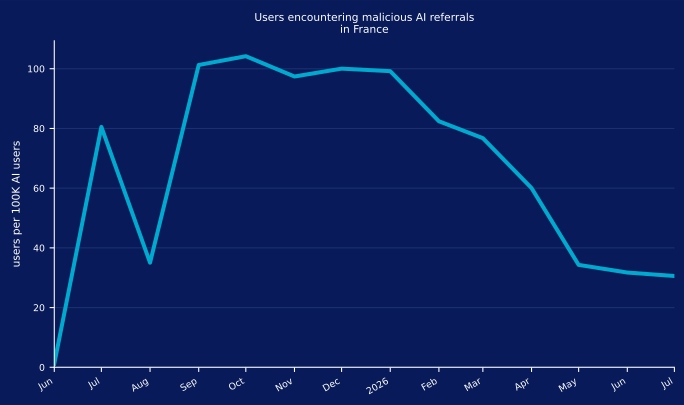
In France, the rate at which users encounter malicious AI links has fallen over the period, from more than 100 encounters per week per 100,000 users from August 2025 to January 2026, stabilizing to around 35. The decline is encouraging, but the volume still points to the need to monitor links returned by AI applications, particularly as employees increasingly rely on AI tools for everyday tasks.

chart showing users encountering malicious ai referrals in france


Recomendações link link

Com o uso crescente de ferramentas de IA, tanto gerenciadas quanto pessoais, e o uso indevido de aplicativos de nuvem pessoais, é essencial fortalecer a visibilidade, aprimorar as políticas e priorizar defesas proativas para proteger sua organização neste cenário de ameaças em rápida evolução.

Based on the trends uncovered in this report, Netskope Threat Labs strongly encourages organizations across France to take a fresh look at their overall security stance:

  • Inspecione todos os downloads HTTP e HTTPS, incluindo todo o tráfego da web e da nuvem, para evitar que malware se infiltre em sua rede. Os clientes Netskope podem configurar seu Netskope One Next Gen Secure Web Gateway com uma política de proteção contra ameaças que se aplica a downloads em todas as categorias e tipos de arquivo.
  • Bloqueie o acesso a aplicativos que não servem a nenhum propósito comercial legítimo ou representam um risco desproporcional para a organização. Um bom ponto de partida é uma política que permita aplicativos confiáveis atualmente em uso e, ao mesmo tempo, bloqueie todos os outros.
  • Utilize políticas de DLP para detectar informações potencialmente sensíveis, incluindo código-fonte, dados regulamentados, senhas e chaves, propriedade intelectual e dados criptografados, sendo enviadas para instâncias de aplicativos pessoais, aplicativos de IA ou outros locais não autorizados.
  • Utilize a tecnologia Remote Browser Isolation (RBI) para fornecer proteção adicional ao visitar sites em categorias que podem representar um risco maior, como domínios recém-observados ou recém-registrados.
  • Use Netskope Skylight AI Gateway to gain visibility and control over AI applications and API interactions, helping secure data flows between users, applications, and LLMs.
  • Deploy Netskope Skylight AI Guardrails to enforce consistent protections against sensitive data exposure, unsafe prompts, and policy violations across managed and unmanaged AI environments.
  • Use Netskope Skylight AI App Security to discover sanctioned and unsanctioned AI applications, apply real-time controls, and enforce governance policies across personal and enterprise AI use.
  • Leverage Netskope Skylight AI Analytics to monitor AI adoption trends, user activities, and DLP incidents, facilitating organizations to better understand and reduce AI-related risk exposure.
  • Consider Netskope Skylight AI Red Teaming to actively identify vulnerabilities and misconfigurations in private AI deployments before they may be exploited in production environments.


Netskope Threat Labs link link

Com uma equipe formada pelos principais pesquisadores de ameaças e malware em nuvem do setor, o Netskope Threat Labs descobre, analisa e projeta defesas contra as ameaças mais recentes que afetam as empresas. Nossos pesquisadores são palestrantes e voluntários frequentes em importantes conferências de segurança, incluindo DEF CON, Black Hat e RSA.


Sobre este relatório link link

Netskope provides threat protection to millions of users globally. The information presented in this report is based on aggregate use data collected by the Netskope One platform for a subset of Netskope customers in France.

As estatísticas deste relatório baseiam-se no período de 01/07/2025 a 30/07/2026. As estatísticas refletem as táticas dos invasores, o comportamento do usuário e a política da organização.