close
close
""
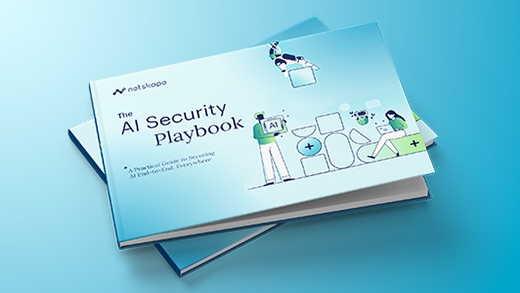
The AI Security Playbook
This playbook explores six core security challenges organizations face when adopting AI, along with proven, real-world strategies to address them.
Experience Netskope
Get Hands-on With the Netskope Platform
Here's your chance to experience the Netskope One single-cloud platform first-hand. Sign up for self-paced, hands-on labs, join us for monthly live product demos, take a free test drive of Netskope Private Access, or join us for a live, instructor-led workshops.
A Leader in SSE. Now a Leader in Single-Vendor SASE.
Netskope is recognized as a Leader Furthest in Vision for both SSE and SASE Platforms
2X a Leader in the Gartner® Magic Quadrant for SASE Platforms
One unified platform built for your journey
""
Netskope One AI Security
Organizations need secure AI to move their business forward, but controls and guardrails must not require sacrifices in speed or user experience. Netskope can help you say yes to the AI advantage.
""
Netskope One AI Security
Organizations need secure AI to move their business forward, but controls and guardrails must not require sacrifices in speed or user experience. Netskope can help you say yes to the AI advantage.
Modern data loss prevention (DLP) for Dummies eBook
Modern Data Loss Prevention (DLP) for Dummies
Get tips and tricks for transitioning to a cloud-delivered DLP.
Modern SD-WAN for SASE Dummies Book
Modern SD-WAN for SASE Dummies
Stop playing catch up with your networking architecture
Understanding where the risk lies
Advanced Analytics transforms the way security operations teams apply data-driven insights to implement better policies. With Advanced Analytics, you can identify trends, zero in on areas of concern and use the data to take action.
The Lens
""
Read about the latest news and opinions from the team at Netskope. The Lens combines our blogs, our podcasts and case studies, with new content added every week.
Netskope Technical Support
Our qualified support engineers are located worldwide and have diverse backgrounds in cloud security, networking, virtualization, content delivery, and software development, ensuring timely and quality technical assistance
""
AI in the Fast Lane
Netskope’s AI in the Fast Lane roadshow brings together security professionals to discuss how organizations are using AI today, and how a comprehensive security strategy can create a smarter, safer, and future-proof model.
Netskope video
Netskope Training
Netskope training will help you become a cloud security expert. We are here to help you secure your digital transformation journey and make the most of your cloud, web, and private applications.

The 2026 threat landscape has moved beyond shadow AI discovery into a phase of bidirectional, agentic risk. We are no longer just monitoring the prompts employees send to third-party models; we are now governing the integrity of the AI-driven supply chain. The rapid integration of the Model Context Protocol (MCP) effectively bridges our internal data stores with external agents, while the surge in autonomous coding tools like Cursor and Claude Code has drastically lowered the barrier for automated, malicious code execution. For security teams, this mandates a pivot from simple data to bidirectional inspection. We need to treat every agentic interaction as a potential execution vector, not just a data request.

20 min read

Executive summary & key findings link link

In 2026, the enterprise AI security strategy has pivoted from the reactive discovery of shadow AI to the active, transactional governance of autonomous AI agents. The rapid proliferation of agentic AI, coupled with the widespread adoption of the Model Context Protocol (MCP) to bridge internal data stores with external models, has expanded the enterprise risk surface beyond simple prompt-based data exfiltration. This report analyzes the resulting AI security landscape, characterizes operational risks ranging from downstream data policy violations to autonomous malicious code execution, and establishes the technical mandate for AI traffic inspection and a zero-trust AI architecture. Among the key findings of this report are:

  • Data security risks: A surge in downstream policy violations
    Downstream data policy violations, where an AI service returns sensitive data that a user or agent is not authorized to access, are rising sharply, driven by a 4x increase in MCP traffic as organizations continue to connect AI systems to sensitive data stores.
  • Agentic risks: The operational shift to autonomous coding
    A surge in coding agent use is driving increased AI traffic volume, greater MCP interconnectedness, and increased risks of malicious code execution, with 75% of organizations using Claude Code and 58% using Codex today, a dramatic increase from negligible adoption a year ago.
  • Adversarial risks: Malicious code, links, and lures
    As AI adoption rises, adversaries continue to use AI lures to trick victims into downloading malware or visiting malicious webpages. At the same time, adversaries are becoming increasingly adept at getting AI apps themselves to surface malicious code to their victims, increasing the risk that autonomous coding agents execute such code or incorporate it into broader codebases.


Introduction

As generative AI adoption matures within the enterprise, security leadership has transitioned from the initial challenge of shadow AI discovery to the more complex requirement of granular, transactional governance. Effective governance now demands that security teams move beyond policies focused primarily on limiting data flow to third-party AI platforms and instead adopt a structured risk assessment framework that evaluates AI interactions across four critical dimensions: volume, directionality, severity, and intent.

The enterprise threat landscape has fundamentally shifted, as the same tools that unlock productivity (AI chatbots, AI assistants, autonomous AI agents, MCP servers, etc.) simultaneously expand the attack surface. While upstream data policy violations (in which users and agents send sensitive data to third parties in violation of organizational policies) remain the most frequent point of failure, critical adversarial risks, including prompt injection, jailbreaking, and the downstream execution of malicious code, are on the rise, as are downstream data policy violations resulting from increasing AI system interconnectedness. This report provides a granular overview of the enterprise AI risk landscape and the technical basis for implementing the visibility, governance, and protection required to secure enterprise AI deployments properly.


Categorizing AI Risks link link

AI visibility, governance, and protection begin with an understanding of the current risk landscape. The chart below ranks the most prevalent risks by the frequency of violations observed within organizations. At the top of this list are upstream data policy violations, which once accounted for nearly 100% of alerts but have fallen below 90% as other types of violations have increased in volume. At the other end of the spectrum are malicious code violations (where an AI system returns malicious code), which are the fewest but also the most severe.

chart showing AI violation breakdown pero 10k alerts


In the following list, we explore each of these risks in more detail, including the direction, intent, and severity.

Upstream data policy violation
Direction: Upstream
Intent profile: Insider/productivity/negligence
Severity: Cumulative
What is an upstream data policy violation?
The most common AI risk is a user or agent attempting to send data to an AI system in violation of the organization’s data use policies, including sending confidential information or source code to unapproved services. Organizations typically use such policies to steer their users away from shadow AI and toward approved AI services, and to steer use cases to the appropriate services. For example, some AI services might be authorized only for coding and development tasks, while others are authorized solely to process sensitive data in documents and spreadsheets. Data policy violations originate primarily from trusted insiders who seek to increase their productivity but do so negligently (without knowledge of organizational policy). The risk severity here is cumulative because a consistent stream of exposure of sensitive data to third parties can cause compliance or regulatory liability.


Downstream data policy violation
Direction: Downstream
Intent profile: Insider/productivity/negligence
Severity: Low/moderate
What is a downstream data policy violation?
Downstream data policy violations occur when an AI service returns data that organizational policies prohibit the user or agent from accessing. Such violations occur when an organization uses MCP, retrieval-augmented generation (RAG), or customized models trained on proprietary data. In these cases, an AI app might return some sensitive data from a connected system that the user or agent is not authorized to access. Another less common example of a downstream data policy violation occurs when an organization authorizes an app but restricts its use to a specific use case. For example, users and agents might be allowed to use the app as a general-purpose chatbot, but not to generate source code. Any source code returned by the app would be classified as a downstream violation. As with upstream violations, the primary intent profile for downstream violations is a trusted insider motivated by productivity gain, and the risk severity depends on the type of data and the breadth of access.


Content filtering
Direction: Bidirectional
Intent profile: Insider/behavior
Severity: Low
What is content filtering in the context of AI risk?
Content filtering violations are bidirectional and occur when a user or agent sends a prompt to, or receives a response from, an AI system that contains content deemed inappropriate under organizational policies. These types of violations are similar to URL filtering violations from a secure web gateway (SWG): In the same way that organizations block sexual or violent content on the web, they typically also block such content from being returned by AI apps. Content filtering violations are low in severity because they pose minimal threat to the organization’s network or data assets. Instead, they are primarily HR, legal compliance, or cultural alignment issues. 


Prompt injection and jailbreaking
Direction: Bidirectional
Intent profile: Adversarial/evasion
Severity: Critical
What is prompt injection? What is jailbreaking?
Prompt injection and jailbreaking violations occur when a user or agent attempts to bypass guardrails, subvert underlying system instructions, or otherwise force an AI system to perform some restricted action. Such violations result from deliberate adversarial or evasive actions by an insider or an external adversary. In many cases, these are indirect prompt injection attacks, in which an adversary embeds malicious instructions into external data sources accessed by an AI system. The severity is critical because successful exploitation subverts the model control plane, potentially triggering cascading execution paths across connected backend services. 


Requests for sensitive data
Direction: Upstream
Intent profile: Adversarial/reconnaissance/harvesting
Severity: High
What are requests for sensitive data in the context of AI risk?
Requests for sensitive data are upstream violations that occur when a user or agent exhibits signs of deliberately attempting to bypass controls to access it. The severity of such a violation is generally higher than that of a downstream data policy violation due to a different intent profile. A downstream data policy violation might occur without deliberate prompting simply because the system has access to data that the user is not authorized to access. By contrast, requests for sensitive data indicate that the requester intends to access such data. Requests for sensitive data, combined with downstream data violations, indicate a critical risk, as they suggest the requester is succeeding in their efforts.


Piracy and copyright
Direction: Downstream
Intent profile: Compliance/accidental
Severity: Low
What are the copyright risks associated with AI?
A piracy and copyright violation is a downstream violation that occurs when an AI application returns protected, copyrighted, or trademarked material without valid third-party licensing or attribution of permission. Such material poses a legal and financial risk to the organization if used inappropriately. Still, it presents a minimal threat to the organization’s network or data assets and is therefore considered low risk.


Malicious code
Direction: Downstream
Intent profile: Adversarial/weaponization
Severity: Critical
What is malicious code in the AI context?
A malicious code violation occurs when an AI application returns malicious code in its response. The malicious code might be some shell commands that the user or agent might execute directly or some malicious code snippet that is incorporated into a broader code base. Autonomous coding agents, which are rapidly gaining popularity, amplify this risk because they generate code much faster than humans and autonomously execute AI-generated code and commands. An AI app might return malicious code as the result of an indirect prompt injection, trojanized AI tooling or models, or even organically. Organic malicious code might be returned as a result of training on vulnerable data, emergent misalignment, or hallucination. The severity is critical because successful execution of malicious code might result in widespread system compromise. Malicious code violations coupled with prompt injection and jailbreaking violations reveal intent and indicate possible success.

AI adoption: Continuing growth link link

Over the past year, the percentage of enterprise users actively using AI apps on a weekly basis has increased from 34% to 59% for the median organization, with the top quartile of organizations having at least 77% of their user base interacting with AI apps each week. Meanwhile, the top 1% of organizations with the most AI users (not pictured) have already plateaued at nearly 100%. The dip in the plot at the end of 2025 and the beginning of 2026 is an artifact that appears throughout this report and results from lower overall activity around the holiday season. The rate of AI adoption accelerated slightly at the end of 2025, and that accelerated growth continued through the beginning of 2026, but has since slowed. We expect this growth to plateau in the second half of 2026 as organizations become more strategic about their AI investments.

chart showing AI users per week median percentage with shaded area showing 1st and 3rd quartiles


At the same time, the volume of AI use has increased 3-fold, from 1,498 to 4,731 prompts per week on average. The top 25% of organizations have seen a significantly higher weekly volume of at least 19,292 prompts, and the top 1% (not pictured) have seen hundreds of thousands of prompts per week. This increase in volume is driven primarily by rising adoption of agentic AI, which we explore in more detail in the next section. We also expect the number of prompts per organization to plateau in the second half of 2026 as agentic AI adoption reaches saturation.

chart showing AI prompts per organization median with shaded area showing 1 st and 3rd quartiles


Shadow AI: A plateau link link

Since the beginning of the AI boom, we have seen a gradual move away from personal, unmanaged shadow AI apps toward organization-managed apps. Back in 2023, nearly all of the AI traffic that we saw in the enterprise was shadow AI, individual users playing around with their ChatGPT subscriptions to try to boost their own productivity. Over time, organizations began to deploy approved and managed apps, and the percentage of users accessing personal AI apps decreased as a result. That trend stopped around March 2026, plateaued, and has trended back slightly in the opposite direction. At present, 56% of AI users use only organization-managed AI applications, 14% use both organization-managed and personal apps, and 30% use only personal apps. This trend reversal indicates that shadow AI is here to stay and, rather than continuing to move every AI user and use case onto managed platforms, organizations have opted to place guardrails around the use of personal and unapproved apps instead. At the same time, shadow AI discovery priorities have expanded from gaining visibility and implementing controls for personal AI app use to include AI agents, MCP servers, and local AI infrastructure (all areas where we are currently seeing rapid growth).

chart showing ai usage personal vs. organizational account breakdown


Agentic AI: A coding boom link link

Over the past year, adoption of conversational chatbot AI apps has reached saturation, with more than 95% of organizations worldwide using a chatbot at least once a week. ChatGPT, the long-time global leader, remains in first place, but is being challenged by Anthropic Claude, Microsoft 365 Copilot, and Google Gemini. At the beginning of the year, Google Gemini was in second place and poised to surpass ChatGPT, but its adoption plateaued. Microsoft 365 Copilot overtook Google Gemini in May but has similarly plateaued. Then, in June, Anthropic Claude overtook both and continues to grow in popularity. Its popularity is linked closely to the adoption of Claude Code, Anthropic’s coding agent, which we explore later in this section. At its current trajectory, Claude is poised to overtake ChatGPT in the second half of 2026.

chart showing most popular conversation apps


Other categories of AI apps see lower overall adoption rates that have remained relatively constant since the beginning of the year, with two notable exceptions:

  1. AI code apps provide tools to assist with software development, including writing, testing, debugging, and optimizing code. Agentic code development apps have driven the popularity of code apps from 42% to 84%. Furthermore, although adoption has slowed from the rapid pace seen at the beginning of the year, it is poised to continue to increase through the second half of the year.
  2. AI platforms streamline the AI development process by hosting key components like AI models, enabling developers to focus on core application logic without managing infrastructure. AI platform adoption has risen rapidly from 51% to 92% of organizations over the past year but has lately plateaued, with adoption expected to remain at this level throughout the second half of the year.

chart showing ai app category adoption by organization


In the AI code app space, GitHub Copilot and Cursor were the dominant players one year ago. Both apps are AI-powered code editors that use a traditional IDE and layer in AI functionality to assist with the software development process. While the popularity of this approach appears to have plateaued, agentic coding apps Claude Code and Codex are rapidly increasing in popularity. Claude Code is now the most popular code development platform, used by 75% of organizations, with Codex in second place at 58%. Both of these apps had less than 1% adoption one year ago. The continuing rise in popularity of these two apps underscores the shift to agentic software development happening across industries worldwide, which increases certain risks highlighted in this report, especially the risks associated with prompt injection and jailbreaks, malicious code, and sensitive data mishandling.

chart showing most popular code apps


AI platforms and data sovereignty

AI platforms are also experiencing rising popularity, led by Anthropic’s Claude Platform. As highlighted throughout this report, Anthropic’s Claude chatbot and Claude Code have grown rapidly in popularity since the beginning of the year. The Claude Platform, which enables users to develop custom apps and agents using its models, has experienced similar growth in popularity and has eclipsed OpenAI’s platform, once the dominant one in this area.

At the same time, multiple other platforms have experienced notable growth throughout the year. For example, in a distant third place (but steadily increasing in popularity) is Amazon Bedrock. Among the reasons that Bedrock continues to gain popularity are its wide variety of models and its approach to data sovereignty, which ensures that organizational data is isolated, encrypted, processed only in the regions of choice, and never shared with third parties or used to train foundation models. That said, certain models have model-specific terms, so organizations should review the use of platforms, including Amazon Bedrock, on a model-by-model basis. Still, we expect to continue seeing movement toward platforms like Bedrock as organizations prioritize data sovereignty.

chart showing most popular platform apps


Running models locally is becoming more popular as organizations increasingly prioritize data sovereignty and look to reduce cloud costs. 41% of organizations (more than use Bedrock, but fewer than use the OpenAI and Claude platforms) are using Ollama. This popular open source framework allows organizations to download and run models locally. Below is a breakdown of model popularity, showing that Google’s Gemma4 is the most popular by a wide margin, followed by various versions of Alibaba’s Qwen and Meta’s Llama. We expect a significant shake-up in this leaderboard in the second half of the year, as Z.ai’s GLM models are currently standing out in benchmarks and gaining popularity.

table showing top AI models used in Ollama by percentage of organizations


MCP: Rapidly increasing interconnectedness link link

MCP, the open-source standard for connecting AI models to external data sources and tools, has experienced a surge in use, with users increasing by 250% and transactions by 375% over the past 10 weeks alone. This surge is significant because it is driving a meaningful change in the volume and direction of data policy violations, which we explore in the following section. Furthermore, these stats represent only remote MCP use, meaning the agent connects to an MCP server hosted on the internet rather than on the local machine or within their organization’s network. Among the top clients being used to connect to these MCP servers are the AI coding agents (Claude Code and Codex) mentioned earlier in this report.

chart showing increase in MCP adoption over time


Data policy violations: growing volume link link

Over the past year, the number of upstream data policy violations has increased modestly, with the average organization seeing 69 per week, up from 44 per week one year ago. At the same time, the top 25% of organizations have seen significant fluctuations throughout the year, but continue to see on the order of 300-400 violations per week, similar to what they were experiencing at the same time last year.

chart showing average upstream sensitive data transfers to AI apps median with shaded area showing 1st and 3rd quartiles


A breakdown of the types of violations shows that intellectual property, regulated data, and source code account for the vast majority of data policy violations, with a smaller proportion involving passwords and keys (typically embedded in source code or configuration files sent to AI apps).

chart showing type of upstream data policy violations of apps


The trend in downstream data policy violations over the past year is quite different from that in upstream violations. Downstream violations occur at a lower rate than upstream data policy violations but have more than doubled from 12 to 31 per week over the past year. Among the top 25% of organizations, this rate has increased from 72 to 206 per week. The increase comes as agentic AI and MCP adoption increase, and AI apps become increasingly connected to data sources and tools that expose sensitive data. As MCP adoption continues to grow, we expect the proportion of downstream data violations to rise across the board throughout the second half of 2026.

chart showing average downstream sensitive data transfers from AI apps median with shaded area showing 1st and 3rd quartiles


AI-adjacent threats link link

While much of this report focuses on the new AI-native threats, which are most likely to require new controls, it is still important to highlight that the increasing adoption of AI carries risks posed by traditional, AI-adjacent threats. In this section, we highlight two such threats: AI lures and AI links.

Malicious AI lures

A malicious AI lure attempts to trick victims into downloading malware or visiting a malicious website using fake branding. Over the past year, we saw a six-month lull in the number of AI lures before they spiked in March and remained at a similar rate into July. Recent campaigns leveraging AI lures have included fake installers of AI apps and trojanized developer tools. Given the continued popularity of AI and organizational pressures to leverage AI to increase productivity, we expect adversaries to continue to construct sophisticated AI baits like these fake installers and continue to find new ways to compromise AI software development pipelines, including continued Shai-Hulud-style attacks and creating malicious packages to squat on the names that AI models tend to hallucinate.

chart showing users encountering AI lure threats


Malicious AI links
A malicious AI link is a malicious link returned by an AI app that a user clicks or an agent visits. Think of this as similar to a malicious link that users click on when using a popular search engine like Bing or Google. Those links appear in the search results either because the attacker used SEO techniques to get their malicious site highly ranked, paid to have a malicious ad linked in the search results, or otherwise compromised benign infrastructure. In the AI world, technology has changed, but the techniques remain. AIEO is emerging as techniques to have your content treated favorably by AI models become well-known, and ads are beginning to make their way into AI apps. The volume of these threats has varied significantly throughout the year, from fewer than 10 to more than 90 per week, and we expect the average number to increase in the second half of 2026, despite the current lull.

chart showing users encountering malicious AI referrals


Visibility, governance, and protection link link

To manage AI risk, organizations should align their security strategies with widely adopted frameworks like MITRE ATLAS and the OWASP Top 10 for LLMs. These frameworks provide critical context: MITRE ATLAS enables CISOs to contextualize the specific attacks being detected and blocked, while the OWASP LLM Top 10 clarifies application-level risks. By integrating these frameworks with real-time monitoring, security teams can effectively track policy enforcement, detect emerging threats, and gain a granular view of their AI risk posture, including breakdowns by risk category and user activity.

Building on this strategic foundation, we round out the report by mapping the principles from these frameworks into a tactical roadmap centered on each risk defined in this work. As you read through this risk-specific guidance, you will identify a few persistent themes:

  • Visibility: Deploying a centralized AI gateway or proxy is essential for all AI interactions, including shadow AI, local infrastructure, and MCP traffic.
  • Governance: Policies must be risk-aligned and granular, incorporating matrixed approval for apps and use cases, supply chain security governance, and adherence to regional/legal compliance requirements.
  • Protection: Security posture must be layered, using real-time data loss prevention (DLP), non-deterministic semantic guardrails, heuristic output validation, and continuous behavioral analytics to detect post-compromise signals (e.g., reconnaissance, C2).

Below, we have mapped specific visibility, governance, and protection requirements to each risk, providing an operational blueprint for mitigating them across your environment.

Data policy violation (upstream)
Visibility: Use an AI gateway or proxy for all AI interactions (especially shadow AI).
Governance: Define a matrix for apps and approved use cases, with a focus on source code, regulated data, and intellectual property.
Protection: Configure real-time data protection policies aligned to approved upstream use cases.


Data policy violation (downstream)
Visibility: Use an AI gateway or proxy for all AI interactions (especially MCP).
Governance: Define a matrix of user groups and required levels of access to sensitive data.
Protection: Configure real-time data protection policies aligned with approved downstream data access.


Content filtering
Visibility: Use an AI gateway or proxy for all AI interactions (especially shadow AI).
Governance: Align real-time text analysis with corporate Human Resources policies, legal compliance criteria, and regional acceptable use policies (AUP).
Protection: Leverage AI guardrails with contextual awareness and keyword filtering.


Prompt injection and jailbreaking
Visibility: Use an AI gateway or proxy for all AI interactions (including local infrastructure).
Governance: Mandate that all AI infrastructure be reviewed for optimal isolation before deployment and include guardrails.
Protection: Deploy non-deterministic semantic guardrails, coupled with behavioral analytics, to detect even the most subtle attempts at prompt injection and jailbreaks, and layer these controls with data protection policies and malicious code inspection.


Requests for sensitive data
Visibility: Use an AI gateway or proxy for all AI interactions (with audit logging of all prompts).
Governance: Establish ownership and isolation frameworks to limit interconnected resources.
Protection: Deploy non-deterministic semantic guardrails, coupled with data protection policies and behavioral analytics, to detect adversarial attempts to access sensitive data.


Piracy and copyright
Visibility: Use an AI gateway or proxy for all AI interactions (that inspects all downstream content)
Governance: Draft formal intellectual property compliance guidelines that specify which AI models and apps may be used to generate code, text assets, and other sensitive content.
Protection: Incorporate heuristic output-validation checks that scan generated source code or prose against known open-source signatures and trademark indexes for AI responses. Set policies to limit unapproved use cases (such as blocking certain models from being used to generate source code).


Malicious code
Visibility: Use an AI gateway or proxy for all AI interactions (that inspects all downstream content).
Governance: Mandate a zero-trust validation architecture across all internal CI/CD pipelines, with robust supply chain risk governance.
Protection: In addition to protecting against prompt injection, ensure all responses from AI apps are inspected for malicious code, incorporate threat scanning in your CI/CD pipelines, and incorporate behavioral analytics to detect post-compromise signals, such as reconnaissance, C2, and data exfiltration.


About this report link link

The information presented in this report is based on aggregate usage data collected by the Netskope One platform for a subset of Netskope customers from June 2025 to July 2026.