Get the report: How to Achieve CIO-CEO Alignment in the Era of AI

close
close
Your Network of Tomorrow
Plan your path toward a faster, more secure, and more resilient network designed for the applications and users that you support.
Experience Netskope
Get Hands-on With the Netskope Platform
Here's your chance to experience the Netskope One single-cloud platform first-hand. Sign up for self-paced, hands-on labs, join us for monthly live product demos, take a free test drive of Netskope Private Access, or join us for a live, instructor-led workshops.
A Leader in SSE. Now a Leader in Single-Vendor SASE.
Netskope is recognized as a Leader Furthest in Vision for both SSE and SASE Platforms
2X a Leader in the Gartner® Magic Quadrant for SASE Platforms
One unified platform built for your journey
Securing Generative AI for Dummies
Learn how your organization can balance the innovative potential of generative AI with robust data security practices.
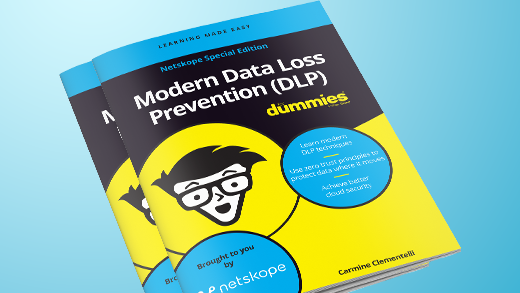
Modern data loss prevention (DLP) for Dummies eBook
Modern Data Loss Prevention (DLP) for Dummies
Get tips and tricks for transitioning to a cloud-delivered DLP.
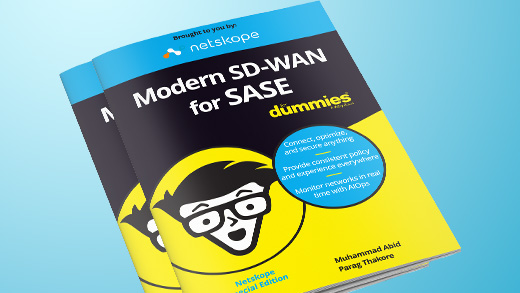
Modern SD-WAN for SASE Dummies Book
Modern SD-WAN for SASE Dummies
Stop playing catch up with your networking architecture
Understanding where the risk lies
Advanced Analytics transforms the way security operations teams apply data-driven insights to implement better policies. With Advanced Analytics, you can identify trends, zero in on areas of concern and use the data to take action.
Netskope Technical Support
Our qualified support engineers are located worldwide and have diverse backgrounds in cloud security, networking, virtualization, content delivery, and software development, ensuring timely and quality technical assistance
Netskope video
Netskope Training
Netskope training will help you become a cloud security expert. We are here to help you secure your digital transformation journey and make the most of your cloud, web, and private applications.

The Netskope Threat Labs Report highlights a different segment every month. This report series aims to provide strategic, actionable intelligence on active threats against users in each segment. The segment highlighted in this report is users working in the Latin America region. The report highlights attackers abusing cloud apps to target users in Latin America with high-risk malware, including Grandoreiro, AgentTesla, and BanLoad.

7 min read

Overview link link

This report intends to provide actionable intelligence about cybersecurity threats in Latin America. While global cybersecurity and cloud adoption trends offer valuable insights into the overall landscape, some regional variations exist. These differences may stem from different regulatory frameworks, infrastructure differences, cultural attitudes toward technology, and varying levels of cyber maturity. Understanding and acknowledging regional nuances is critical for devising effective cybersecurity and cloud adoption strategies tailored to each region’s unique challenges and opportunities.


In This Report link link

Cloud App Adoption: Enterprise users in Latin America regularly interact with an average of 25 cloud apps each month. While this includes the same popular enterprise apps used worldwide, it also includes the private messaging app WhatsApp, used by nearly one-quarter of all users in Latin America.

Cloud App Abuse: Globally, approximately half of all malware downloads originate from popular cloud apps. In Latin America, this includes phishing attachments downloaded in the Outlook.com webmail client and banking Trojans downloaded from websites using Azure Blob Storage to host the payloads.

Malware & Ransomware: Among the most prevalent malware families targeting victims in Latin America was the banking Trojan Grandoreiro, which is typically delivered as part of a phishing campaign.


Cloud App Adoption link link

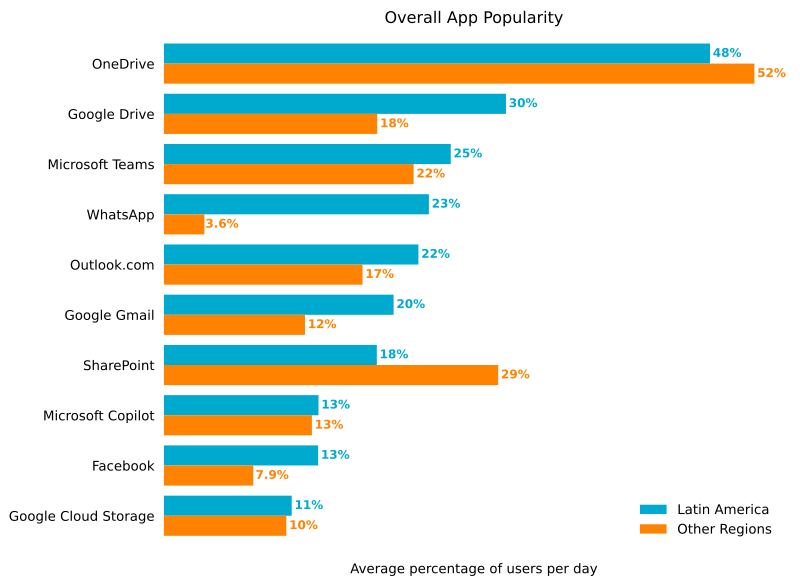
Cloud apps are ubiquitous in the enterprise, with the average user interacting with 25 different cloud apps every month. The most popular cloud apps in Latin America mostly follow broader global trends, with some noteworthy differences.

  • While Microsoft OneDrive is the most popular cloud app globally, its main competitor, Google Drive, is also very popular in Latin America, used by nearly one-third of all users analyzed.
  • While enterprise users globally tend to use enterprise apps like Microsoft Teams for messaging, the private messaging app WhatsApp is very popular in Latin America, used by nearly one-quarter of employees.

Using so many cloud apps, especially multiple apps with overlapping functions and combinations of enterprise and personal apps, underscores the importance of organizations in Latin America having policies to ensure the safe handling of sensitive data.

Overall App Popularity - LATAM


Cloud Apps Abused for Malware Delivery link link

Because adversaries deliver malware through many different channels, organizations in Latin America must ensure that they have security controls to block malware downloads over the most popular channels. Globally, approximately one-half of all HTTP/HTTPS malware downloads originate from popular cloud apps, with the other half originating from different locations on the web. This section highlights the apps for which Netskope blocked the most malware downloads over the past year.

Globally, the trend is for the most popular apps overall to be among the top apps in terms of the number of malware downloads, reflecting adversary tactics (adversaries tend to abuse popular apps because of their popularity), user behavior (users interact with popular apps more frequently), and organizational policy (organizations tend to allow popular apps). Regionally, differences arise based on those exact same three factors: differences in adversary tactics, user behaviors, and organizational policies.

In Latin America, the top apps for cloud malware downloads were indeed among the most popular apps overall in the enterprise, with some noteworthy differences from other regions. Among the top apps was the webmail app Outlook.com, with 18% of all cloud malware downloads. The malware downloads from Outlook.com originated from both personal Outlook accounts and organizational Microsoft 365 instances. Personal webmail accounted for two-thirds of all Outlook.com malware downloads by volume. The most common type of malware downloaded from Outlook.com were malicious PDF documents that were components of phishing campaigns. These documents directed the recipient to visit a phishing website, call a phone number, or both. These attacks typically aim to gain access to the victim’s accounts and sell that access in illicit marketplaces or financial theft. Azure Blob Storage was also among the top apps, driven primarily by spyware and banking trojans distributed by websites using Azure Blob Storage for file hosting.

Where Latin America saw a higher percentage of malware downloads from Outlook.com and Azure Blob Storage, they saw a lower percentage from Microsoft OneDrive and Microsoft SharePoint, where the downloads were primarily malicious documents and executables inadvertently shared internally.
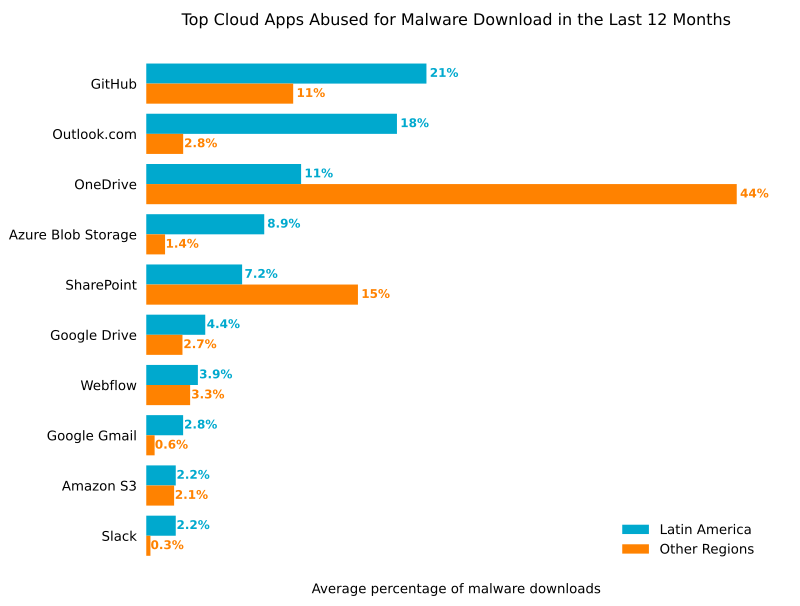
Apps abused for malware download


Top Malware Families link link

This list contains the top 5 malware and ransomware families detected by Netskope targeting users in Latin America in the last 12 months:

  • Downloader.BanLoad is a Java-based downloader widely used to deliver a variety of malware payloads, especially banking Trojans.
  • Infostealer.AgentTesla is a .NET-based remote access Trojan with many capabilities, such as stealing browser passwords, capturing keystrokes, and stealing the clipboard.
  • Phishing.PhishingX is a malicious PDF file used as part of a phishing campaign to redirect victims to a phishing page.
  • Trojan.Grandoreiro is a LATAM banking Trojan with the goal of stealing sensitive banking information, commonly targeting users in Brazil, Mexico, Spain, and Peru.
  • Trojan.Ramnit is a banking Trojan that has been around for a while. It can steal information such as login credentials, banking information, and more.

Banking Trojans have long targeted users and organizations in Latin America, and the past year has been no exception. The malware families Grandoreiro, AllaSenha, and Ousaban are among the banking trojans in the region. In the past year, Netskope Threat Labs found Grandoreiro to be the most common banking Trojan in Latin America. Grandoreiro is a multi-component banking Trojan operating under a malware-as-a-service (MaaS) model. Attackers typically deploy Grandoreiro as part of a phishing campaign and use the malware to control their victims’ bank accounts. The attackers typically empty the bank accounts and launder the stolen funds. Although law enforcement disrupted Grandoreiro’s operation in early 2024, Netskope Threat Labs expects Grandoreiro variants to continue circulating.


Recommendations link link

This report highlights increasing cloud adoption, including increased data uploaded to, and downloaded from, various cloud apps. It also highlights an increasing trend of attackers abusing various cloud apps, especially popular enterprise apps, to deliver malware (mostly Trojans) to their victims. Netskope Threat Labs recommends organizations in Latin America review their security posture to ensure that they are adequately protected against these trends:

  • Inspect all HTTP and HTTPS downloads, including all web and cloud traffic, to prevent malware from infiltrating your network. Netskope customers can configure their Netskope NG-SWG with a Threat Protection policy that applies to downloads from all categories and applies to all file types.
  • Ensure that high-risk file types like executables and archives are thoroughly inspected using a combination of static and dynamic analysis before being downloaded. Netskope Advanced Threat Protection customers can use a Patient Zero Prevention Policy to hold downloads until they have been fully inspected.
  • Configure policies to block downloads from apps and instances that are not used in your organization to reduce your risk surface to only those apps and instances that are necessary for the business.
  • Configure policies to block downloads from apps and instances that are not used in your organization to reduce your risk surface to only those apps and instances that are necessary for the business.
  • Configure policies to block uploads to apps and instances that are not used in your organization to reduce the risk of accidental or deliberate data exposure from insiders or abuse by attackers.
  • Use an Intrusion Prevention System (IPS) that can identify and block malicious traffic patterns, such as command and control traffic associated with popular malware. Blocking this type of communication can prevent further damage by limiting the attacker’s ability to perform additional actions.
  • Use Remote Browser Isolation (RBI) technology to provide additional protection when there is a need to visit websites that fall into categories that can present higher risk, like newly observed and newly registered domains.


Netskope Threat Labs link link

Staffed by the industry’s foremost cloud threat and malware researchers, Netskope Threat Labs discovers, analyzes, and designs defenses against the latest cloud threats affecting enterprises. Our researchers are regular presenters and volunteers at top security conferences, including DefCon, BlackHat, and RSA.


About This Report link link

Netskope provides threat protection to millions of users worldwide. Information presented in this report is based on anonymized usage data collected by the Netskope One platform relating to a subset of Netskope customers with prior authorization.

This report contains information about detections raised by Netskope One Next Generation Secure Web Gateway (NG-SWG), not considering the significance of the impact of each individual threat. Stats in this report are based on the period starting July 1, 2023 through June 30, 2024. Stats are a reflection of attacker tactics, user behavior, and organization policy.