

 Back
Back


40%
of alerts are going entirely uninvestigated due to a lack of capacity
















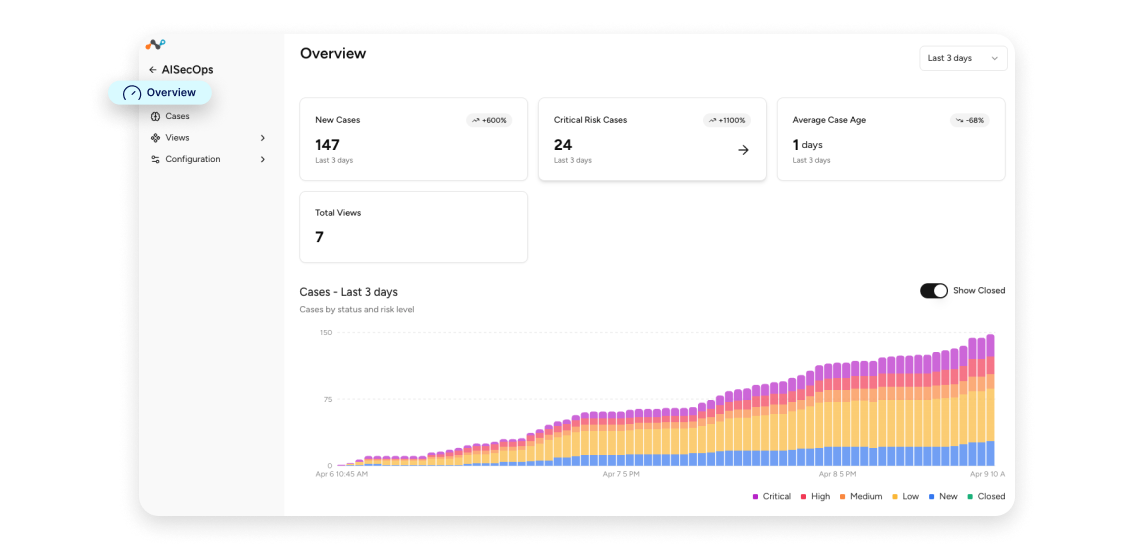
Eliminate fatigue and manual tasks with automated enrichment, conversational AI, and integrated workflows that turn complex risk signals into clear, actionable decisions in just minutes.


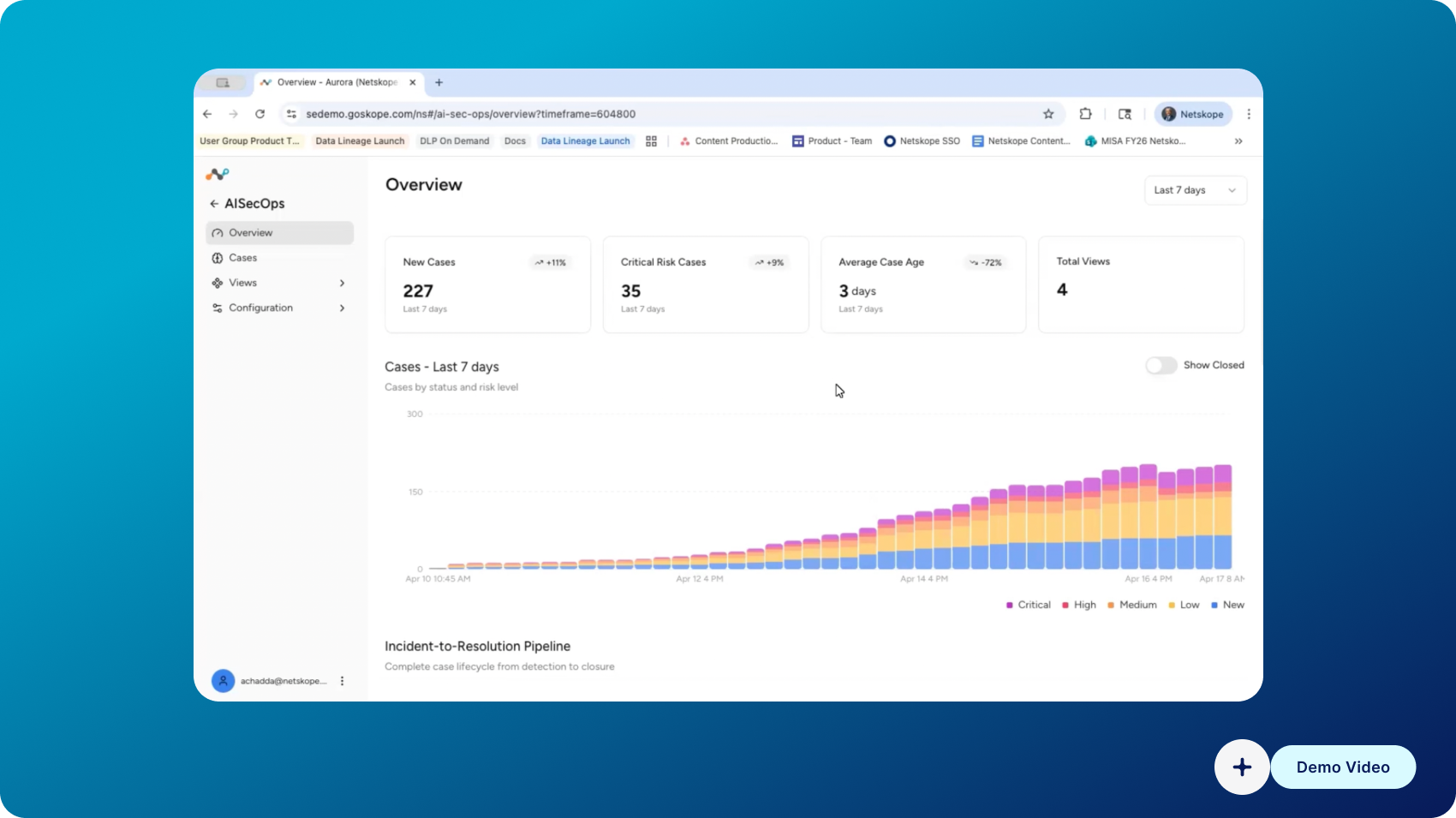
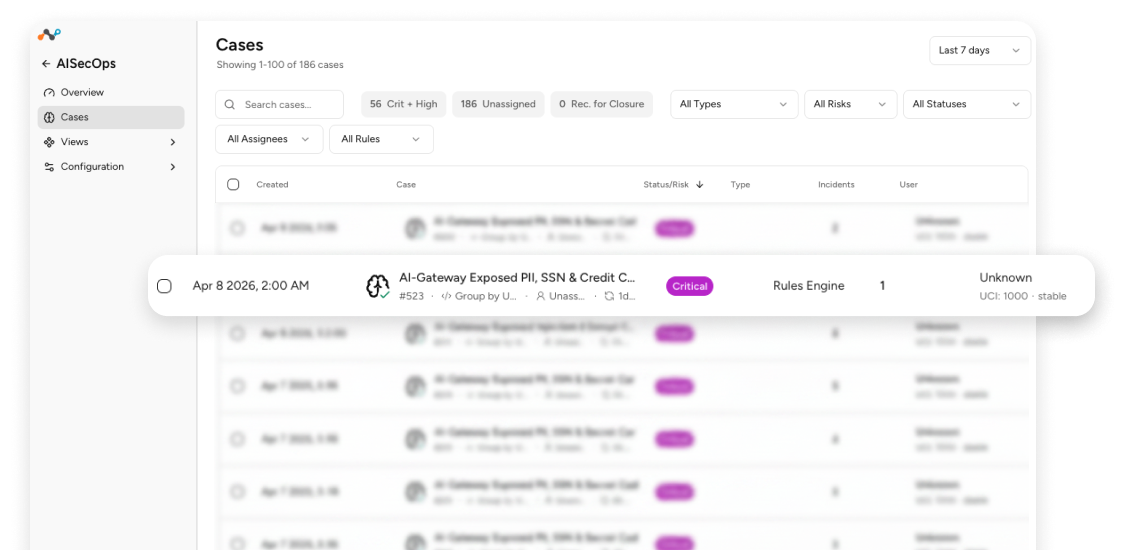
Netskope DLP AISecOps Agent reduces alert fatigue by consolidating large volumes of raw DLP alerts into a small number of high‑priority cases organized around users, data, applications, and devices. By deduplicating repetitive signals and clustering related activity into a single case, analysts no longer have to review isolated alerts without context. They benefit from faster identification of real risk, fewer missed incidents, and reduced analyst workload, which allows them time to focus on high‑impact issues instead of routine noise.
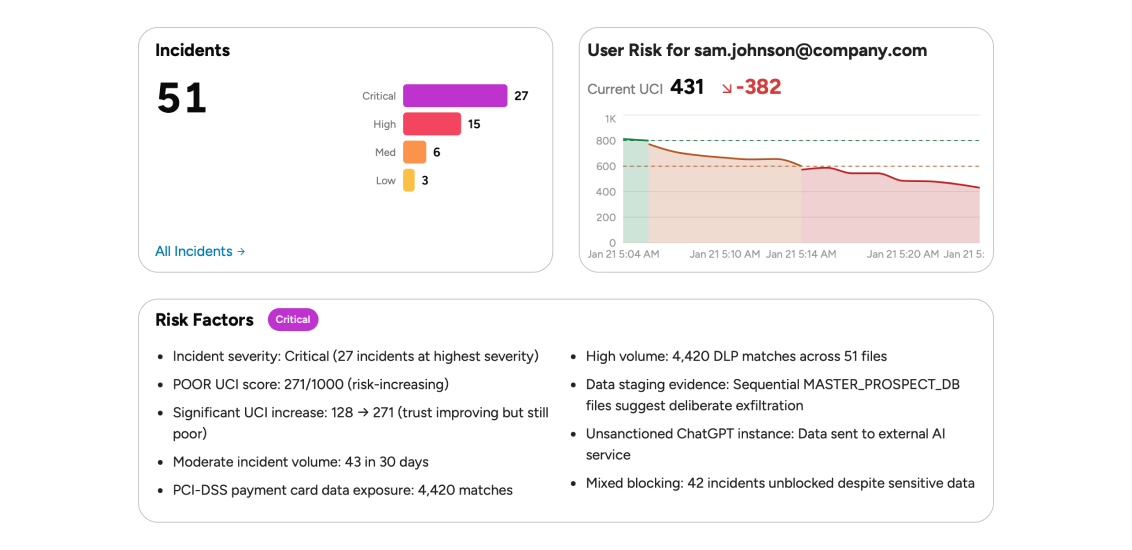
Netskope DLP AISecOps Agent automatically enriches every case with identity, device, application, and data context using integrations such as Entra ID and the Cloud Confidence Index. Analysts do not have to manually gather evidence across multiple tools, whereas, each investigation starts with complete, standardized information. This helps reduce investigation time, remove inconsistencies in decision‑making, and analysts can validate incidents are handled accurately and defensibly.
Netskope DLP AISecOps Agent analyzes user behavior, identity, device posture, and data sensitivity in minutes, which enables analysts to verify whether an event is an accidental policy violation or a genuine misuse of data. This structured context replaces lengthy manual investigation with faster, more consistent decisions. Organizations achieve quicker containment of real threats and save analyst time, reduce unnecessary disruptions to employees that cost productivity, and measurably lower mean time to resolution.
Netskope DLP AISecOps Agent allows analysts to execute remediation actions such as muting benign activity, revoking sharing permissions, or updating Jira and ServiceNow tickets, directly from the case view. Because investigation and response happen in one place, teams avoid tool switching and manual handoffs that slow down resolution and introduce errors. For the business, this results in fewer coordination errors, faster response, stronger audit trails, and predictable security execution processes.
Netskope DLP AISecOps Agent identifies recurring low‑value activity and recommends precise DLP rule adjustments based on actual investigation outcomes and analyst input. This reduces false positives and prevents the same non‑critical activity from repeatedly triggering alerts. As a result, organizations see a sustained drop in incident volume, more predictable workloads for security teams, and greater value from existing DLP investments without adding staff.
Netskope DLP AISecOps Agent allows analysts to query investigation data using natural language and capture business context directly within each case. That context is retained and reused in future investigations, so similar activity is evaluated faster and more accurately. For organizations, this creates a durable operational record, reduces dependency on individual analyst knowledge, shortens onboarding time for new team members, and ensures security decisions reflect real business usage rather than static policy assumptions.
Netskope DLP AISecOps Agent reduces alert fatigue by consolidating large volumes of raw DLP alerts into a small number of high‑priority cases organized around users, data, applications, and devices. By deduplicating repetitive signals and clustering related activity into a single case, analysts no longer have to review isolated alerts without context. They benefit from faster identification of real risk, fewer missed incidents, and reduced analyst workload, which allows them time to focus on high‑impact issues instead of routine noise.
Netskope DLP AISecOps Agent automatically enriches every case with identity, device, application, and data context using integrations such as Entra ID and the Cloud Confidence Index. Analysts do not have to manually gather evidence across multiple tools, whereas, each investigation starts with complete, standardized information. This helps reduce investigation time, remove inconsistencies in decision‑making, and analysts can validate incidents are handled accurately and defensibly.
Netskope DLP AISecOps Agent analyzes user behavior, identity, device posture, and data sensitivity in minutes, which enables analysts to verify whether an event is an accidental policy violation or a genuine misuse of data. This structured context replaces lengthy manual investigation with faster, more consistent decisions. Organizations achieve quicker containment of real threats and save analyst time, reduce unnecessary disruptions to employees that cost productivity, and measurably lower mean time to resolution.
Netskope DLP AISecOps Agent allows analysts to execute remediation actions such as muting benign activity, revoking sharing permissions, or updating Jira and ServiceNow tickets, directly from the case view. Because investigation and response happen in one place, teams avoid tool switching and manual handoffs that slow down resolution and introduce errors. For the business, this results in fewer coordination errors, faster response, stronger audit trails, and predictable security execution processes.
Netskope DLP AISecOps Agent identifies recurring low‑value activity and recommends precise DLP rule adjustments based on actual investigation outcomes and analyst input. This reduces false positives and prevents the same non‑critical activity from repeatedly triggering alerts. As a result, organizations see a sustained drop in incident volume, more predictable workloads for security teams, and greater value from existing DLP investments without adding staff.
Netskope DLP AISecOps Agent allows analysts to query investigation data using natural language and capture business context directly within each case. That context is retained and reused in future investigations, so similar activity is evaluated faster and more accurately. For organizations, this creates a durable operational record, reduces dependency on individual analyst knowledge, shortens onboarding time for new team members, and ensures security decisions reflect real business usage rather than static policy assumptions.