GenAI adoption in the healthcare sector has continued to follow the strong upward trend observed over the past year, signaling sustained momentum in how healthcare organizations integrate genAI into clinical, administrative, and operational workflows. This steady growth reflects increasing maturity and confidence in genAI technologies, as the sector aligns more closely with broader global adoption patterns.
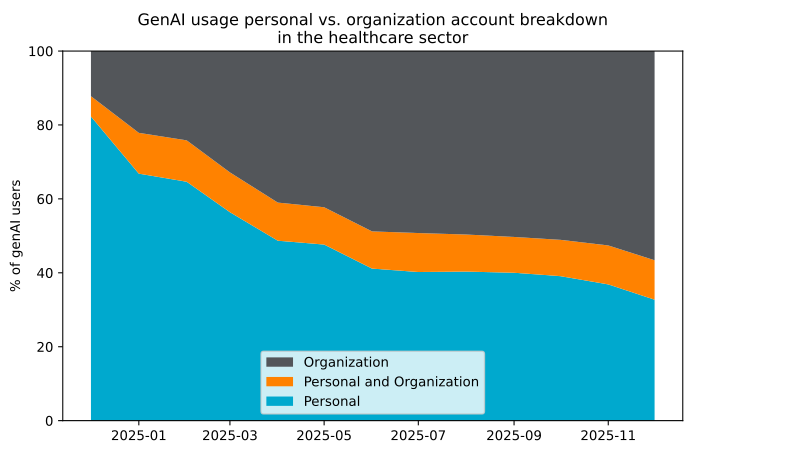
At the same time, healthcare organizations have taken meaningful steps to reduce shadow AI risks by shifting users away from personal genAI accounts and toward organization-managed tools. Over the past year, the use of personal genAI applications has dropped sharply from 82% to 32%, while adoption of organization-managed genAI solutions has risen significantly from 12% to 56%. However, there is a growing overlap of users switching back and forth between personal and enterprise accounts, increasing from 5% to 10%. This trend suggests that organizations still have work to do to match the convenience, accessibility, and features that users expect, even as managed platforms become more widely adopted. This marked shift indicates stronger governance, improved oversight, and a growing preference for managed environments that enhance data protection, compliance, and risk control while still enabling innovation.
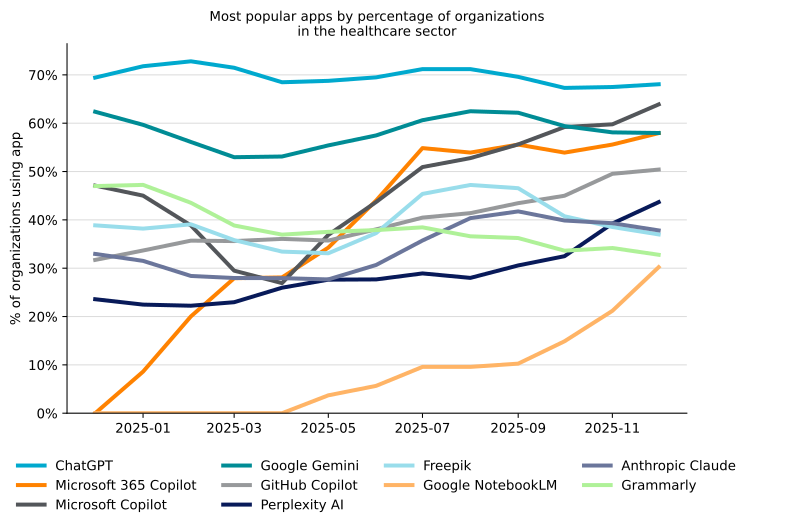
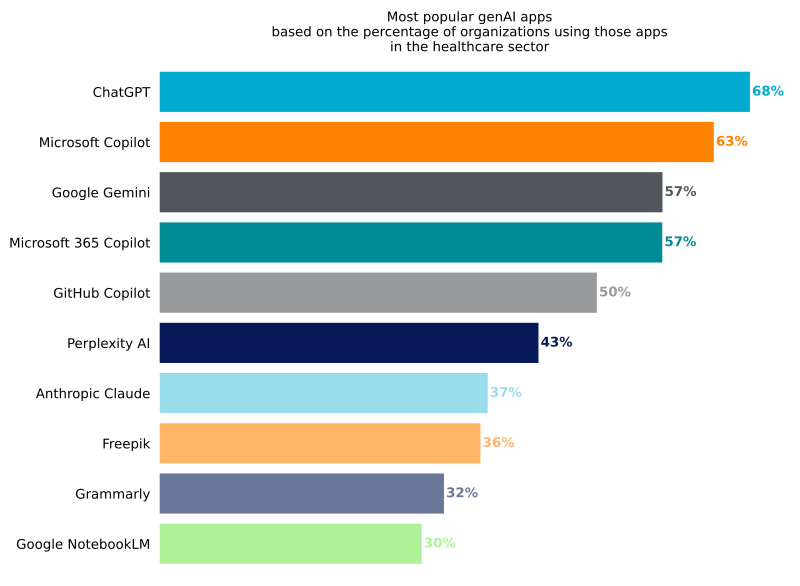
In the healthcare sector, the top genAI applications show a slightly different pattern compared to global trends. ChatGPT remains the most widely adopted genAI app, used by 68% of organizations. However, Microsoft Copilot has moved into second place at 63%, surpassing Google Gemini, which stands at 57%. This shift highlights the strong appeal of AI tools embedded directly into productivity and collaboration platforms within healthcare environments. The remaining leading applications include a mix of specialized and workflow-integrated AI tools designed to support clinical, administrative, and operational use cases.
The chart below illustrates how usage of the top genAI applications in the healthcare sector has evolved over the past year, highlighting notable shifts in platform preference. During this period, ChatGPT usage experienced a gradual decline, while Microsoft Copilot and Google Gemini gained momentum, reflecting healthcare organizations’ growing preference for tools embedded within productivity and clinical workflows.
At the same time, newer entrants are emerging quickly. Google NotebookLM has seen rapid uptake, reaching 30% adoption, signaling increasing interest in knowledge-focused and documentation-driven AI tools within healthcare environments. Overall, these trends reflect a diversifying genAI ecosystem in the healthcare sector, as organizations expand beyond early leaders and adopt a broader mix of integrated and specialized solutions.